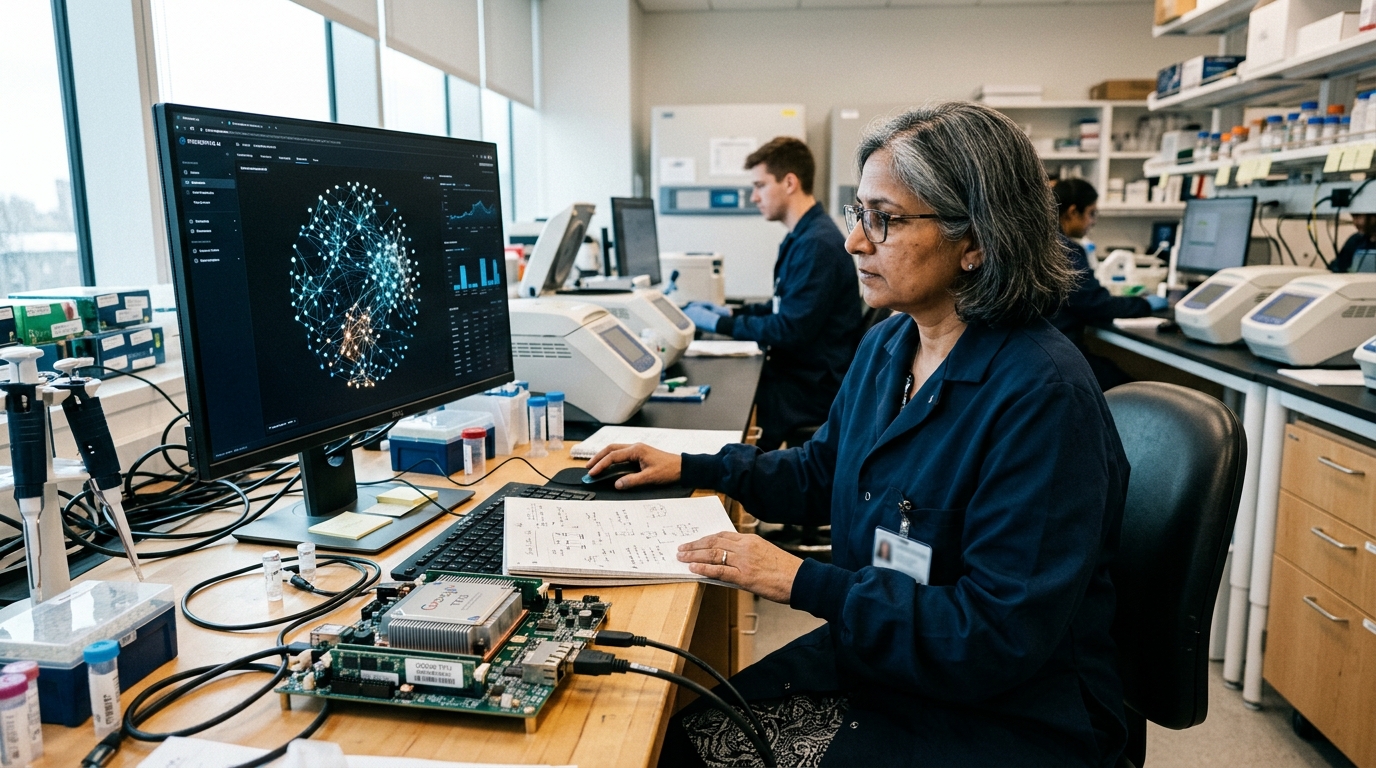
For decades, the role of the middle manager was clearly defined: they were the bridge between executive leadership and the frontline, a translator of strategy into action, and a monitor of daily performance. Today, as Generative AI permeates the corporate world, this traditional model is fracturing. Middle managers, both in Greece and globally, face unprecedented pressure as they are tasked with leading a digital transformation that simultaneously automates their core responsibilities.
The Automation of Oversight and the Death of the 'Controller'
Traditional management relied heavily on data collection, report writing, and task scheduling. These functions are precisely the strengths of modern algorithms. AI systems can now analyze team productivity in real-time, identify process bottlenecks, and suggest optimizations with a precision that exceeds human intuition. When AI can handle reporting and scheduling better and faster, the manager's role as a simple supervisor becomes redundant.
Recent analyses suggest that corporations view AI as an opportunity to 'flatten' their organizational structures. Removing intermediate layers of management promises faster decision-making and significant cost reductions. However, this trend carries risks. Without proper guidance, the loss of the 'human fabric' that holds a team together can lead to employee alienation and the erosion of corporate culture.
The Adoption Paradox and the Greek Context
In Greece, where business culture remains largely hierarchical and grounded in personal relationships, the challenge is two-fold. Greek middle managers must convince their teams to use tools that the employees themselves fear. The paradox is that the manager acts as a 'Trojan Horse' for technology: if they succeed in AI integration, they risk being seen as expendable; if they fail, they are viewed as obstacles to progress.
However, Fortune Greece highlights that the solution lies not in resistance, but in transformation. The manager's new role is shifting from task management to talent management and algorithm supervision. Their value will no longer be measured by how well they monitor clock-ins, but by how effectively they can combine human creativity with the computational power of AI.
From Administrator to Orchestrator
Survival in the new corporate world requires the development of 'soft skills' that AI cannot yet simulate. Empathy, complex conflict resolution, ethical judgment, and strategic thinking are becoming the manager's new toolkit. The 'algorithm supervisor' must be able to evaluate AI outputs, correct system biases, and ensure that technology serves humanity rather than the other way around.
- Redefining Purpose: Managers must focus on the 'why' rather than the 'how.'
- Prompt Engineering Literacy: The ability to communicate with machines is becoming as vital as communicating with people.
- Psychological Safety: Managing employee anxiety regarding automation is the top priority.
"The middle manager of the future will not be a bureaucrat relaying orders, but an architect of experiences and a guardian of human creativity within a digital ecosystem."
In conclusion, the AI era does not necessarily signal the end of middle management, but it certainly signals the end of management as we knew it. The companies that will thrive are those that successfully retrain their executives, turning them from 'flow managers' into 'strategic orchestrators.'