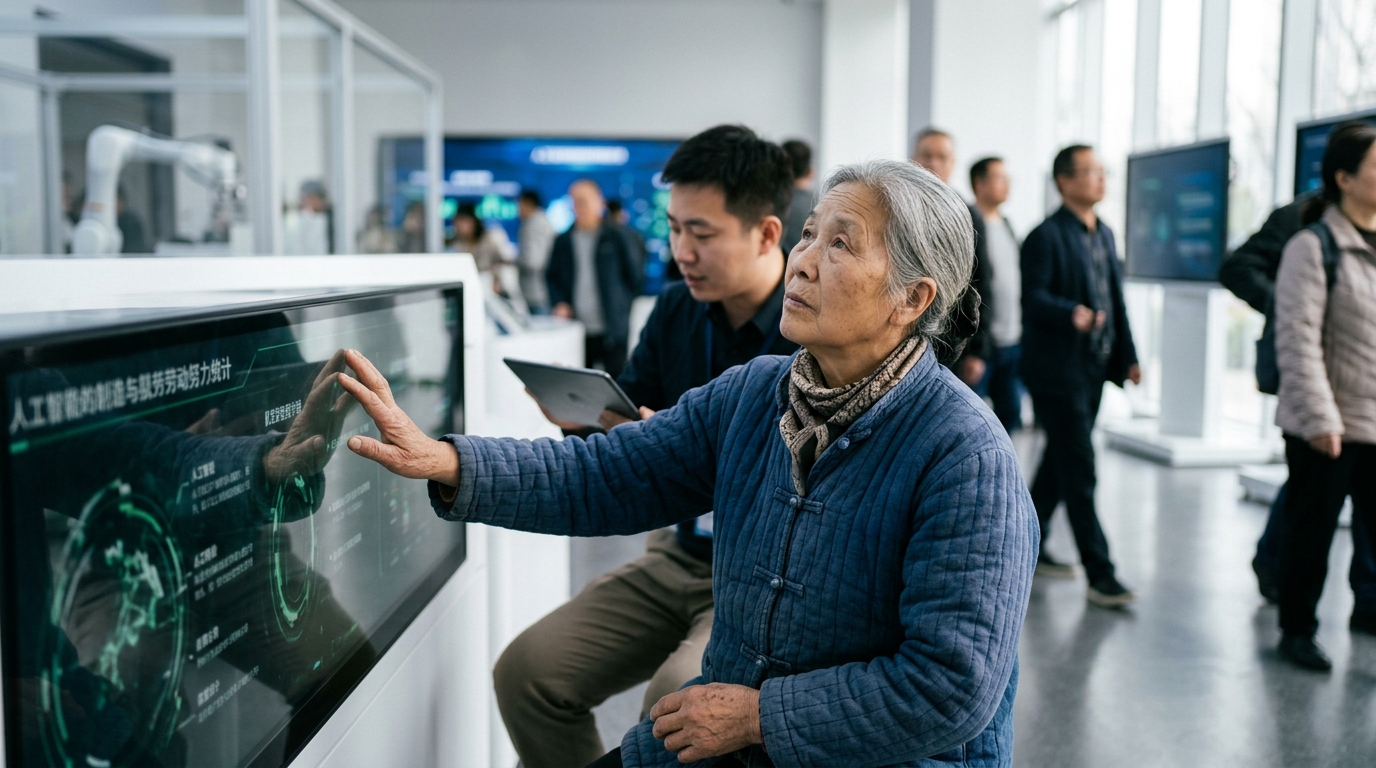
In a rare and remarkably blunt intervention, Chinese state media sounded the alarm this week, calling for the urgent strengthening of labor rights in the face of the Artificial Intelligence (AI) onslaught. As Beijing pursues global technological supremacy, the Communist Party leadership appears to be realizing that the price of total automation could be the very social stability it so desperately seeks to maintain.
A Rare State Warning
The article published in the *Workers' Daily*, the official organ of the All-China Federation of Trade Unions, was not merely a technological analysis; it was a directive. The piece emphasized that the use of algorithms for performance evaluation, surveillance, and termination has birthed a new form of "digital exploitation" that transcends the boundaries of traditional labor law. This intervention comes at a sensitive time, as China grapples with high youth unemployment and a slowing economy, making job protection a matter of national security.
This rhetoric marks a significant pivot from the previous "growth at all costs" stance. Analysts suggest that Beijing is increasingly concerned about the creation of a "useless class" of workers who, despite being skilled, find their expertise devalued by Large Language Models (LLMs) and advanced robotics. The call for "human-centric AI" is no longer just a Western slogan; it has become a Chinese necessity.
"Algorithmic Despotism" in the Workplace
At the heart of the issue is the transformation of managers into mere observers of algorithmic decisions. From JD.com’s massive logistics hubs to the coding farms of Shenzhen, AI now dictates break times, workload intensity, and task prioritization. Employees report feeling trapped in a "digital cage," where every second of inactivity is logged and penalized by a system devoid of empathy.
- Automated layoffs conducted without human oversight or the right to appeal.
- Wage reductions driven by "dynamic pricing" of labor hours.
- Increased workplace anxiety due to constant monitoring via biometric sensors.
China, which once took pride in its "996" culture (9 a.m. to 9 p.m., six days a week), is now confronting the toxic side effects of this pressure when amplified by AI. The government seems to understand that without intervention, worker resentment could coalesce into organized resistance—an outcome Beijing fears far more than any economic downturn.
The Regulatory Framework and Its Challenges
The Chinese government has already begun drafting new guidelines that would require companies to disclose how their hiring and firing algorithms operate. However, implementing these rules is fraught with difficulty. Tech giants like Alibaba and Tencent are locked in a relentless arms race with the United States, and any delay in AI deployment could be perceived as a strategic failure.
"Artificial intelligence must be a tool for human empowerment, not an invisible whip that leads to exhaustion," stated the Workers' Daily editorial.
The challenge for China is twofold: maintaining leadership in the global AI race while ensuring the domestic labor market does not collapse. This is an incredibly delicate balance. If Beijing over-regulates, it risks falling behind Silicon Valley. If it fails to regulate, it risks a social explosion triggered by millions of displaced or exploited workers.
Conclusion: A Global Warning
The situation in China serves as a mirror for what is happening globally. The call for labor protection within an authoritarian state underscores the magnitude of the threat. If even a government that prioritizes control and output feels the need to shield workers from AI, then the debate in the West must intensify. AI is not just changing how we work; it is shifting the power dynamics of the workplace. The question remains: will humans remain masters of the machine, or will the algorithm become humanity's new overseer?