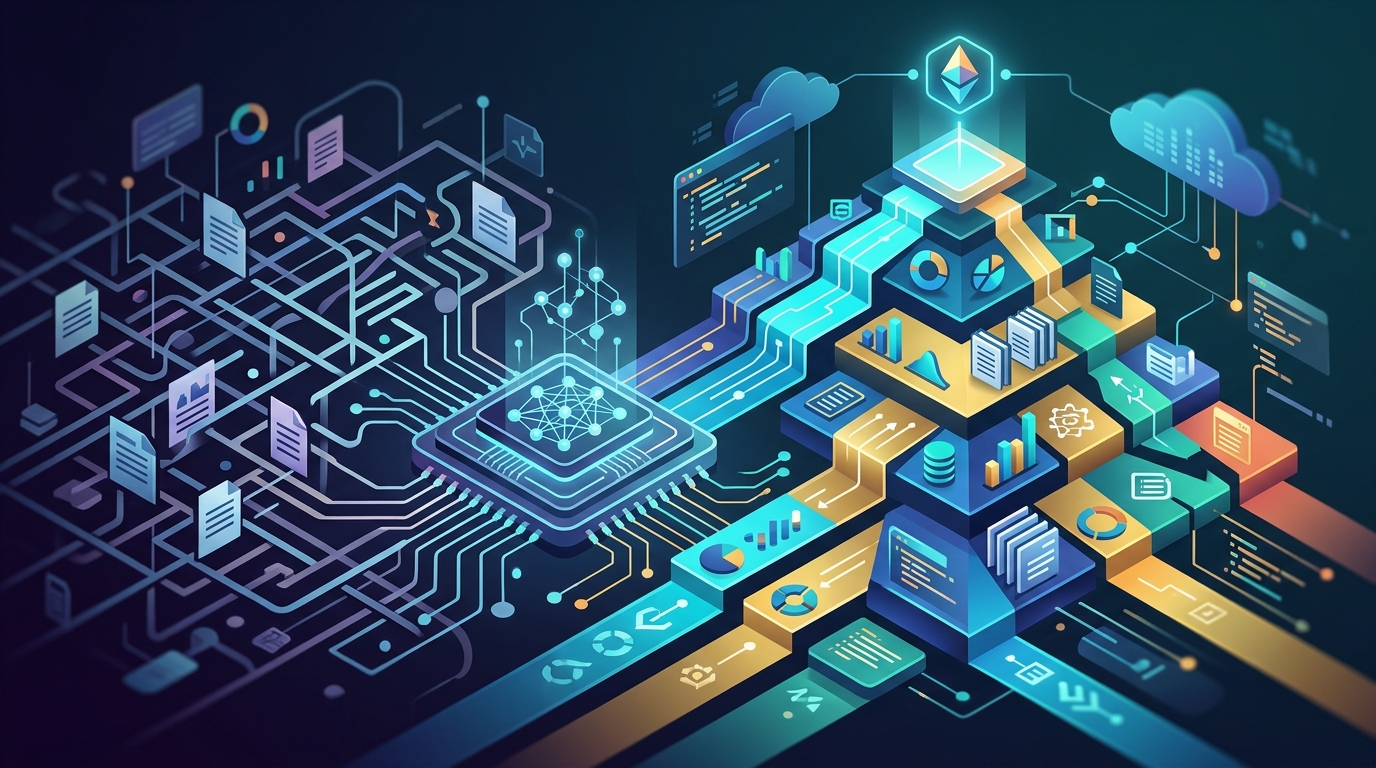
In the rapidly shifting landscape of global artificial intelligence, the discourse has moved beyond simple text generation toward the ability of models to 'understand' and 'interpret' the world around them. Zhipu AI, one of China’s leading AI 'tigers' with deep roots in Tsinghua University, is now at the forefront of a new, more profound conflict. It is no longer just about who has the most parameters or the greatest compute power; it is about who will hold the 'interpretation rights' to the digital and, by extension, the physical world.
The Shift from Text to Visual Interpretation
For years, Large Language Models (LLMs) operated as sophisticated statistical parrots, processing symbols without genuine contact with visual reality. Zhipu AI, alongside competitors like Kai-Fu Lee’s 01.AI and DeepSeek, is breaking these chains. With the advent of models such as GLM-4V, AI no longer just reads words; it 'sees' screens, analyzes user interfaces (UI), and interprets the spatial arrangement of information.
This shift toward multimodality is critical. When a model can interpret a smartphone screen as a human does, it gains the ability to act as an 'agent.' The battle for interpretation means that AI is no longer an external advisor but a mediator that perceives the digital environment and makes decisions within it. If Google controls search, Zhipu and its contemporaries aspire to control the layer of understanding that sits atop every application.
Ecosystems and the Strategy of Autonomy
China views this race as a matter of national and technological sovereignty. In an environment where access to cutting-edge Western technologies—such as Nvidia chips or OpenAI’s latest models—is restricted by geopolitical barriers, developing domestic interpretative capabilities is the only path forward. Zhipu AI has successfully built an ecosystem that integrates academic research with practical application, aiming for what analysts call 'Native Multimodal Intelligence.'
According to reports from 36Kr, Zhipu’s strategy is not limited to building a chatbot. Instead, it is constructing the infrastructure for AI to 'read' the code of the world. This includes real-time video understanding, complex chart analysis, and the ability to navigate digital environments not originally designed for machines. Meanwhile, 01.AI focuses on efficiency and cost-effectiveness, creating a market dynamic where 'interpretation' becomes the new commodity.
Global Implications and the Digital Iron Curtain
This battle has deep implications. Whoever controls the model that interprets information also controls the information itself. If an AI interprets a news story or a financial chart in a specific way, it shapes the user's perception. This is where the risk of 'interpretative bias' enters. Chinese models, trained in different cultural and political contexts, offer an alternative—or competitive—interpretation of reality compared to Silicon Valley models.
- Process Automation: The ability to interpret leads to AI Agents that perform complex tasks without human intervention.
- Cultural Sovereignty: The language and values embedded in the world's interpretation reflect the model's origins.
- Economic Efficiency: Reducing the cost of 'reasoning' allows for the mass adoption of AI across all industrial sectors.
In conclusion, Zhipu AI’s move signals the end of the era of 'passive AI.' We are entering a phase where artificial intelligence claims an active role in understanding the world. The 'battle for the right to interpret' is, in reality, a battle for who will define the rules of digital existence in the years to come.