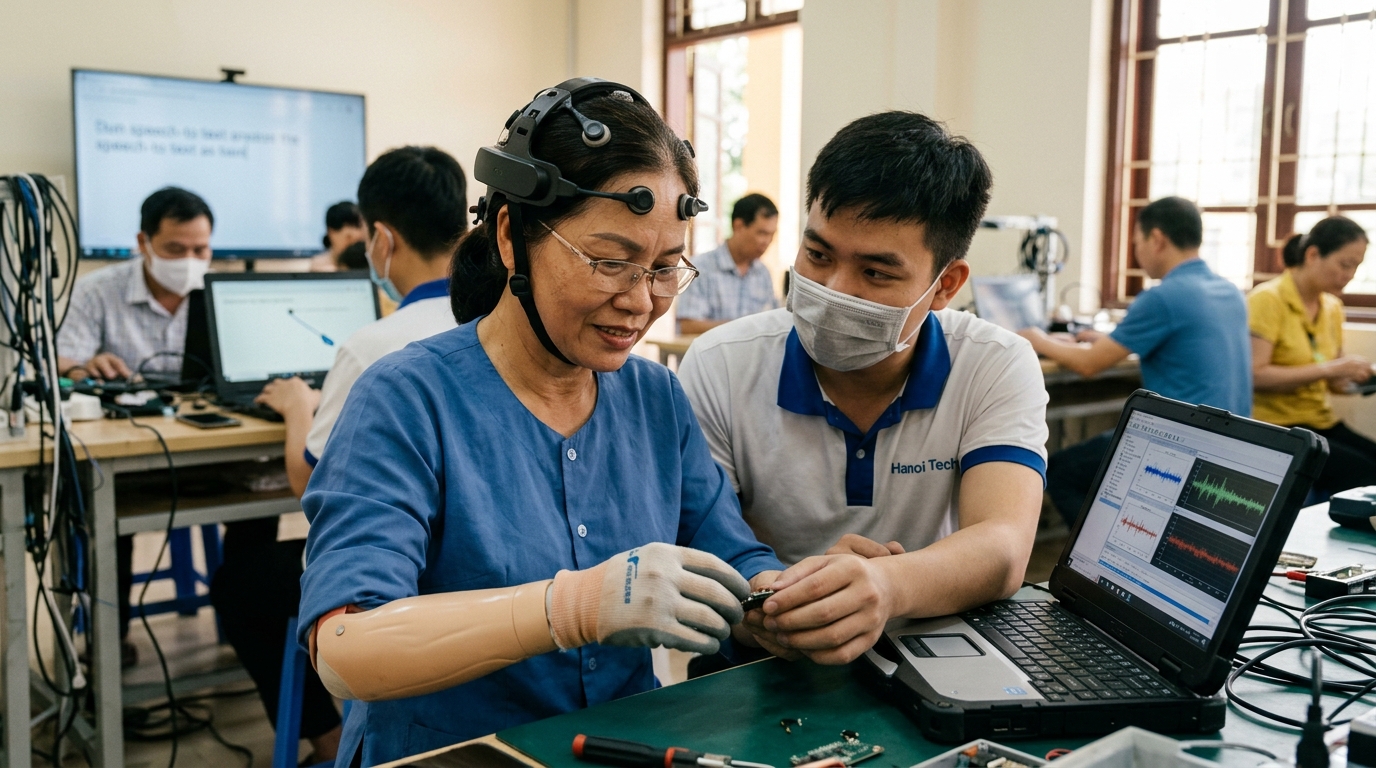
In the bustling heart of Hanoi’s Thanh Xuan district, a quiet revolution is unfolding. Where technology once loomed as an impenetrable barrier for the visually impaired, Artificial Intelligence (AI) is now emerging as a bridge to total autonomy. The new educational programs being implemented in the region are more than just IT classes; they are workshops of liberation, where code is transformed into voice and image analysis into vision.
Beyond the Screen Reader: A New Era of Accessibility
For decades, digital access for the visually impaired was largely confined to basic screen readers. While groundbreaking at the time, these tools often failed to capture the rich, visual-heavy context of the modern web. The dawn of Generative AI and multimodal models has fundamentally shifted the paradigm. In Thanh Xuan, students are learning to harness tools that can describe a photograph in vivid detail, summarize complex documents, and navigate intricate software interfaces through natural language commands.
The curriculum focuses on "prompt engineering" tailored specifically for accessibility needs. Participants learn how to ask the right questions to AI models, effectively turning their smartphones into personal assistants that "see" and interpret the world around them in real-time. This doesn't just improve daily logistics; it drastically boosts self-confidence, allowing individuals to feel like equal participants in a rapidly digitizing society.
The Thanh Xuan Initiative: A Case Study in Empowerment
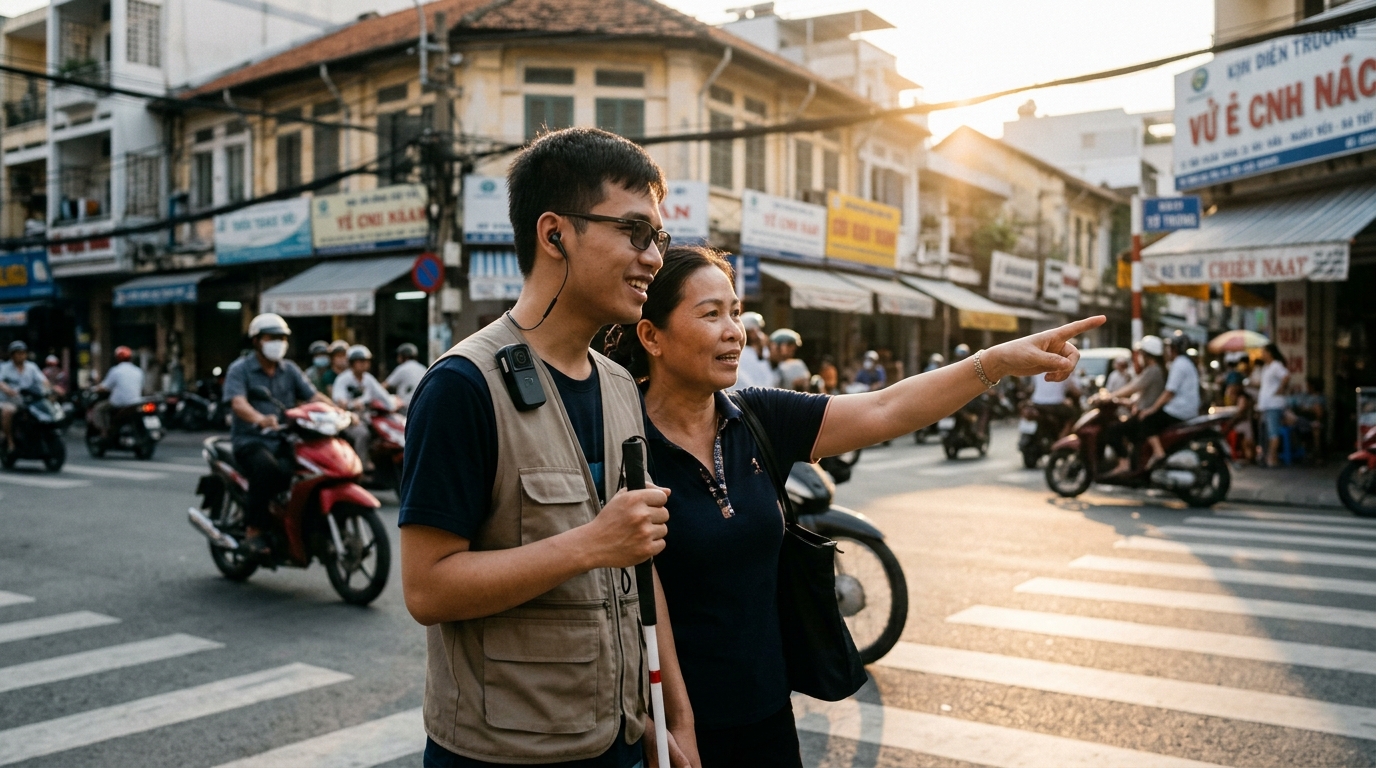
The program in Vietnam is far from theoretical. It includes practical exercises where users solve everyday challenges using AI-powered applications. From identifying currency and reading medication labels to navigating Hanoi’s chaotic streets via AI-enhanced GPS systems, technology is becoming the 21st-century cane. The initiative's success lies in its peer-to-peer approach: many instructors are themselves visually impaired, possessing a deep understanding of the specific hurdles their students face.
According to participant testimonials, the most profound change is psychological. "Before AI, I felt the world was shrinking. Now, I feel I can explore again," one student remarked. This sense of agency is vital for social integration. When a visually impaired person can read a menu at a restaurant or respond to a professional email without sighted assistance, the power dynamic of dependency shifts fundamentally.
The Ethics of Accessibility in the Algorithmic Age
Despite the optimism, the Thanh Xuan case study raises critical ethical questions. Access to high-tier AI is neither free nor universal. There is a looming risk of a new "digital divide" within the disability community: those with the means and education to leverage AI versus those left behind. Furthermore, reliance on algorithms developed primarily in Western contexts raises issues of cultural and linguistic nuances for countries like Vietnam.
Ethically, the tech industry bears the responsibility to ensure that accessibility is not a "premium feature" but a fundamental human right. The Vietnamese example demonstrates that with proper state support and community engagement, AI can be the ultimate tool for democratization. The challenge for the future lies in scaling these programs so that every person with a disability, regardless of geography or economic status, can perceive the world through the lens of artificial intelligence.
- AI integration in disability education significantly reduces social isolation.
- Multimodal models provide real-time visual interpretation for the blind.
- Localizing AI tools is essential for the success of inclusion programs.
- AI ethics must prioritize universal access over profit-driven models.