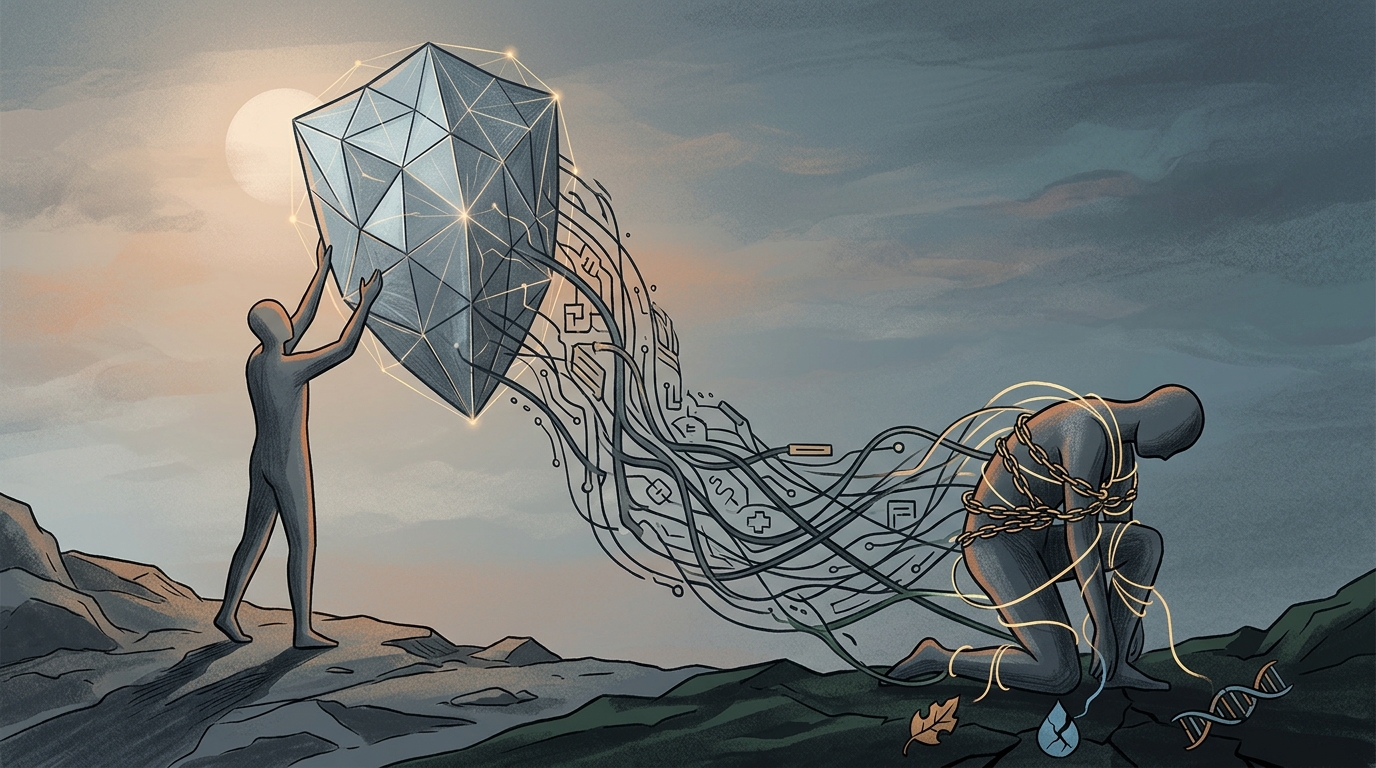
The summer of 2026 will be remembered in the history of American higher education not for a scientific breakthrough, but for an ethical collapse that began within the halls of Brown University. The revelation of an extensive network of students using advanced AI models to bypass any notion of original work is not merely an incident of plagiarism; it is a symptom of a deeper crisis threatening the foundations of Western education.
Anatomy of a Foretold Scandal
It all began when a Political Science professor noticed a disturbing uniformity in term papers. Despite the fact that the texts passed traditional plagiarism checks, the structure, tone, and absence of "human error" or original synthesis of ideas raised suspicions. The ensuing investigation revealed that over 40% of students in certain departments were using specialized AI "wrappers" designed to mimic the user's personal style, making detection nearly impossible with existing tools.
The statement by Professor James Miller, who led the internal probe, rings as a warning for the future:
"The problem isn't just that students are cheating. The problem is that they are choosing intellectual suicide. We cannot choose to become idiots and expect our society to continue functioning."
Intellectual Atrophy and "Societal Failure"
The criticism emanating from the Brown academic community goes beyond mere punishment. Analysts speak of a "prompt generation," where the ability to formulate a question for a machine replaces the capacity for deep analysis and critical thinking. If future leaders, lawyers, and scientists cannot synthesize an argument without an algorithm's help, then the very structure of democratic decision-making is at risk.
- The Collapse of Assessment: Traditional take-home assignments are now considered obsolete, as AI can produce PhD-level essays in seconds.
- The Crisis of Trust: The relationship between teacher and student is fracturing, turning education into a "cat and mouse" game with digital tools.
- Social Inequality: Access to more sophisticated, paid AI models creates a new divide among students.
Institutional Response: A Return to Roots?
Brown University now faces a dilemma: accept AI as an integral tool or impose draconian measures. There is already talk of completely abolishing out-of-class assignments and returning to oral exams and supervised, handwritten tests. However, many argue that this is a regression that fails to acknowledge the new reality of the labor market.
The crisis at Brown reflects a global challenge. Technology is evolving at a pace that human learning cannot match. If education loses its ability to cultivate the mind, the result will not just be a generation with bad grades, but a society incapable of perceiving the complexity of its world. The "ease" of AI may prove to be the most expensive price the human mind has ever been asked to pay.