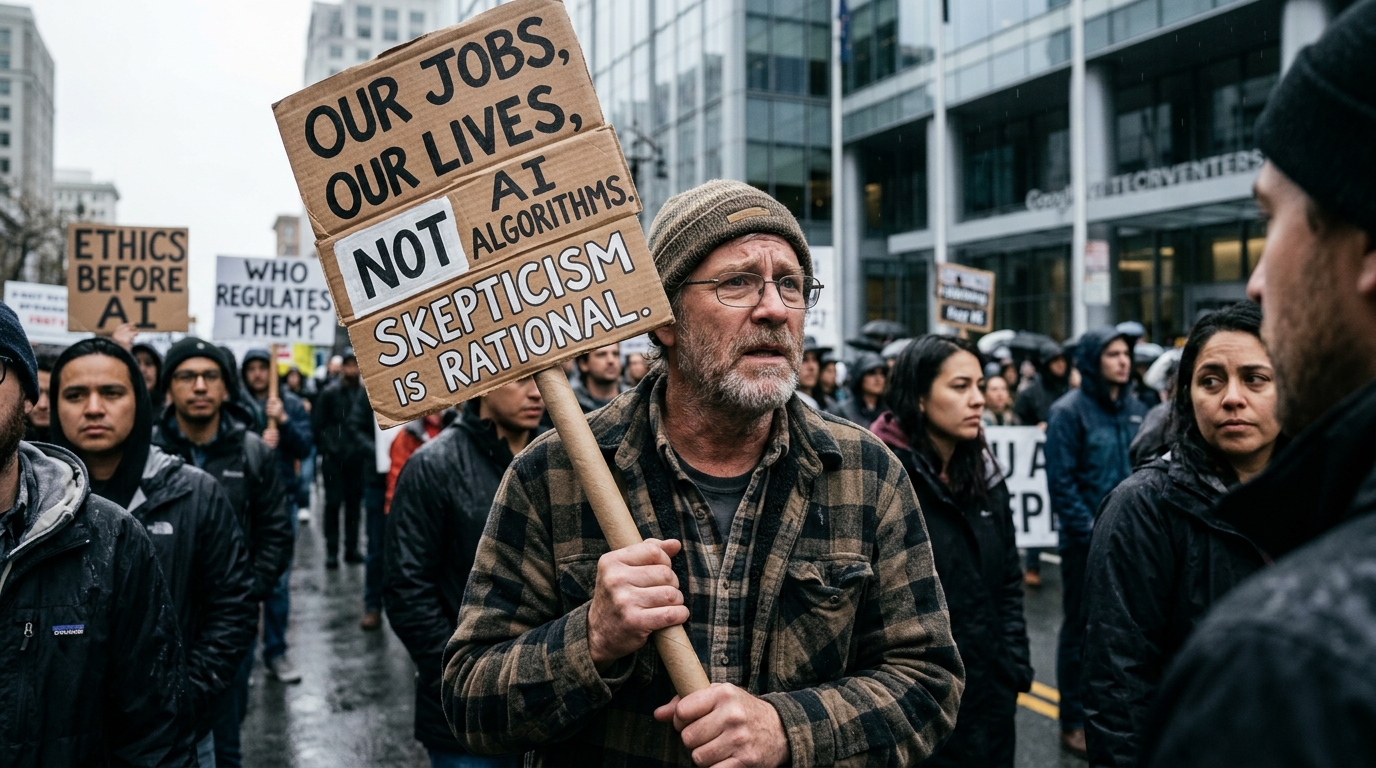
The era of unbridled enthusiasm for Artificial Intelligence appears to be drawing to a close in the United States. While 2023 and 2024 were characterized by a "gold rush" surrounding large language models, 2026 finds the American public in a state of profound skepticism. According to recent analyses, including a detailed report by Le Monde, AI is no longer viewed merely as a miraculous tool of progress, but as an existential threat to both the environment and social cohesion.
This shift is not accidental. It is the result of accumulated fatigue from Silicon Valley promises that have not been accompanied by commensurate benefits for the average citizen. On the contrary, the impact on daily life is becoming increasingly visible, ranging from rising electricity bills to growing uncertainty in the workplace.
The Environmental Toll: An Energy 'Black Hole'
One of the primary points of friction is the staggering energy consumption of the data centers required to train and operate AI. American citizens, particularly in states like Virginia and Arizona, are witnessing vast tracts of land being converted into server warehouses that devour electricity and water for cooling. The recent pivot by tech giants toward nuclear energy—exemplified by deals to restart decommissioned reactors—has sparked a complex mix of reactions.
- Data center energy consumption is projected to double by 2030.
- Water usage for cooling AI systems is causing local shortages during periods of drought.
- Carbon emissions from Big Tech firms are rising despite their "net-zero" pledges.
This environmental burden is no longer a theoretical concern. It has become a potent political issue that unites environmentalists and conservative voters worried about energy security and the cost of living. The perception that "we are burning the planet to generate fake images and mediocre text" is gaining significant traction among the masses.
Job Insecurity and the Erosion of the Middle Class
If energy is one prong of the backlash, employment is the other—and perhaps the more painful one. AI is no longer just replacing manual labor; it is aggressively entering sectors previously considered "safe," such as law, software engineering, graphic design, and corporate administration. The mass layoffs in the tech sector over the past two years have been interpreted by the public as a prelude to a wider displacement of human talent by algorithms.
"We are not witnessing a technological revolution that creates new jobs, but a process of automated impoverishment," notes a labor relations analyst.
Distrust is exacerbated by the fact that productivity gains from AI appear to be flowing exclusively to corporate shareholders, while workers experience intensification of labor and wage stagnation. The sense of injustice is palpable, fueling movements such as the Hollywood creators' strikes and protests by tech workers themselves.
Political Fallout and the Future of Regulation
The U.S. government is under increasing pressure to intervene. While Washington fears falling behind in the strategic competition with China, domestic popular discontent is forcing lawmakers to consider stricter regulatory frameworks. Discussions regarding "AI taxes" or mandatory labeling for machine-generated content have moved from the fringe to the mainstream political discourse.
In conclusion, AI is facing a crisis of legitimacy. To survive and thrive, the tech industry must prove that AI can be environmentally sustainable and socially equitable. Otherwise, the backlash described by Le Monde could transform into a permanent state of technological skepticism that will define the political agenda for years to come.