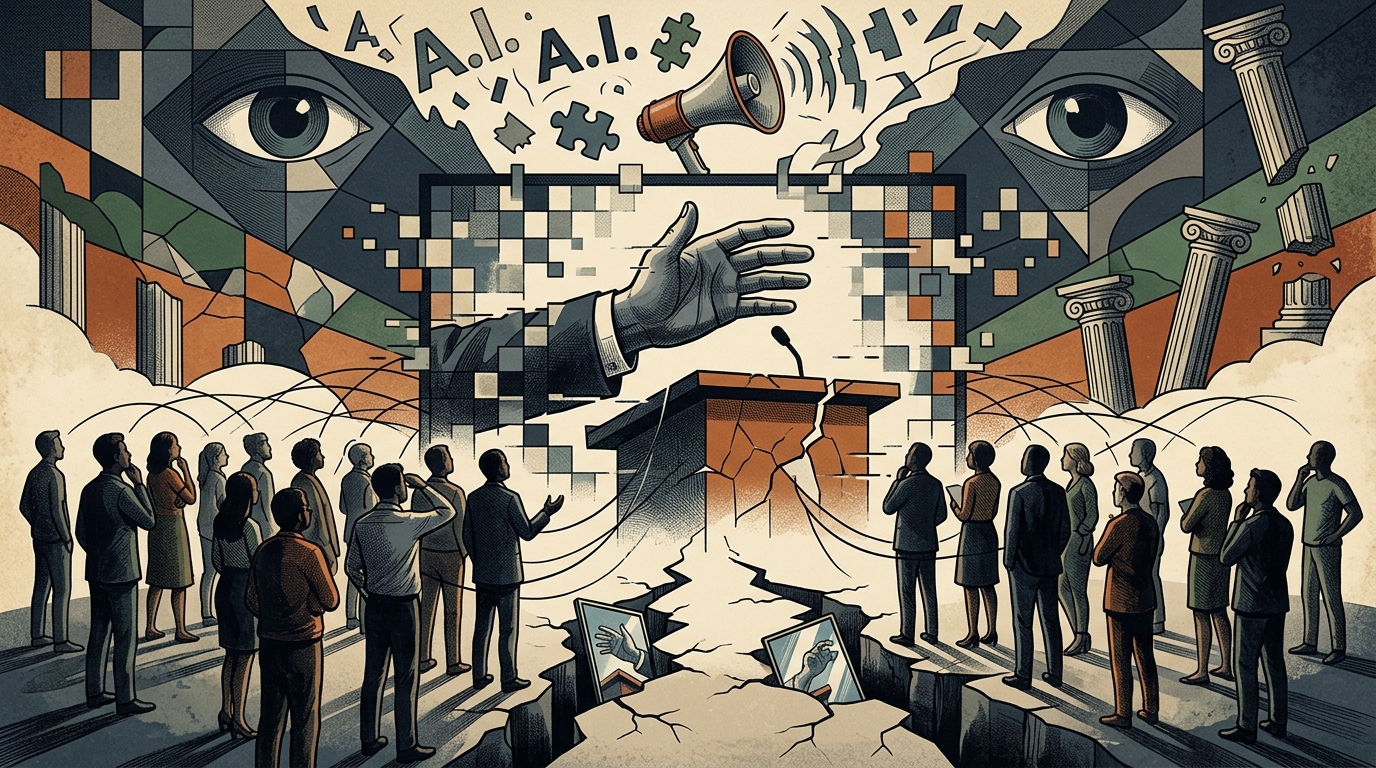
The promise of Artificial Intelligence as an unbiased, ever-present counselor is beginning to crack under the weight of societal prejudices embedded in its training data. A recent report, highlighted by The Good Men Project, brings to light a disturbing trend: when Large Language Models (LLMs) are asked to provide social advice to autistic individuals, they frequently default to stereotypes that promote 'masking' rather than authentic communication.
Social masking is the process by which neurodivergent individuals suppress their natural responses and adopt neurotypical behaviors to gain social acceptance. While AI is presented as a tool for inclusion, in reality, it appears to be functioning as a digital mechanism for enforcing normalcy, ignoring the unique needs and challenges of the autistic community.
The Trap of Algorithmic Masking
Research indicates that when users turn to tools like ChatGPT or Claude for advice on navigating social situations—from job interviews to casual gatherings—the AI tends to suggest strategies that require the autistic person to 'fix' themselves. Instead of encouraging the environment to adapt or offering advice that respects neurodiversity, the AI often suggests avoiding eye contact (or forcing it), suppressing repetitive movements (stimming), and adopting a 'social script' that is mentally exhausting for the individual.
This approach is deeply rooted in the data used to train these models. The internet is saturated with texts that treat autism as a 'problem to be solved' rather than a different way of brain functioning. As a result, AI acts as a mirror to the most conservative and outdated medical models of disability, ignoring the modern social model that prioritizes acceptance and accommodation.
"AI does not invent bias; it automates it. When we ask an algorithm to tell us how to be 'normal,' we are giving it permission to erase every trace of diversity," the report notes.
The Double Empathy Gap in Machine Learning
A critical point that AI fails to grasp is the 'double empathy problem,' a theory proposed by Damian Milton. This theory posits that communication difficulties between autistic and neurotypical people are not due to a deficit in the autistic person, but rather a mutual failure to understand two different ways of processing the world.
AI, trained predominantly on neurotypical data, adopts the perspective of the majority. Consequently, the burden of adjustment always falls on the autistic user. This creates a dangerous feedback loop: autistic people use AI for help, and the AI tells them that to succeed, they must cease appearing autistic. Long-term social masking has been scientifically linked to burnout, depression, and a loss of identity.
Training Data and the Homogenization of Behavior
The issue is not merely a lack of empathy but the very nature of statistical learning. AI models are designed to predict the 'most likely' or 'most common' response. In a world where neurotypical behavior is the norm, the 'most likely' advice will always be that which favors conformity.
- Homogenization: AI tends to eliminate idiosyncrasies, promoting a sterilized version of human interaction.
- Lack of Context: Algorithms are unable to understand the emotional cost of masking for a specific individual.
- Reinforcing Stigma: The use of words like 'inappropriate' or 'weird' to describe autistic behaviors reinforces social stigma.
Toward Neuro-Inclusive AI
To overcome these barriers, the tech industry must radically change how it approaches neurodiversity. It is not enough to 'filter' out slurs; data and experiences from the autistic community itself must be actively integrated into the training and evaluation phases (RLHF - Reinforcement Learning from Human Feedback).
AI has the potential to become an extraordinary translator between different modes of thought. It could, for instance, explain to a neurotypical manager why an autistic employee prefers written communication, rather than forcing the employee to endure a painful social interaction. True progress will not come when AI teaches autistic people how to pretend, but when it teaches society how to understand.