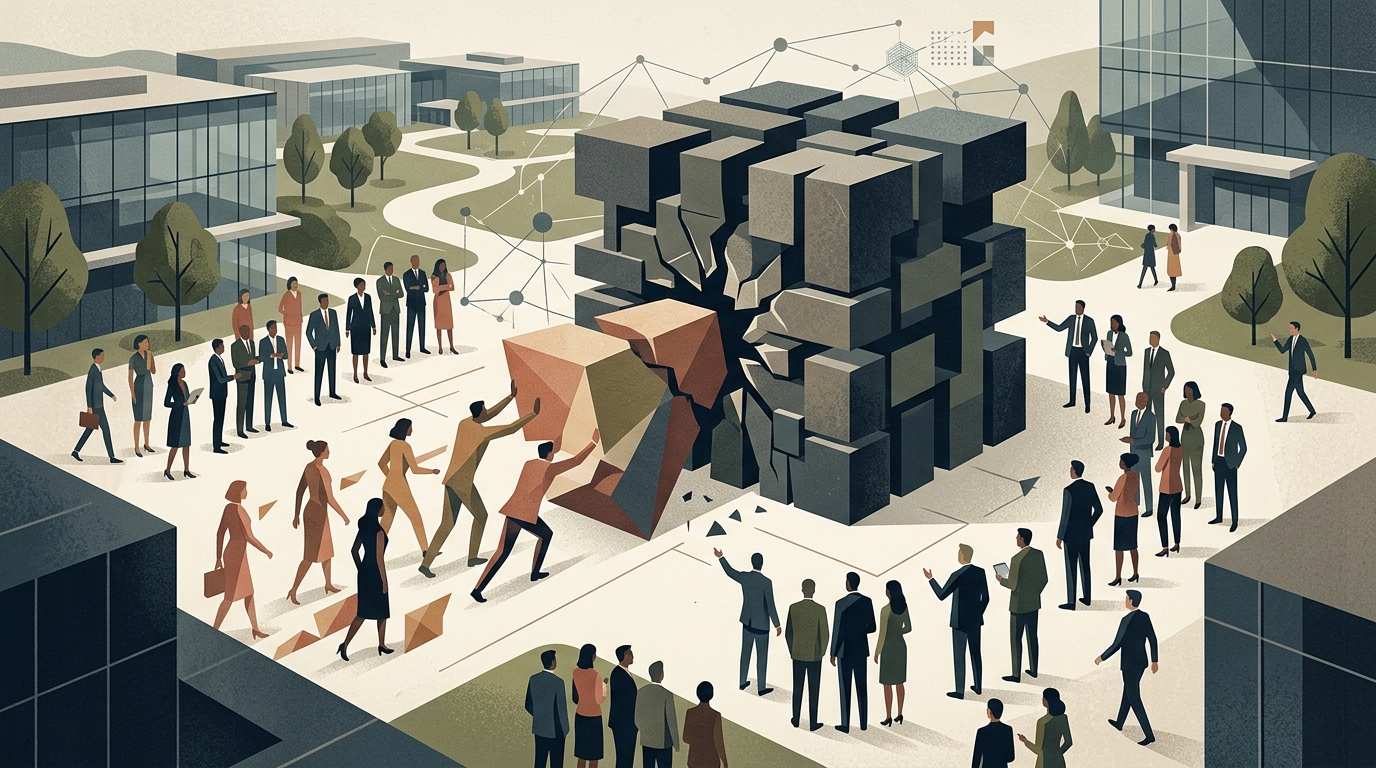
In the 21st century, the old adage "if you're not paying for the product, you are the product" has evolved into something far more complex and economically brutal. As we navigate through 2026, the value of personal data is no longer measured solely in targeted advertisements; it is the cornerstone upon which Artificial Intelligence empires are built. Every click, every post, every medical record, and every GPS coordinate feeds the Large Language Models (LLMs) that promise to reshape the world. Yet, a key factor is missing from this equation: the compensation of the data producer.
The Invisible Mining of Digital Gold
The process of data collection has transformed into a form of digital mining. Big Tech companies act as the modern-day "barons" of this industry, extracting information from our daily activities. According to recent market analyses, the average digital footprint of a user in the US and Europe is worth hundreds of dollars annually to advertising platforms. However, with the advent of Generative AI, this value has skyrocketed. Our data is no longer just statistics on shopping habits; it is the "raw material" for the creation of intelligence.
The problem lies in the asymmetry of information and power. While corporations use sophisticated algorithms to price our data for sale to third parties or internal development, the average user remains in the dark. "Free" access to an email service or a social network is considered a sufficient exchange. However, economic reality shows that the profit generated from this data far exceeds the cost of providing these services.
AI and the "Theft" of Experience
The rise of AI in 2025 and 2026 has brought a new ethical and economic crisis to the forefront. The models developed by OpenAI, Google, and Meta were trained on vast amounts of human-generated data—authors, artists, and everyday users writing reviews or participating in forums. This "collective intelligence" has been privatized. Companies are converting our knowledge into products that they then sell back to us in the form of subscription-based AI services.
- Social media platforms have updated their terms of service to allow the training of AI models on user data without additional consent.
- Data brokers are now selling data packages specifically tailored for "fine-tuning" algorithms, with prices reaching into the millions.
- The concept of "data as labor" is gaining traction, arguing that users should be paid for their digital contributions.
Toward a New Data Social Contract
There are movements to overturn this model. In the European Union, the discussion regarding "Data Dividends" has been reignited. The idea is simple: if a company profits from your data, a portion of that profit should return to you or to society through taxation or direct payments. Some startups are attempting to create "data wallets" where users can choose which data they share and get paid in micro-cryptocurrencies.
"The current structure of the digital economy is feudal. We are the serfs tilling the data fields, and the tech giants are the lords reaping the entire harvest," says a digital rights analyst.
However, the challenges are immense. How do you price a single email? How do you ensure privacy when data becomes a commodity? The solution may not lie in individual payments but in a collective renegotiation of the value of our digital existence. If we do not act now, the gap between those who own the algorithms and those who feed them will become unbridgeable.
Conclusion: The Need for Transparency
2026 must be the year of transparency. Users are demanding to know not just *what* is being collected, but *how much* it is worth. The AI economy cannot continue to rely on one-sided exploitation. Whether through legislation or new technological standards, the redistribution of wealth generated from data is the next great challenge for digital democracy. Your life has value—it is time to claim it.