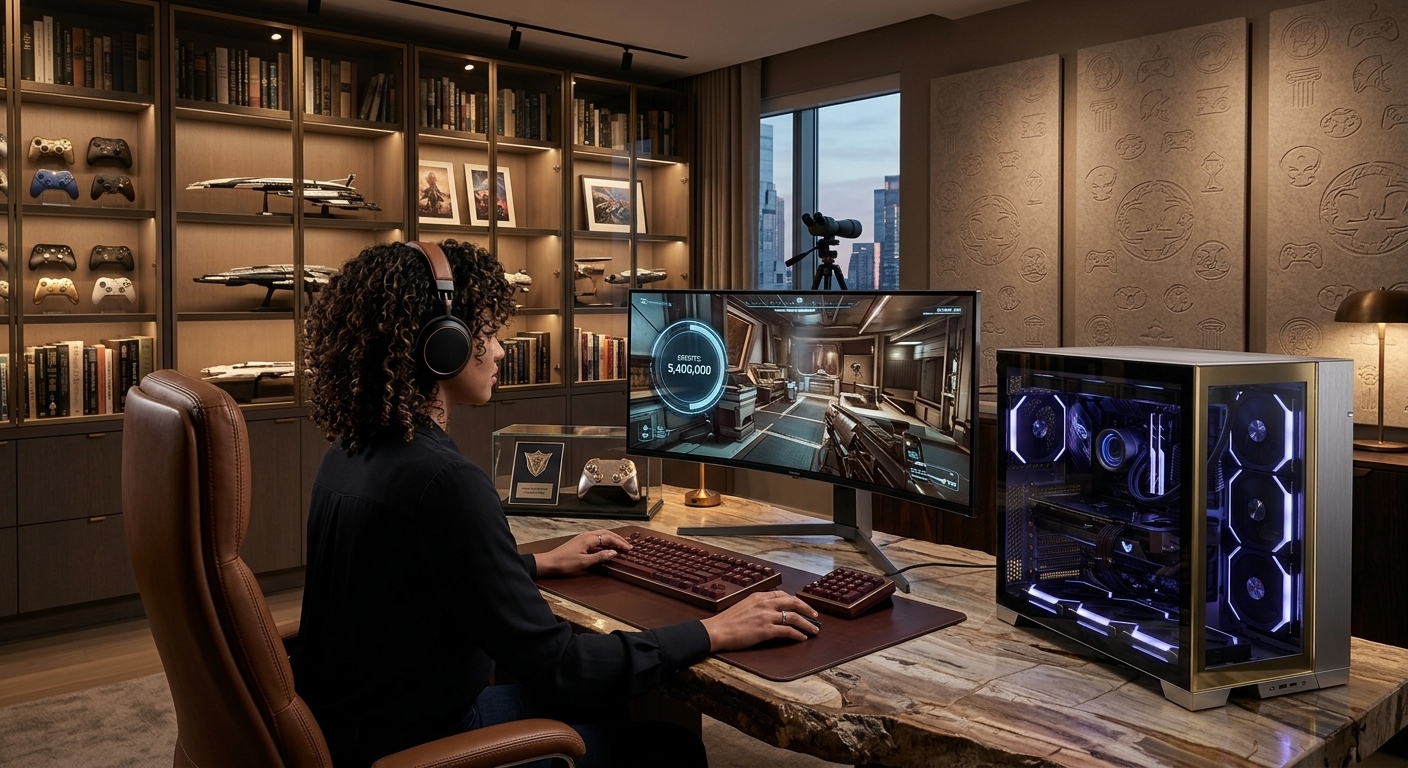
Once upon a time, gaming was considered the most cost-effective form of entertainment per hour of engagement. By purchasing a single game, a user secured dozens or even hundreds of hours of leisure without additional costs. Today, in 2026, this equation has been completely inverted. The video game industry is undergoing a structural cost crisis that is being passed directly to the consumer, transforming a once-universal hobby into an expensive pursuit for the few.
The AAA Budget Crisis and the $70 Barrier
The primary cause of the rising prices lies in production costs. So-called AAA titles—the industry's blockbusters—now require budgets exceeding $200 or even $300 million. The demand for photorealistic graphics, top-tier voice acting, and massive open worlds has led to an "arms race" among major studios like Sony, Microsoft, and Rockstar. To recoup these costs, companies established the $70 / €80 price point as the new standard, yet even this is proving insufficient.
The result is the introduction of aggressive monetization methods. Games are no longer sold as finished products but as "services" (Games as a Service). Microtransactions, battle passes, and DLCs (downloadable content) are now essential for a game to be deemed profitable. This creates a paradox: the player pays the highest entry price in history, only to find themselves in an environment that constantly asks for more money.
The Impact of AI on Hardware
Another critical factor is the global semiconductor market. The AI explosion has shifted the priorities of chip manufacturers like NVIDIA and TSMC. Chips destined for data centers and AI model training offer massive profit margins compared to graphics cards (GPUs) for gamers. This means that gaming hardware production takes a backseat, keeping component prices at astronomical levels.
Consoles have not remained unscathed. While console prices traditionally decreased over time, the current generation (PS5, Xbox Series X) saw the opposite: mid-cycle price hikes. The arrival of "Pro" versions in 2025 and 2026, with prices approaching €800—often without including basic accessories—confirms that gaming hardware is now moving into the premium electronics category.
The Subscription Trap and the Loss of Ownership
To mitigate high purchase costs, many players turned to subscription services like Xbox Game Pass and PlayStation Plus. However, 2026 finds these services significantly more expensive than they were two years ago. Companies, having established their user base, are implementing successive price increases, knowing that players are now locked into digital libraries they do not actually own.
- The gradual elimination of physical media (discs) is destroying the second-hand game market.
- Subscription fees are rising by 15-20% annually, outstripping inflation.
- Dependence on cloud gaming requires expensive high-speed fiber connections, adding further indirect costs.
In this landscape, the only hope for "democratic" gaming seems to be the indie scene. Smaller studios, unburdened by massive budgets, continue to offer innovative experiences at reasonable prices. However, for the average consumer who wants to follow pop culture trends and major titles, gaming now requires a budget that resembles hobbies like skiing or golf, rather than the carefree entertainment of previous decades.