For more than a decade, Silicon Valley's titans—Google, Microsoft, Meta, and Amazon—competed to showcase the most impressive "green" profile. Pledges of net-zero emissions, massive investments in wind farms and solar arrays, and a rhetoric that positioned technology as the planet's ultimate ally were the norm. However, the advent of Generative AI has violently shifted the landscape. The demand for computational power is growing at rates that the electrical grid simply cannot sustain, and the erstwhile apostles of clean energy are now turning to an old, proven, and environmentally controversial solution: natural gas.
The Insatiable Hunger of Artificial Intelligence
Training a Large Language Model (LLM), such as GPT-4 or Gemini, requires not just millions of programming hours, but vast amounts of electricity. Data centers hosting Nvidia's Graphics Processing Units (GPUs) operate at full throttle 24/7. According to Goldman Sachs analysts, a single ChatGPT query requires approximately ten times more energy than a standard Google search. This exponential surge in demand has created an "energy gap" that renewable energy sources (RES) are currently unable to fill on their own.
The primary hurdle for renewables remains intermittency. The sun doesn't always shine when AI processing demand peaks, and the wind doesn't blow with constant intensity. For data centers, baseload power stability is a matter of survival. Without a cheap and continuous flow of energy, billion-dollar investments in AI risk sitting idle. This is where natural gas enters the frame. It is considered a "bridge fuel" because it emits less carbon dioxide than coal, yet it remains a fossil fuel that contributes to climate change.
The Pivot of Microsoft and Google
Recent sustainability reports from Google and Microsoft have revealed a harsh truth: their greenhouse gas emissions are rising rather than falling. Google admitted its emissions have surged by nearly 50% since 2019, primarily due to data center expansion. Microsoft, despite its commitment to become "carbon negative" by 2030, saw its emissions increase by 30% since 2021.
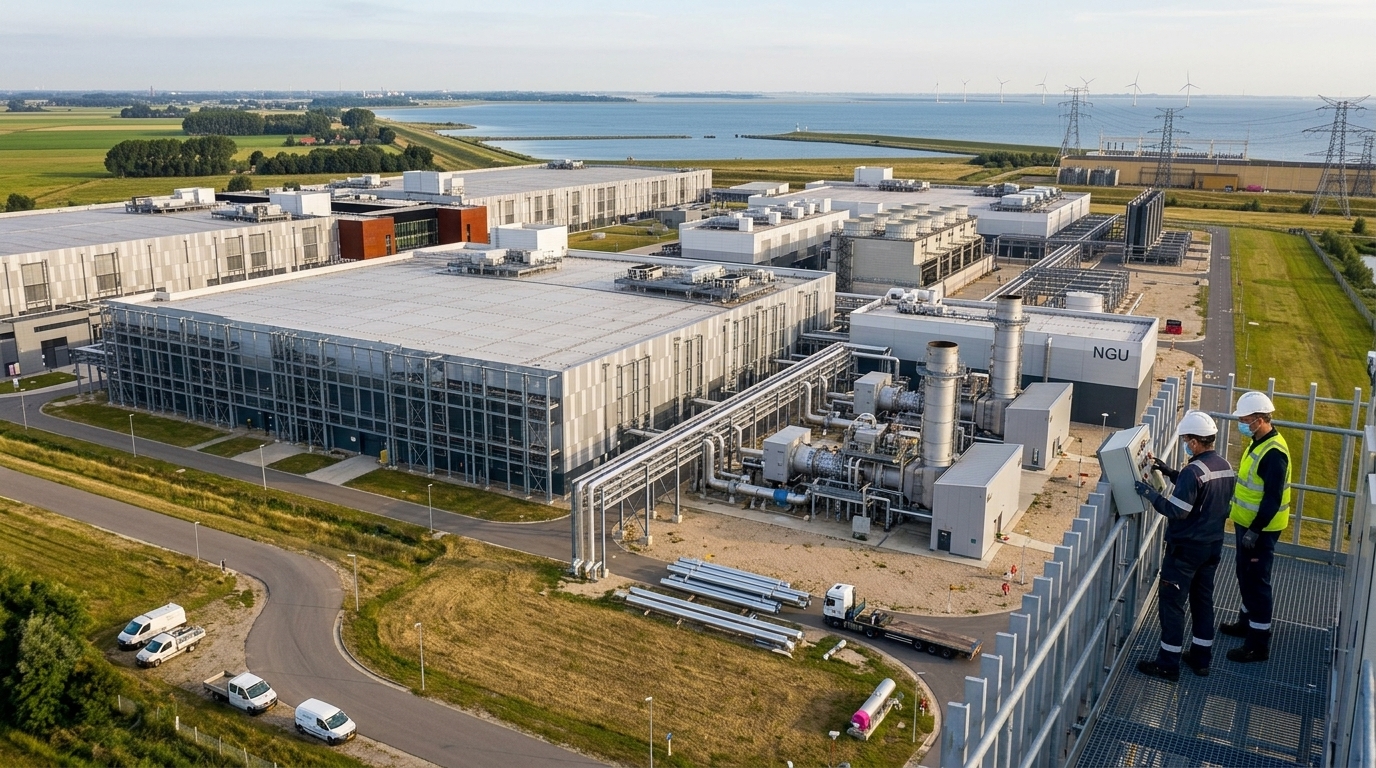
In many instances, these companies are now pressuring US utility providers to keep natural gas plants operational or even build new ones. In North Carolina and Virginia—regions that serve as the heart of global data centers—local power providers are revising their long-term plans, adding new gas units to meet Big Tech's demands. The irony is palpable: the very companies funding climate tech are becoming the largest customers of fossil fuels.
The Economic Stakes and the Nuclear Alternative
The turn to natural gas is not just a matter of necessity; it's a matter of cost. Building infrastructure for large-scale battery storage remains prohibitively expensive. Natural gas offers an immediate, cost-effective solution that allows companies to continue the AI race without interruption. However, a third path is gaining traction: nuclear energy. Microsoft's recent deal to restart Three Mile Island and Amazon's investments in nuclear reactors indicate that the industry is desperately seeking stable, carbon-free energy. But nuclear solutions take years to materialize. Until then, gas turbines will remain the "dirty" heart of the digital revolution.
Conclusion: The Clash of Idealism and Reality
The return to natural gas marks a moment of reckoning for Silicon Valley. It proves that the laws of physics and economics often override corporate manifestos. AI promises to solve the climate crisis through resource optimization, but for now, its very existence exacerbates the problem. The question is no longer whether Big Tech will remain "green," but whether the price of technological dominance is a permanent retreat from humanity's environmental goals.