The image of the laid-off software engineer desperately scouring LinkedIn for the next remote SaaS role has become a defining trope of the 2026 economy. Yet, while the world of "screen-based" work is tightening due to AI-driven automation and market saturation, another sector of the tech industry is starving for talent. It is the very foundation of the digital world: the physical infrastructure of data centers.
The Rise of the ‘Data Center Athlete’
According to a recent report by Fortune AI, talent CEOs are highlighting a staggering paradox. While there are approximately 81,000 annual openings for data center technicians, laid-off tech workers are largely ignoring them. These roles, often described as the "white-collar trade jobs" of the 21st century, can command total compensation packages reaching $300,000 when overtime, bonuses, and specialized certifications are factored in.
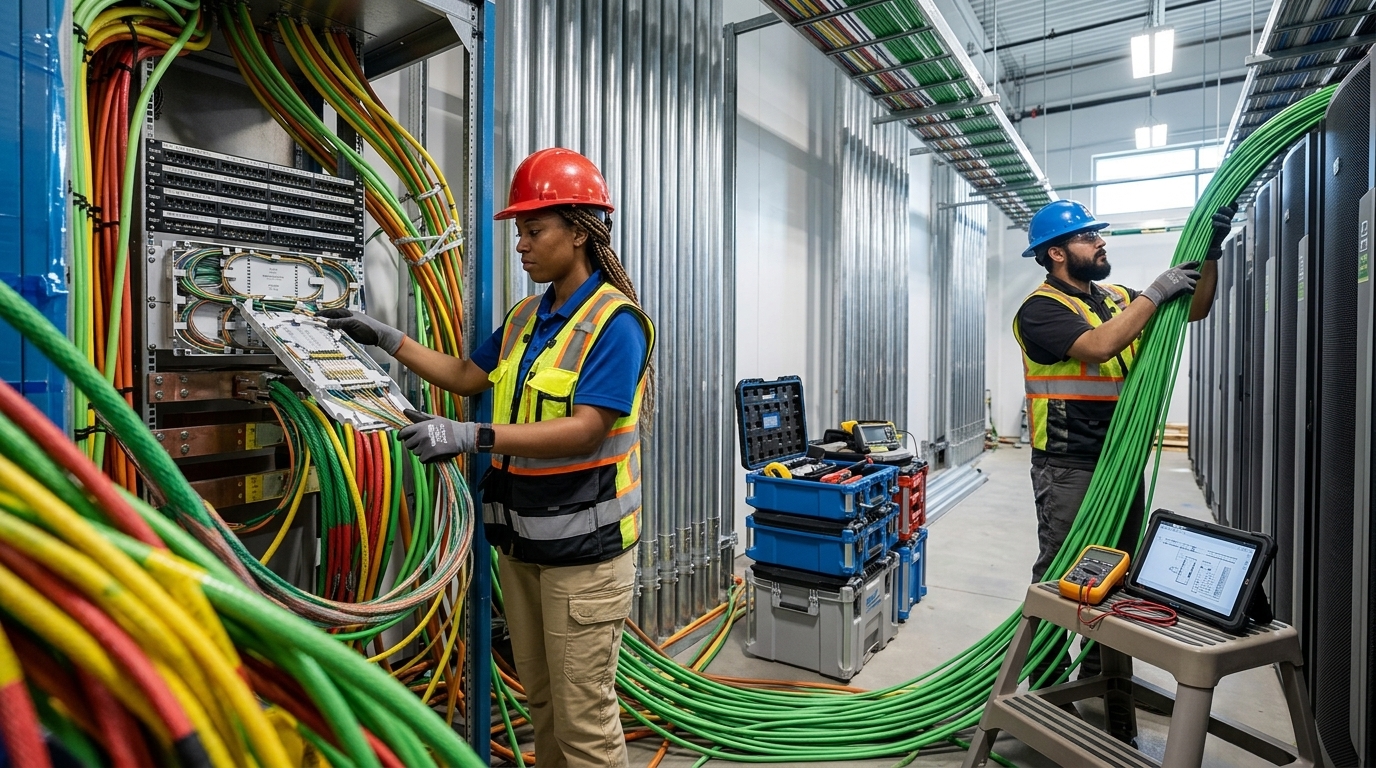
Why the hesitation? The answer lies in a deep-seated cultural perception of what "tech work" looks like. For decades, success in Silicon Valley was synonymous with intellectual labor performed in a climate-controlled office with artisanal coffee. Working in a data center requires physical presence. It requires getting your hands dirty—metaphorically and sometimes literally—installing servers, managing complex liquid cooling systems, and troubleshooting fiber optic arrays. It is a fusion of high-level engineering and traditional craftsmanship.
A $700 Billion Infrastructure Gold Rush
The demand is driven by the insatiable hunger of Generative AI. Tech giants like Microsoft, Google, and Amazon are pouring over $700 billion into building and maintaining new data centers globally. These "cathedrals of compute" cannot run themselves. They require a workforce that understands both the logic of the cloud and the physics of the ground.
- Power management and Uninterruptible Power Supply (UPS) systems.
- Maintenance of advanced liquid cooling for next-generation GPUs.
- Network security and physical infrastructure protection.
- Rack-level configuration and hardware diagnostics.
As one staffing CEO put it: "Many of the workers laid off from Meta or Salesforce could transition into these roles with minimal upskilling. But there’s a stigma. They view data center work as a step down, when in reality, it’s the most stable and lucrative career path in the current economy."
Breaking the Blue-Collar Stigma
The distinction between "office work" and "field work" is blurring. In the AI era, the ability to write code is becoming a commodity, but the ability to keep the machine that runs that code alive is becoming a premium skill. Salaries reflect this criticality. With base pay often starting at $100,000 and scaling rapidly in hubs like Northern Virginia, Dublin, or Singapore, the financial incentives are undeniable.
"This isn’t just a technician job; it’s the heart surgery of the digital age. If a server supporting a critical AI model goes down, the losses are measured in millions per minute," notes an industry analyst.
The shift represents a broader economic trend: the return to the physical. As digital assets become increasingly automated by AI, the value of physical assets and the people who maintain them rises. The data center is the new factory floor, but instead of steam and steel, it runs on electricity and light.
The Re-skilling Challenge
The question remains: how do we bridge the gap? Universities continue to churn out computer science graduates focused almost exclusively on software. There is an urgent need for certification programs and apprenticeships that teach "field skills." The transition from the keyboard to the multimeter and the network analyzer is not just a technical shift; it’s a psychological one. Those who recognize this shift early will be the winners in a labor market that no longer rewards those who refuse to adapt to the physical reality of the cloud.