At the dawn of the Generative Artificial Intelligence revolution, the narrative was simple and enticing: businesses could replace expensive human labor hours with algorithms costing just cents per query. However, as we move through 2026, reality is proving to be far more complex and, in many cases, economically unviable. The explosion in the costs of AI tools, from enterprise-level subscriptions to computational power consumption, is beginning to create significant gaps in corporate budgets, forcing CFOs to re-evaluate their strategies.
The Inference Trap and Hidden Charges
Most of the discussion surrounding AI costs focuses on model training. However, for businesses utilizing these tools, the real burden is the cost of execution, known as inference. Every time an employee asks a Large Language Model (LLM) to draft an email, analyze a spreadsheet, or write code, the company incurs a cost that, while appearing small per unit (token), transforms into an astronomical monthly bill when scaled across thousands of employees.
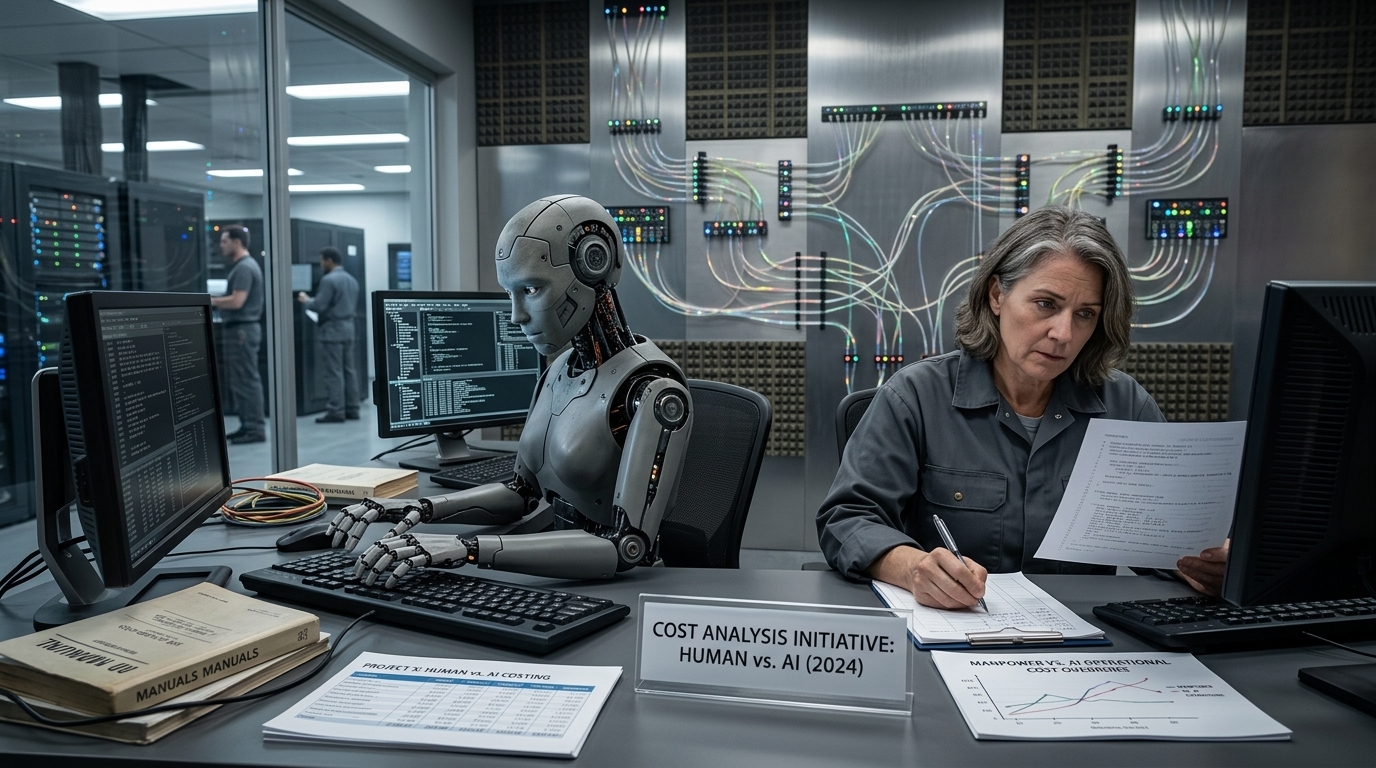
According to recent market analyses, the cost of maintaining a customized AI infrastructure can exceed traditional cloud services by 20% to 50%. Providers such as Microsoft, Google, and Amazon are raising their premium AI subscription prices to cover the massive costs of Nvidia's GPUs and the energy required to run data centers. In many cases, "hiring" an AI assistant now costs more than employing a junior staff member or an external contractor in countries with lower living costs.
The Human Element as a Quality Filter
Another factor driving costs upward is the need for continuous human oversight (Human-in-the-loop). Despite its progress, AI still produces hallucinations or inaccurate data. This means that for every task AI performs, an experienced professional is required to check, correct, and validate the output. Instead of AI eliminating jobs, it often adds an extra layer of complexity and cost.
- Verification Costs: The time a senior manager spends checking an AI's errors often costs more than if a human had written the text from scratch.
- Staff Training: Companies are investing millions in upskilling programs, which often have a slow return on investment (ROI).
- Security Risks: Ensuring that data fed into AI does not leak requires expensive cybersecurity and compliance systems.
Energy Crisis and Digital Footprint
We cannot ignore the environmental and energy costs. Running AI models requires vast amounts of electricity and water for cooling servers. With energy prices remaining volatile globally, cloud providers are passing these costs on to their customers.
"AI is not just code; it is physical resources transformed into probabilities. And these resources are becoming increasingly scarce,"as one industry analyst aptly put it. Companies committed to net-zero carbon footprints now face a dilemma, as AI usage jeopardizes their ESG goals, leading to indirect costs through fines or loss of investor confidence.
The Return to Realism and Strategic Choice
The current situation is leading to an inevitable market correction. Businesses are stopping the reckless adoption of every new AI tool and beginning to apply strict ROI criteria. The choice is no longer "AI or Human," but "which specific process is worth the cost of automation." In areas like first-level customer service, AI remains profitable. However, in fields requiring critical thinking, strategy, and creativity, humans remain not only qualitatively superior but also more economically efficient. The era of "free and unlimited" AI is over; the era of sustainable and measured use is now beginning.