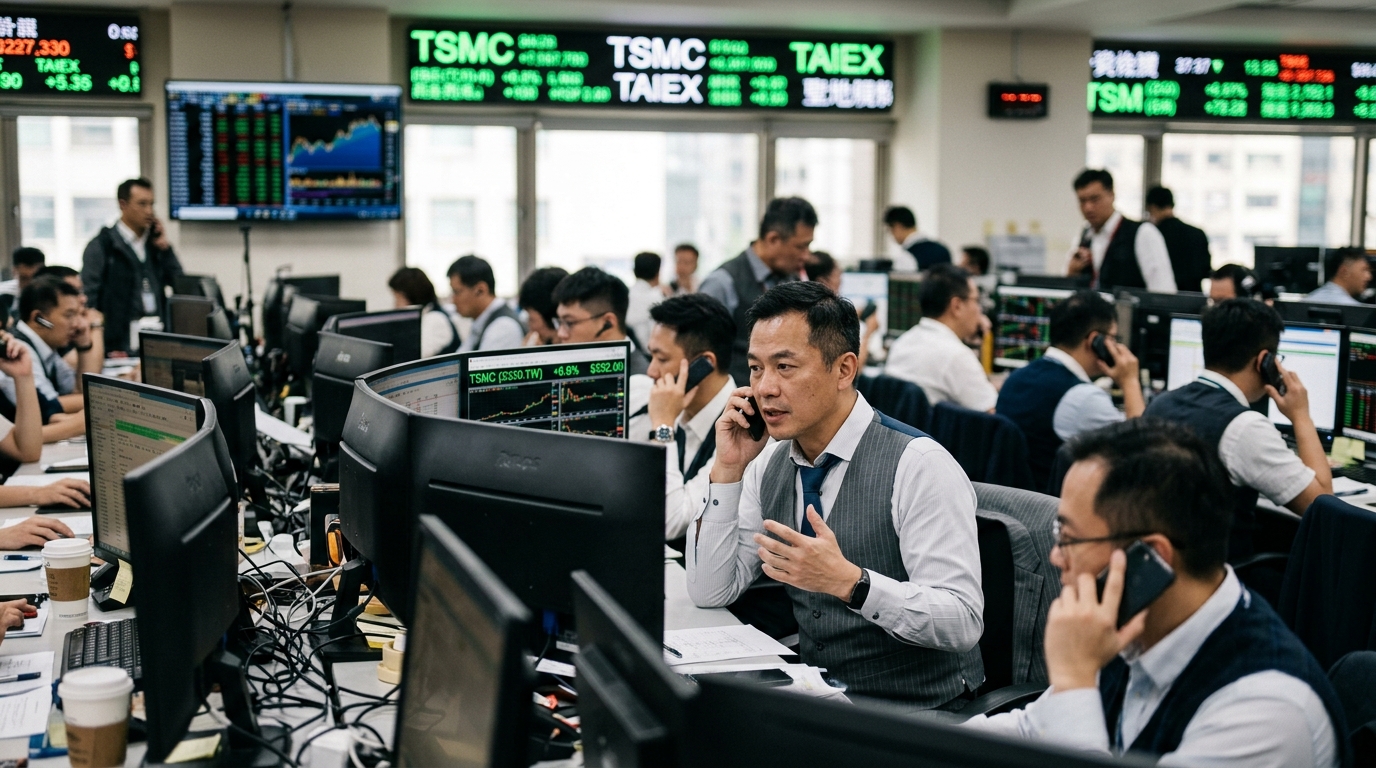
In a move that reshapes the investment landscape in East Asia, shares of Taiwan Semiconductor Manufacturing Co. (TSMC) surged on Friday, April 24, 2026. This development followed a landmark decision by Taiwan’s Financial Supervisory Commission (FSC) to lift long-standing restrictions on the percentage of a single security that domestic mutual funds are permitted to hold. The shift, described by analysts as a "historic pivot," is expected to unleash massive liquidity toward the global leader in semiconductor manufacturing.
Regulatory Reform and the 'TSMC Effect'
Until recently, Taiwanese regulations imposed strict diversification limits, preventing domestic funds from becoming overly concentrated in any single stock. However, TSMC's sheer dominance of the local market and its pivotal role in the global Artificial Intelligence (AI) boom had rendered these limits increasingly archaic. The FSC recognized that maintaining these caps was effectively forcing Taiwanese investors to seek returns abroad, depriving the domestic market of the opportunity to fully capitalize on the success of its "national champion."
According to estimates from JPMorgan Chase & Co., easing these limits could trigger capital inflows exceeding $6 billion. Institutional investors, who were previously forced to trim their TSMC holdings despite bullish outlooks, are now racing to rebalance their portfolios. The market responded instantly, with shares climbing over 4% in early trading on the Taipei exchange. This influx of domestic capital provides a sturdy floor for the stock's valuation at a time of global economic uncertainty.
Geopolitical Strategy and the 'Silicon Shield'
Beyond the purely financial metrics, this decision carries profound geopolitical implications. Taiwan relies on TSMC not just as an economic pillar, but as a core component of its national security—the so-called "Silicon Shield." By strengthening domestic ownership of the company, the Taipei government aims to stabilize TSMC’s capital base against potential pressures from international market volatility or geopolitical tensions with mainland China.
Analysts point out that as the U.S. and Europe strive to repatriate semiconductor production through massive subsidies like the CHIPS Act, Taiwan must ensure that TSMC remains inextricably linked to its home economic ecosystem. Lifting investment limits sends a clear signal: Taiwan is prepared to support its premier company with every available tool, including regulatory flexibility. It reinforces the idea that the company's success is synonymous with the island's prosperity and security.
Challenges and Concentration Risk
Despite the widespread enthusiasm, some economists are raising concerns about "concentration risk." TSMC already accounts for a disproportionately large share of the Taiex index. By allowing mutual funds to further increase their exposure, the fate of millions of Taiwanese savers is becoming even more tightly bound to the performance of a single corporation. Should the semiconductor industry face a sharp cyclical downturn or a disruptive technological shift, the repercussions for the domestic economy could be magnified.
However, the current insatiable demand for AI chips—with TSMC serving as the sole manufacturer for Nvidia’s and Apple’s high-end processors—appears to outweigh these fears for the time being. The market seems to be betting that TSMC is not just a stock, but a proxy for the future of the global digital economy. The company's ability to maintain its technological lead in 2nm and 1.4nm nodes remains the critical factor that will either validate or undermine the Taiwanese regulator's bold gamble.
Conclusion
The FSC's decision marks a new era for Taiwan’s capital markets. With TSMC at the center, the nation is choosing to embrace the monopolistic strength of its tech giant rather than constrain it. For investors, this translates to greater freedom and potentially higher returns. For the global economy, it serves as a potent reminder that the control of semiconductor manufacturing remains the most powerful currency of the 21st century.