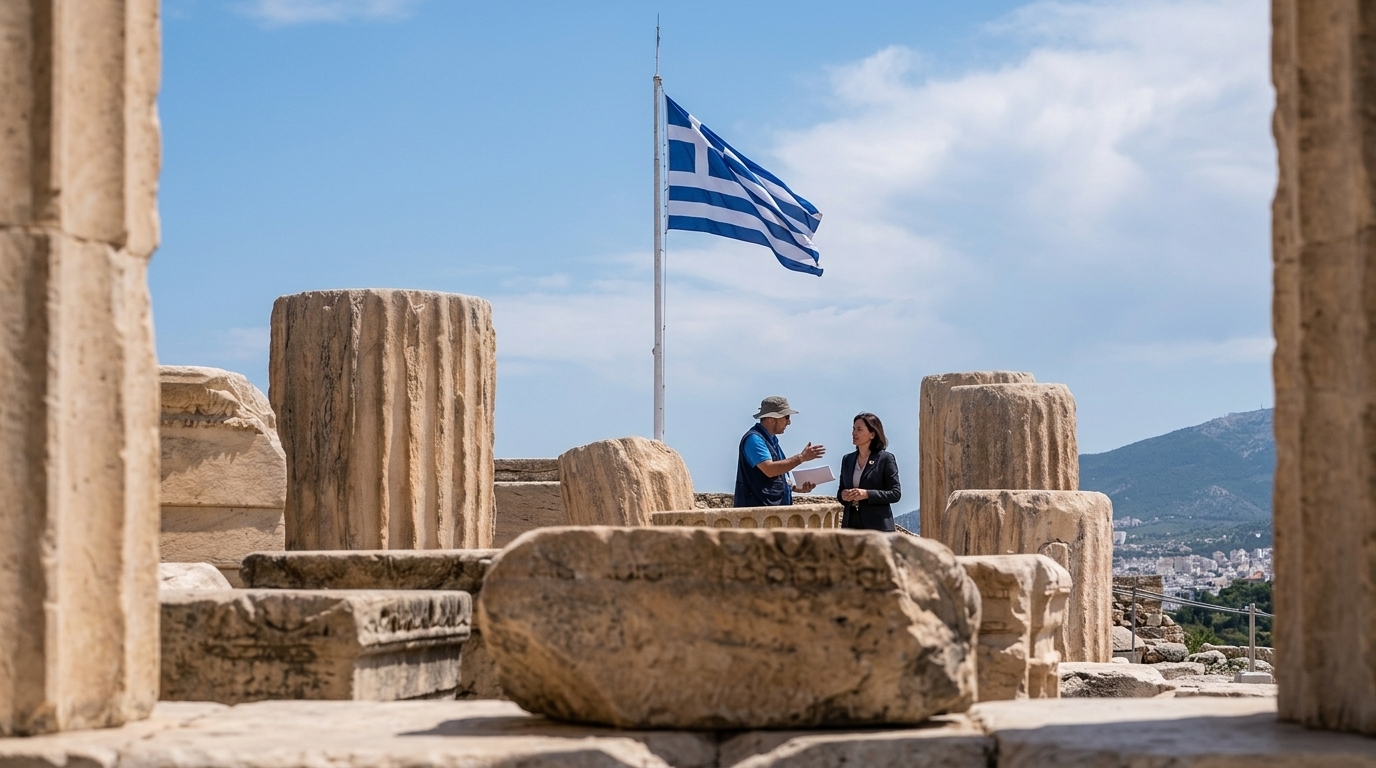
The Greek economy appears to have decisively stepped out of the shadows of the past decade, recording a stellar performance in Foreign Direct Investment (FDI) for the year 2025. According to the latest data from the Organisation for Economic Co-operation and Development (OECD), foreign capital inflows into Greece reached a historic high of $12.8 billion, marking an explosive 69% increase compared to the previous year. This represents the highest level recorded in the last twenty years, signaling a profound structural shift in how international markets perceive the country.
Dissecting an Investment Surge
This impressive growth is not accidental; it is the result of several converging factors. The recovery of investment-grade status, political stability, and the effective utilization of the Recovery and Resilience Facility (RRF) funds acted as catalysts for attracting capital. However, a qualitative analysis of the data reveals that the Greek economy is transforming, shifting its center of gravity from traditional consumption toward fixed capital investment.
The services sector and real estate remained the primary pillars of attraction. The property market, bolstered by the Golden Visa program (despite recent tightening) and intense interest in luxury tourism resorts, absorbed a significant portion of the investment. Simultaneously, the hospitality industry continues to attract international chains that view Greece as a stable and growing high-end destination.
Technology and Energy: The New Protagonists
Beyond the traditional strongholds of tourism, 2025 saw the consolidation of Greece as a technological and energy hub in Southeastern Europe. Investments in data centers by giants such as Microsoft, Google, and Amazon Web Services began to materialize into physical infrastructure and jobs, creating an innovation ecosystem that attracts smaller high-tech players as well.
"Greece is no longer treated as a problem to be solved, but as an opportunity to be seized. The steady fiscal path combined with the digital transformation of the state has reduced country risk to pre-crisis levels," OECD analysts noted in their report.
In the energy sector, the "green" transition has been a magnet for foreign capital. Large-scale wind and solar parks, as well as the first investments in offshore wind and green hydrogen infrastructure, demonstrated that Greece can play a leading role in Europe's energy autonomy. The country's strategic position as an energy gateway to the Balkans and Central Europe further strengthens this narrative.
Challenges and Structural Weaknesses
Despite the euphoria generated by the numbers, the OECD analysis also highlights areas requiring attention. The heavy reliance on real estate carries the risk of a "bubble" and exacerbates the housing crisis for locals. Furthermore, manufacturing, while showing signs of recovery through the pharmaceutical industry, still lags behind other European economies.
Bureaucracy, although significantly reduced due to digitalization, remains a hurdle at the level of local government and urban planning approvals. At the same time, the speed of judicial proceedings remains the "Achilles' heel" of the investment environment, as international investors seek legal certainty and swift dispute resolution.
The Challenge of Sustainability
The $12.8 billion record sets a high bar for the future. To maintain this momentum, Greece must invest in its human capital. The phenomenon of "Brain Gain"—the return of young scientists who left during the crisis—is essential to staff new investments in technology and industry. Linking education with the labor market and further reducing non-wage labor costs are the next critical steps for the government and social partners.
In conclusion, 2025 stands as a landmark year. Greece has managed to turn crisis into opportunity, but the real challenge begins now: dispersing this wealth into the real economy and ensuring that growth is inclusive and sustainable in the long run.