In a period of structural transformation for the Greek economy, OTE Group continues to project a signal of dominance, confirming its role as the undisputed telecommunications leader in Greece. Recent financial results and strategic management moves highlight a company that, despite market maturity, succeeds in unlocking new revenue streams, primarily through mobile telephony, ICT services, and the rapid expansion of Fiber to the Home (FTTH) networks.
The Strategy of Optical Superiority
The infrastructure battle is the central competitive arena for 2026. OTE, having invested billions of euros over the last decade, finds itself in a privileged position. FTTH penetration is increasing geometrically as consumers abandon traditional copper connections for high speeds. According to the latest data, the Group already covers a vast portion of the country, aiming for 3 million homes and businesses by the end of 2027.
The interesting element is OTE's ability to convert technological superiority into customer loyalty (churn reduction). Converged offerings—including fixed, mobile, and Cosmote TV content—have created an "ecosystem" that users are reluctant to leave. Furthermore, the surge in mobile data traffic, fueled by the full deployment of 5G, is boosting Average Revenue Per User (ARPU), offsetting pressures from inflation and energy costs.
The ICT Factor and the Recovery Fund
Beyond traditional telecommunications, OTE has evolved into an ICT services giant. Its participation in major digital transformation projects for the public sector, funded by the Recovery and Resilience Facility (RRF), is now a critical pillar of profitability. From digitizing state archives to implementing smart city solutions, OTE acts as the nation's primary technological arm.
"The digitalization of Greece is not just a policy goal, but a massive commercial opportunity that OTE is leveraging with consistency and expertise," market analysts note.
This strategy allows the Group to diversify its revenue, reducing dependence on household consumption, which is vulnerable to fluctuations in disposable income. Simultaneously, strengthening the B2B (Business to Business) sector provides long-term contracts with stable cash flows.
The Elephant in the Room: PPC’s Entry
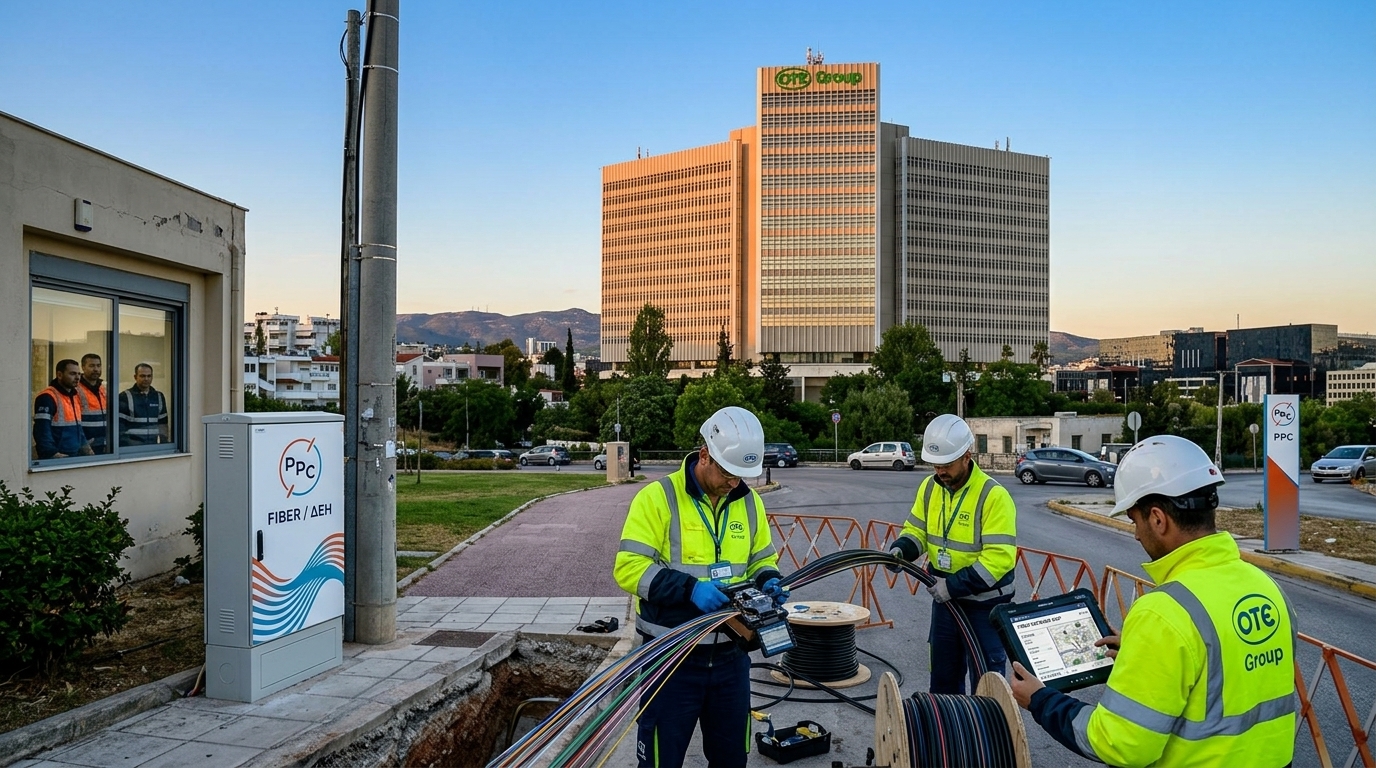
However, the horizon is not entirely clear. The entry of Public Power Corporation (PPC/DEH) into the wholesale telecommunications market via its subsidiary, FiberGrid, represents the most serious challenge in years. PPC, utilizing its existing power pole network, promises rapid fiber deployment at lower installation costs. OTE's management, however, remains composed. In recent briefings to analysts, Group executives emphasized that competition is welcome and that OTE's network quality and customer service serve as a protective shield.
The reality is that PPC is primarily targeting the wholesale segment, aiming to become the "provider of providers." This could squeeze OTE's margins in the wholesale sector, but it might also accelerate the country's overall transition to fiber, increasing the total market "pie." The question remains: will OTE manage to maintain its high EBITDA AL (After Lease) margins when a player of PPC's scale begins offering alternative interconnection routes?
Financial Discipline and Shareholder Rewards
Despite the challenges, OTE remains a "cash-generating machine." The shareholder reward policy, combining dividends and share buybacks, remains aggressive. This reflects Deutsche Telekom's confidence in the prospects of its Greek subsidiary. With the sale of Telekom Romania Mobile on the table, the Group is expected to focus even more on the Greek market, investing in new technologies like AI for service automation and network optimization.
In conclusion, OTE is entering a new phase of maturity. It is no longer the former state monopoly but a lean technological entity required to balance heavy infrastructure investments with the need for continuous innovation, in an environment where the traditional roles of utilities (energy and telecoms) are beginning to converge.