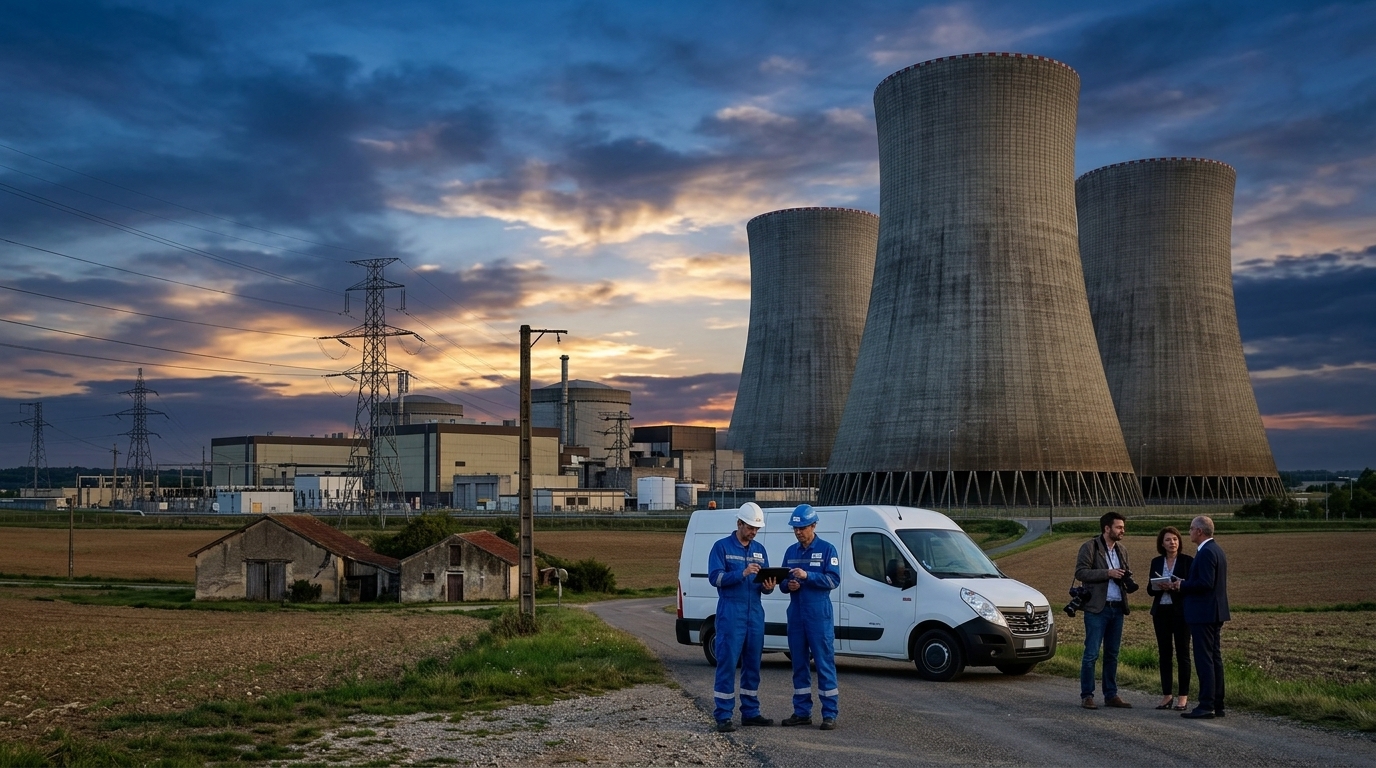
In an era where Europe is grappling with the aftershocks of the energy crisis and the specter of deindustrialization, Paris appears to be holding a formidable card. French Finance Minister Roland Lescure, in recent statements, did not merely stop at an optimistic GDP forecast; he provided a profound analysis of how nuclear energy serves as an economic bulwark. While Germany, the traditional engine of Europe, faces structural woes due to its reliance on natural gas and its decision to shutter its nuclear fleet, France seems vindicated in its long-standing commitment to the atom.
The Strategy of Energy Sovereignty
The French economy is not simply "lucky"; its current resilience is the fruition of a long-term strategy initiated in the 1970s with the Messmer Plan. Today, with approximately 70% of its electricity generated by nuclear reactors, France enjoys a price stability that its neighbors find impossible to match. Lescure emphasized that this "energy sovereignty" translates directly into a competitive advantage for French industry. When the cost per megawatt-hour remains predictable, businesses can plan decade-long investments—a rare luxury in today's volatile global landscape.
The Macron administration has made it clear that the nuclear renaissance is the cornerstone of the "France 2030" plan. The construction of six new EPR-2 reactors, with the potential for eight more, is not just about climate change. It is a purely economic instrument. According to the Finance Ministry, maintaining low energy costs is the only way to prevent energy-intensive industries, such as steel and chemicals, from fleeing to the United States or China.
The Comparative Advantage Over Berlin
The comparison with Germany is inevitable and, for Paris, highly instructive. The German economy, built for decades on cheap Russian gas, found itself exposed when geopolitical balances shifted. Conversely, France, despite the maintenance issues its EDF fleet faced in 2022, managed a swift recovery. Lescure argued that nuclear power provides a "baseload" that renewable energy sources, due to their intermittency, cannot yet guarantee without prohibitively expensive storage solutions.
This disparity is reflected in business confidence indices. While German conglomerates express concerns about the future of their production on European soil, France is recording historically high levels of foreign direct investment. The promise of "green" electricity at a competitive price is attracting tech giants for data centers and battery production plants—the so-called "gigafactories"—in the French North.
Challenges and the Cost of Transition
However, the "atomic fortress" is not without its cracks. The cost of building new reactors is astronomical, and past delays, such as those at Flamanville, have fueled skepticism. EDF, the state-owned utility, carries a massive debt load, which the French government is attempting to manage through full nationalization and energy market restructuring. Lescure admits that the primary challenge is financing: how to find the billions required without derailing the public deficit, which is already under scrutiny from Brussels.
Furthermore, there is the political dimension within the European Union. France leads a "Nuclear Alliance" of member states, pushing for the recognition of atomic energy as strategically vital for decarbonization. The battle over the EU Taxonomy was fierce, but Paris appears to be gaining ground, ensuring that nuclear projects will have access to cheaper financing and green bonds.
The Social Dimension of Energy
Beyond numbers and indices, nuclear energy in France has a potent social component. The memory of the "Yellow Vests" (Gilets Jaunes) crisis, sparked by rising fuel prices, remains fresh in the government's mind. Keeping electricity prices at levels tolerable for households is not just an economic choice; it is a guarantee of social peace. Lescure understands that an economy that avoids recession is one that can fund the welfare state and absorb inflationary shocks.
In conclusion, France is betting its future on the atom. If the gamble of Lescure and Macron pays off, France will not just be the country that avoided recession in 2026, but the blueprint for a Europe desperately seeking a path toward energy and industrial autonomy. Nuclear power, once a subject of heated debate, is transforming into the ultimate tool of economic diplomacy and national power.