In an era where maritime routes increasingly resemble a geopolitical minefield, shipping giant MSC (Mediterranean Shipping Company) is making a move that fundamentally alters the global supply chain landscape. The announcement of a new trade corridor connecting Europe to the Middle East, bypassing the strategic yet volatile Strait of Hormuz, is more than a business decision; it is a clear signal of the new reality in international trade: the prioritization of security over speed and low costs.
The Strategy of Circumvention: From Sea to Land
The Strait of Hormuz, a narrow waterway separating Iran from Oman and the United Arab Emirates, is the most critical artery for global energy and goods. However, escalating regional tensions, threats of ship seizures, and attacks by non-state actors have made passage through these waters a high-risk and expensive endeavor, primarily due to skyrocketing war risk insurance premiums.
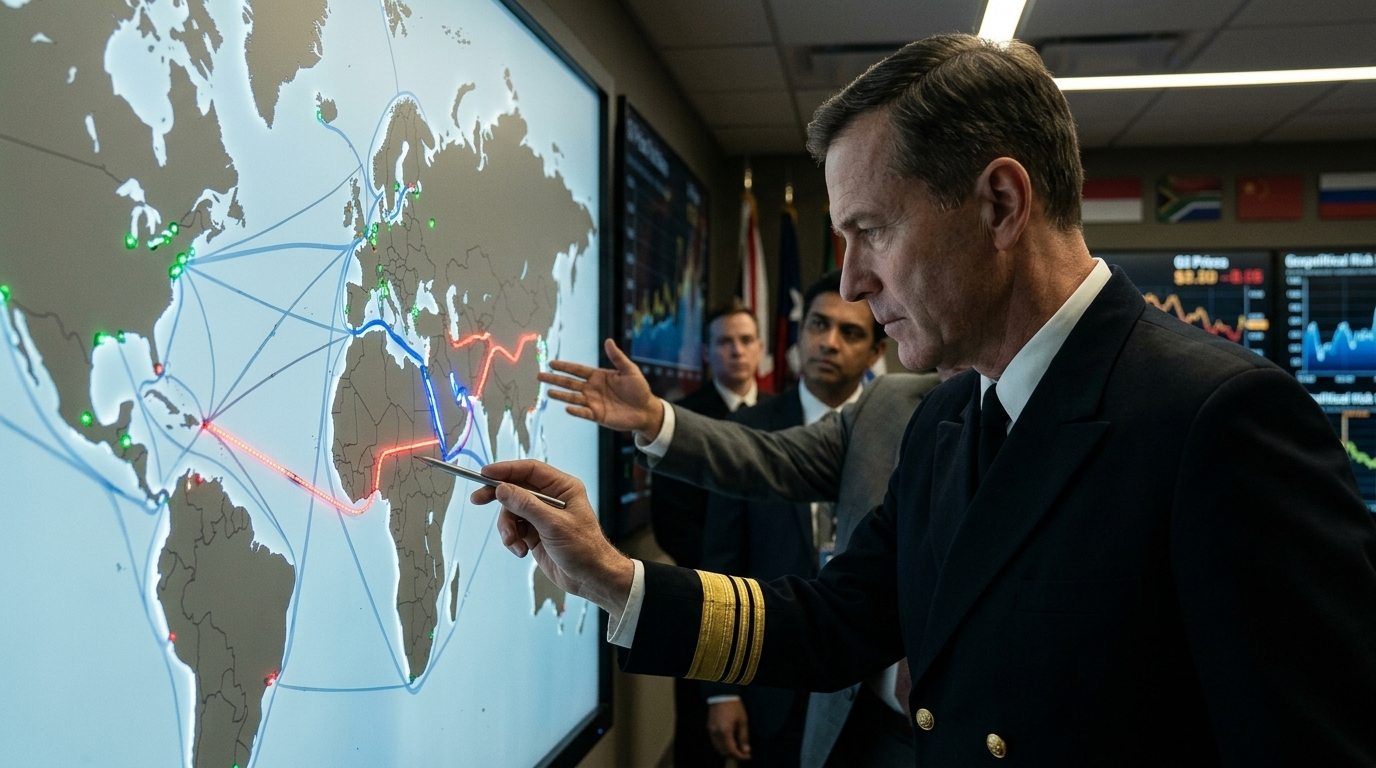
MSC's solution is intermodal transport. Instead of vessels entering the Persian Gulf via Hormuz, they will discharge cargo at Saudi Arabian ports on the Red Sea (such as Jeddah or King Abdullah Port). From there, containers will be transported by road or rail across the Arabian Peninsula to final destinations in the UAE, Kuwait, or Qatar. This "land bridge" reduces dependence on the straits and offers an alternative that, while requiring more logistical management, guarantees the flow of goods even in the event of a total maritime blockade.
The Geopolitical Significance of Saudi Arabia
This shift would not be possible without Saudi Arabia's massive infrastructure investments under its "Vision 2030" program. The Kingdom aims to transform itself into a global logistics hub connecting three continents. By leveraging Saudi Arabia's new highway and rail networks, MSC is shifting the center of gravity of trade away from traditional hubs like Dubai's Jebel Ali port toward the peninsula's interior.
This development has significant political implications. It bolsters Riyadh's role as a guarantor of regional stability and commercial continuity, while simultaneously diminishing the leverage of Iran, which frequently uses the threat of closing Hormuz as a tool of geopolitical pressure against the West. For European importers and exporters, this means a more predictable, albeit slightly more complex, route for their products.
Economic Implications and the Future of Trade
Despite the security advantages, transitioning to land transport presents challenges. Moving thousands of containers by road requires a massive fleet of trucks, increasing the carbon footprint and labor costs. However, MSC is betting that its customers would rather pay a premium than see their goods trapped on a detained vessel or threatened by missile strikes.
Furthermore, MSC's move is likely to trigger a domino effect in the industry. Other major players, such as Maersk and Hapag-Lloyd, are already exploring similar land bridge solutions. What we are witnessing is a move away from the "efficiency at all costs" model toward a "resilience" model. Supply chains are no longer designed solely based on maps, but on news cycles and intelligence reports.
Conclusion
MSC's new corridor is a symbol of a new era. It is an era where globalization is not collapsing but reorganizing around "safe harbors" and land routes that avoid geopolitical friction points. The Mediterranean and the Red Sea remain central, but the way we traverse them is changing radically. The success of this venture will depend on the ability of Saudi Arabian infrastructure to handle the volume, but the message is clear: trade will always find a way, even if it has to cross the desert to avoid the storm.