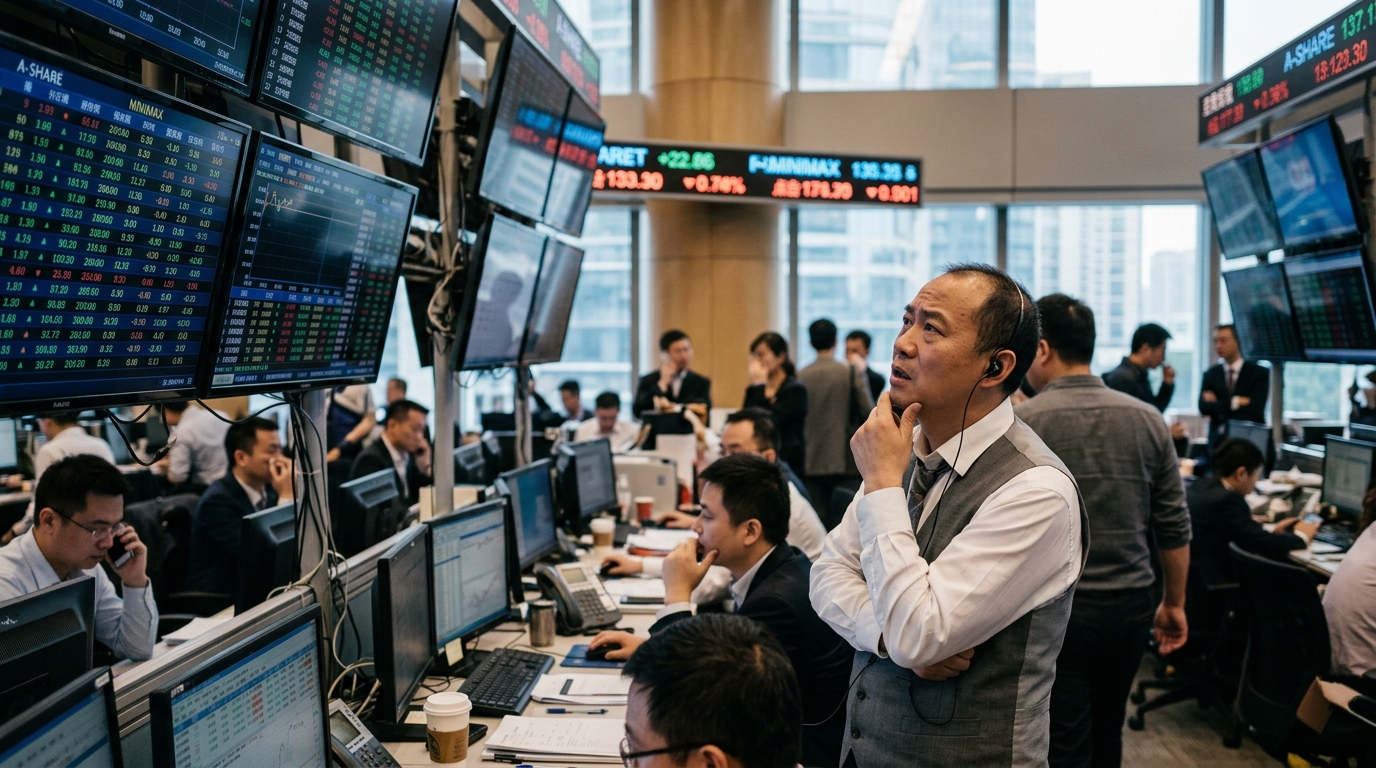
In the intricate geopolitical chessboard of technological supremacy, MiniMax, one of China’s most promising artificial intelligence startups, appears to be charting a new course that could fundamentally alter how innovation is funded in the East. The news that the company is exploring a move toward the A-share market in mainland China is not merely a business decision; it is a statement of survival and adaptation in a world where American capital is retreating and domestic self-reliance has become an existential imperative.
The 'Six Little Dragons' and the Liquidity Challenge
MiniMax belongs to an elite group that analysts call China’s 'Six Little Dragons' (or AI Tigers). Alongside firms like Zhipu AI, Moonshot AI, and Baichuan AI, MiniMax stands at the forefront of developing Large Language Models (LLMs) that aim to rival OpenAI’s GPT-4. However, developing these models requires astronomical amounts of computing power and talent, at a time when traditional sources of US Dollar (USD) funding are drying up.
The pivot toward A-shares—stocks of mainland China-based companies traded on the Shanghai and Shenzhen exchanges—represents an attempt to tap into the vast domestic pool of capital. For years, Chinese tech firms preferred Hong Kong or New York for their Initial Public Offerings (IPOs). Today, stringent oversight from the US government and restrictions on investments in cutting-edge Chinese technology are forcing these 'Tigers' to look inward.
The Geopolitics of Funding
MiniMax’s move comes as Washington intensifies restrictions through executive orders prohibiting US venture capital (VC) firms from investing in critical Chinese sectors like AI and quantum computing. This has created a 'capital gap' that Chinese state-owned banks and local government guidance funds are scrambling to fill. The A-share market offers an exit strategy, albeit one with stricter profitability and governance criteria compared to overseas markets.
However, the Chinese government has shown signs of relaxing rules for strategic technologies. Shanghai’s STAR Market (China’s equivalent of the Nasdaq) is specifically designed to welcome companies that, while not yet profitable, possess high technological value. MiniMax, with its 'Abab' model and strong presence in consumer-facing applications, serves as the ideal experiment for whether this market can support the massive cash burn required by frontier AI development.
Implications for the AI Ecosystem
If MiniMax succeeds in its listing and manages to raise significant capital, it will set a precedent for other players to follow. This could lead to the 'RMB-ization' of the Chinese AI scene. The implications are multi-layered:
- Decoupling: The US-China financial decoupling is deepening, as the tech giants of the future will rely on entirely different financial ecosystems.
- State Influence: Increased reliance on domestic capital often means greater influence from state actors, which could shape research priorities and AI ethics.
- Valuations: Valuations in China’s domestic market tend to be higher due to a limited supply of quality tech stocks, which could provide MiniMax with the financial firepower needed to compete with the likes of Microsoft and Google.
"The survival of Chinese AI will not be decided solely in the laboratories, but in its ability to create a self-sustaining capital cycle far from the reaches of Wall Street," noted a Beijing-based market analyst.
The Risks of the Domestic Market
Despite the opportunities, the A-share market is not without risks. Chinese retail investors are known for their volatile behavior, and the market can be swayed by sudden regulatory shifts from Beijing. Furthermore, the lack of access to USD makes it harder to expand into international markets and acquire foreign talent or companies. MiniMax must balance national security interests with global competitiveness, a tightrope walk that is becoming increasingly narrow.
Ultimately, the MiniMax A-share move is a barometer for the broader Chinese tech sector. If the 'AI Tigers' can successfully migrate to domestic capital markets, it will prove that China’s 'Internal Circulation' policy is more than just rhetoric—it is a functional economic reality that can sustain the next generation of global technology leaders.