The 33rd matchday of the Premier League will be etched in history as the moment Pep Guardiola's "machine" demonstrated why it is considered the most sophisticated sporting entity on the planet. The showdown against Arsenal was not merely a football match; it was a collision of two distinct philosophies. On one side, the youthful vigor and emotional drive of the Gunners; on the other, the cold, calculating efficiency of Manchester City. The final score and City's dominance came as no surprise to data analysts, who for months had predicted that City's squad depth and statistical superiority would prevail in the final stretch.
The Data Revolution and the City Model
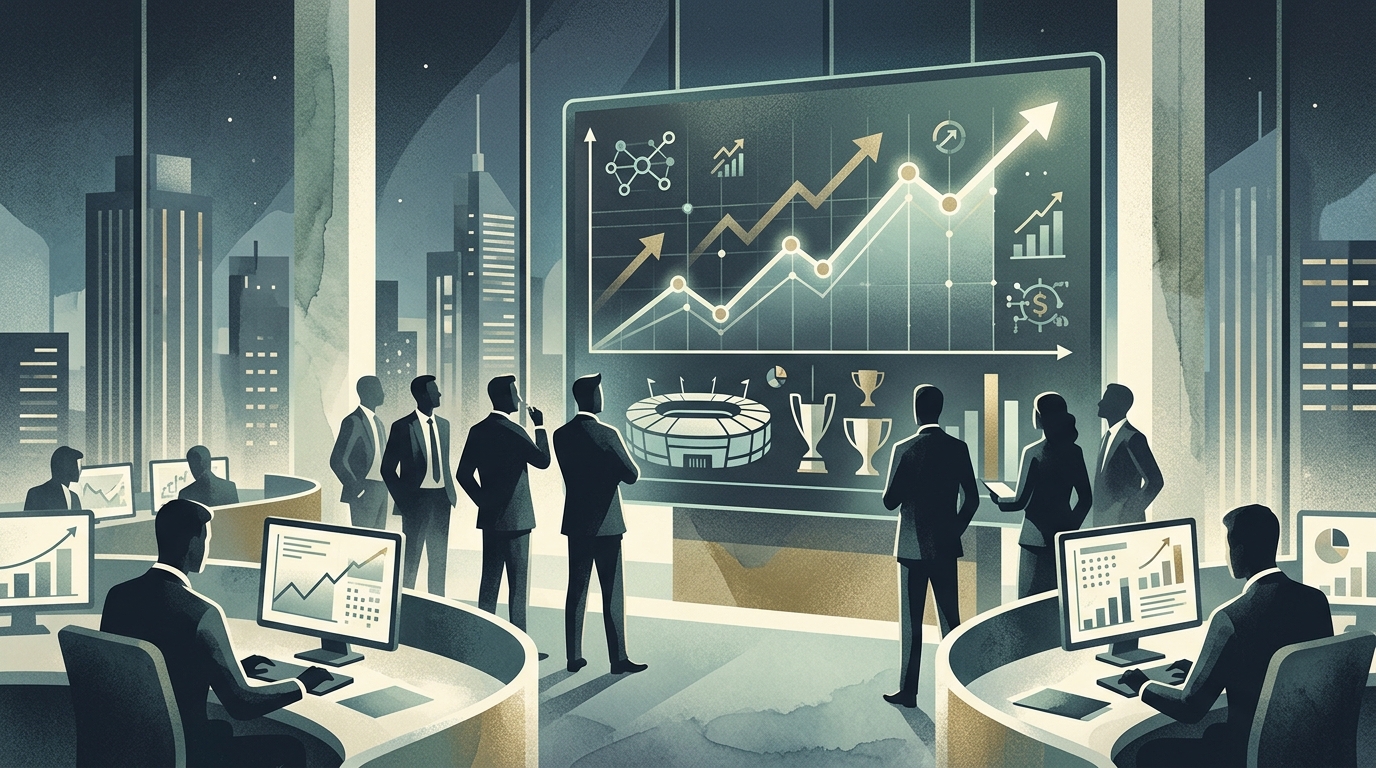
In modern football, decisions are no longer made solely on the pitch but in high-tech command centers where Artificial Intelligence analyzes every movement. Manchester City, under the umbrella of the City Football Group, has invested hundreds of millions into data science departments. Every pass from Kevin De Bruyne and every positioning of Erling Haaland is the product of thousands of hours of simulation. City's ability to maintain high xG (Expected Goals) rates while minimizing defensive threats is the result of an algorithmic model that predicts player fatigue and suggests the optimal rotation.
Arsenal, despite their extraordinary run, seemed to "run out of steam" exactly when City was shifting gears. This is no coincidence. Financial power allows City to maintain two world-class starting elevens, reducing the risk of injury and performance dips. In the economy of football, City operates as a monopoly of knowledge and resources, turning the league into a race where the odds are always in favor of "the house."
The Economic Dimension: Investment or Distortion?
The discussion regarding Manchester City's success cannot be isolated from its economic background. With 115 charges pending for alleged breaches of Financial Fair Play rules, the Manchester club finds itself at the center of a storm concerning the ethics of sports in late-stage capitalism. However, analysis suggests it is not just about "throwing money" at the problem. It is the strategic placement of capital into cutting-edge technologies, AI-driven scouting, and infrastructure that makes the team nearly invincible.
- Use of advanced sensors in training to prevent muscular injuries.
- Algorithms that evaluate the market value of players before they become global icons.
- Geopolitical influence of the owners providing unlimited liquidity.
Arsenal represents the older model of organic growth, which, while romantic, struggles to compete with the total industrialization of football championed by City. The "overturn" in the league standings was the inevitable market correction, where the most powerful and technologically equipped player claims their share.
The Future: A Predictable Dominance?
The question now arises whether the Premier League is at risk of losing its element of unpredictability. If Artificial Intelligence and unlimited capital can guarantee success, then the role of luck is minimized. City doesn't just play football; they execute software designed not to fail. For fans, this might feel sterile, but for shareholders and efficiency aficionados, it is the ultimate expression of human and technological superiority. The data-driven shift in the 33rd matchday was proof that in the age of Big Data, miracles have an expiration date.
"We don't win because we are rich, but because we work harder on the details that others ignore," Guardiola once stated.
This statement hides a profound truth: the detail now lies in bits and bytes, and Manchester City is the master programmer of this new footballing code.