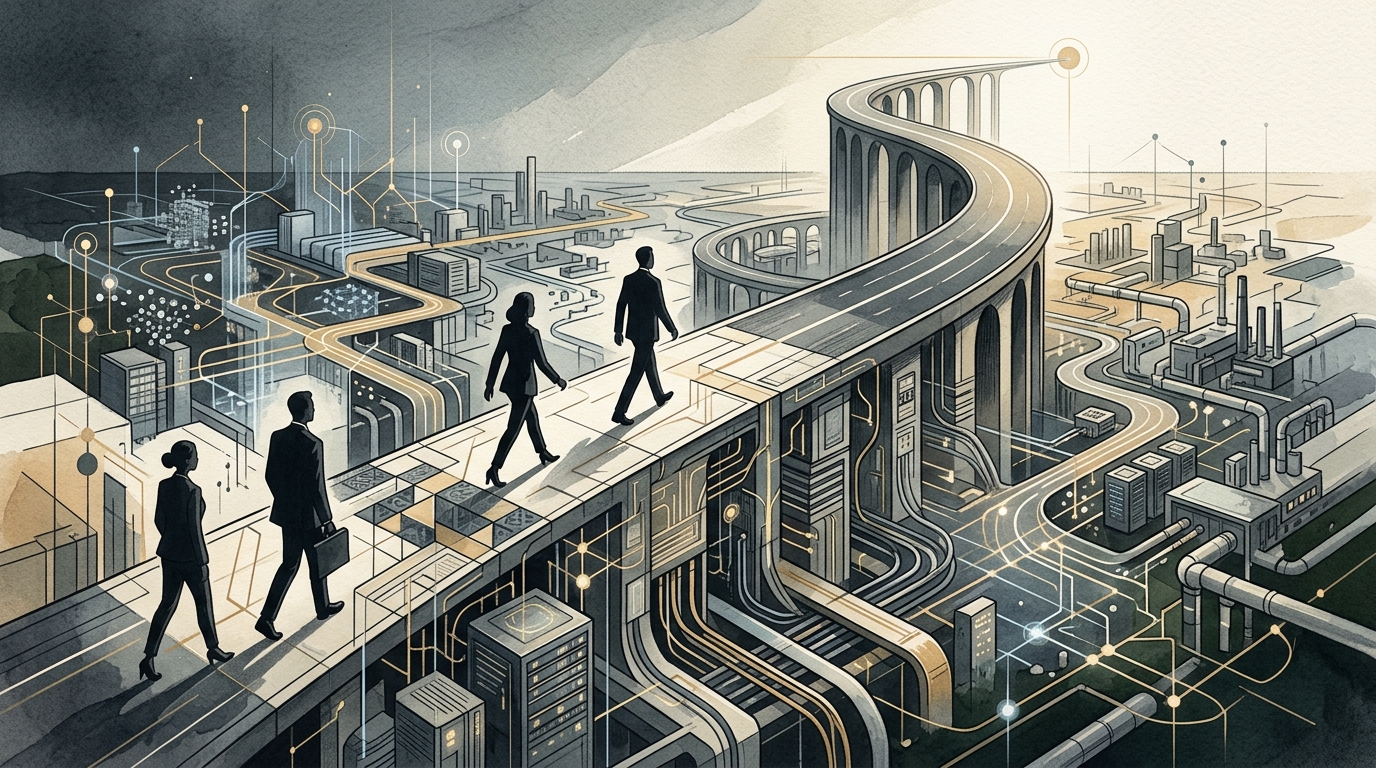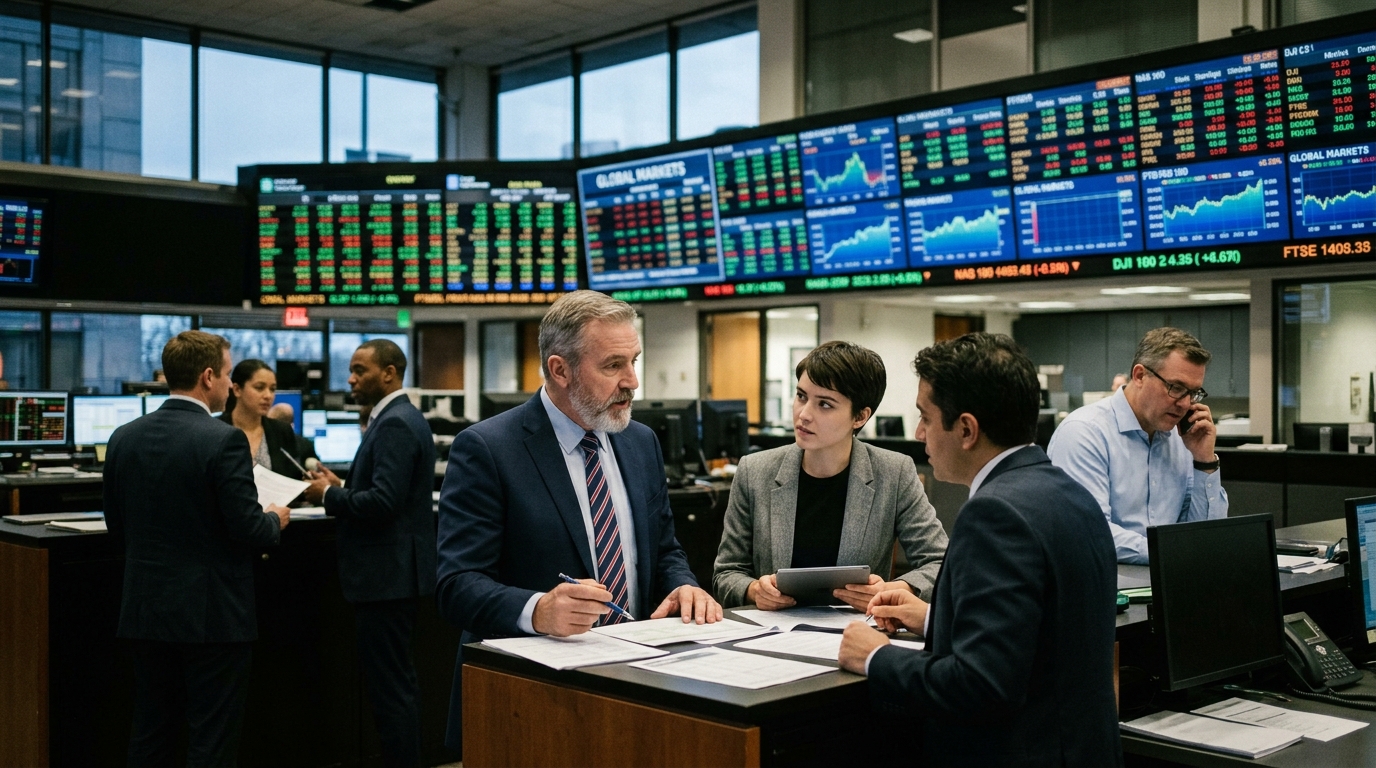
When Leopold Aschenbrenner was dismissed from OpenAI in early 2024, the tech world initially viewed him as just another "heretic" who had breached security protocols. However, the publication of his 165-page manifesto, titled "Situational Awareness," revealed a thinker who views Artificial Intelligence not merely as a productivity tool, but as the new "Manhattan Project." Today, his investment vehicle, the Situational Awareness Fund, is making waves on Wall Street with a highly concentrated strategy: just 24 stocks that form the backbone of the coming Artificial General Intelligence (AGI).
The Philosophy of Situational Awareness
Aschenbrenner’s investment approach is not based on traditional financial metrics, but on a technological forecast: AGI will be a reality by 2027. According to him, the growth rates of compute power and algorithmic efficiency lead mathematically to systems that will surpass human intelligence in every domain. This conviction translates into a portfolio that ignores market noise and focuses on what he calls the "physics of AI": energy, chips, and cloud infrastructure.
The fact that the fund holds only 24 stocks suggests extreme high conviction. In a world where most fund managers diversify risk, Aschenbrenner chooses to concentrate it on the winners who will control the infrastructure of the future. His top seven holdings reveal a roadmap of what the global economy will look like under AI dominance.
The 7 Pillars of the Portfolio
At the top of the list is, predictably, NVIDIA. For Aschenbrenner, NVIDIA is not just a semiconductor company, but the sole provider of the "digital oil" of our era. Without Blackwell processors, the path to AGI stops. Following are the "Hyperscalers": Microsoft, Alphabet (Google), and Amazon. These giants possess the capital to invest hundreds of billions in data centers, creating an oligopoly that is nearly impossible to displace.
However, the real surprise lies in his emphasis on energy. Stocks like Constellation Energy and Vistra Corp hold a central role. Aschenbrenner argues that the next big bottleneck for AI will not be algorithms, but electricity. The data centers of the future will require gigawatts of power, and nuclear energy is the only reliable solution. Meta Platforms rounds out the top seven, as Mark Zuckerberg’s pivot to open-source AI (Llama) is seen as a strategic move that will define the application ecosystem.
The Geopolitical Dimension and Risk
Aschenbrenner does not see AI only as an investment opportunity, but as a national security imperative for the United States. In his manifesto, he warns that China is in an arms race with the West and that the security of AI labs is currently inadequate. His portfolio, therefore, is also a vote of confidence in American hegemony. By investing in companies based in or controlled by the US, he is betting that Washington will be forced to subsidize and protect these entities as strategic national assets.
Of course, the risk is immense. If the prediction for AGI by 2027 proves hyperbolic, or if constraints in energy and raw materials (like lithium or cobalt) stall development, the valuations of these 24 companies could collapse. Aschenbrenner, however, seems willing to accept this volatility, believing that the cost of not being positioned for this paradigm shift is far greater.
Conclusion: A New School of Investing?
The Situational Awareness Fund represents a new school of thought: "technological determinism" in investing. This is not simple portfolio diversification; it is a total bet on a specific version of the future. For traditional investors, concentrating on 24 stocks looks like gambling. For Aschenbrenner, it is the only logical reaction to a revolution that will change the very essence of human existence.