In the high-stakes world of global finance, few voices carry as much weight as Larry Fink’s. The chairman and CEO of BlackRock, the world’s largest asset manager, is no longer just talking about market volatility or interest rates. Instead, he is sounding the alarm—and the dinner bell—on what he describes as a nascent, trillion-dollar asset class: Artificial Intelligence infrastructure.
The Infrastructure Supercycle: From Bits to Atoms
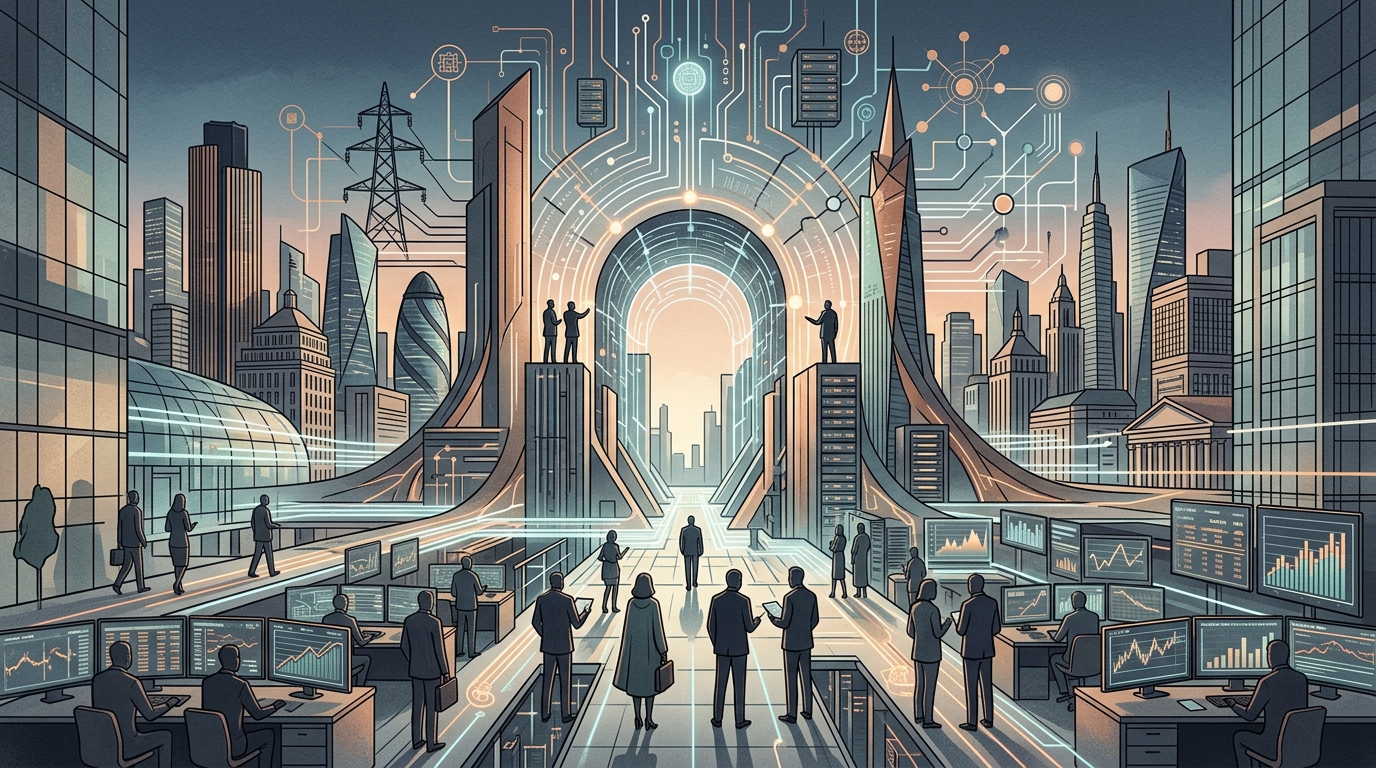
For several years, the AI narrative has been dominated by software: the brilliance of Large Language Models, the utility of generative tools, and the valuation of companies like OpenAI. However, Fink’s thesis shifts the focus from the digital to the physical. He argues that the true bottleneck for AI is not human ingenuity, but the physical infrastructure required to sustain it. This means data centers, fiber-optic networks, and, most crucially, a massive overhaul of the electrical grid.
Fink posits that we are entering an "infrastructure supercycle." BlackRock’s strategic moves reflect this conviction. The firm recently launched the Global AI Infrastructure Investment Partnership (GAIIP) alongside Microsoft, aimed at mobilizing up to $100 billion in total investment potential. This isn't just a tech fund; it's a play on real estate, energy production, and logistics. By framing AI as an infrastructure play, BlackRock is inviting institutional investors—pension funds, insurance companies, and sovereign wealth funds—to treat AI as a stable, long-term asset similar to toll roads or energy pipelines.
The Trump Factor: Deregulation as an Accelerator
The intersection of Fink’s vision and the political landscape, specifically the potential policies of a second Trump administration, provides a compelling economic roadmap. While Fink has often navigated the complexities of ESG (Environmental, Social, and Governance) investing, the sheer energy requirements of AI are forcing a more pragmatic approach to energy policy.
Donald Trump’s economic platform, centered on "America First" energy production and radical deregulation, aligns neatly with the needs of the AI sector. The primary obstacle to building massive data centers in the U.S. is not a lack of capital, but the arduous permitting process and environmental regulations that can delay projects for years. Trump’s promise of "permitting reform" and his support for fossil fuels and nuclear energy could provide the "fast track" that the AI industry desperately needs. If AI is a race for national sovereignty, a deregulatory environment could be the fuel that allows the U.S. to outpace its global competitors.
The Energy Paradox: AI’s Voracious Appetite
The scale of energy required for the next generation of AI is staggering. Some estimates suggest that AI data centers could consume a significant double-digit percentage of total U.S. electricity by the end of the decade. This reality creates a tension with climate goals. Fink has noted that while the transition to green energy continues, the immediate demand for AI power might necessitate a renewed reliance on natural gas and a massive investment in small modular nuclear reactors (SMRs).
This is where the "Trumpian" approach to energy—prioritizing reliability and cost over carbon intensity—becomes a strategic advantage for AI infrastructure. For investors, this means the AI boom is not just a Silicon Valley story; it is a story for the Permian Basin, for nuclear energy providers, and for utility companies. The convergence of tech demand and a permissive regulatory environment creates a unique window for capital deployment that BlackRock is keen to exploit.
Conclusion: The New Bedrock of the Global Economy
Larry Fink’s assessment of AI as a trillion-dollar asset class marks a turning point in how we perceive the digital age. It is no longer an ethereal cloud; it is a physical entity made of copper, concrete, and silicon. The involvement of political forces—specifically the potential for a more deregulated, energy-centric U.S. policy—suggests that the build-out of this infrastructure will be the defining economic project of the next decade. For BlackRock and the institutional giants they lead, the goal is clear: to own the physical foundation upon which the future of intelligence will be built.