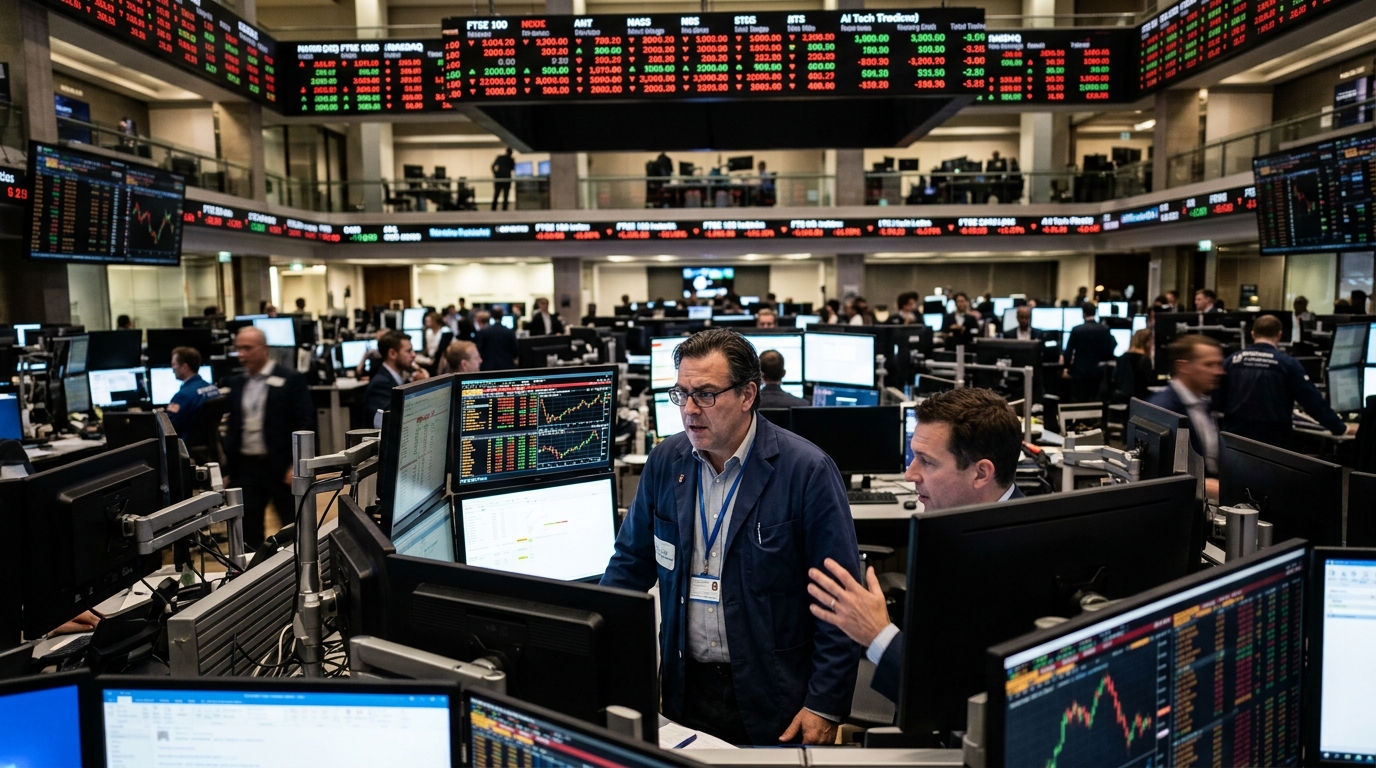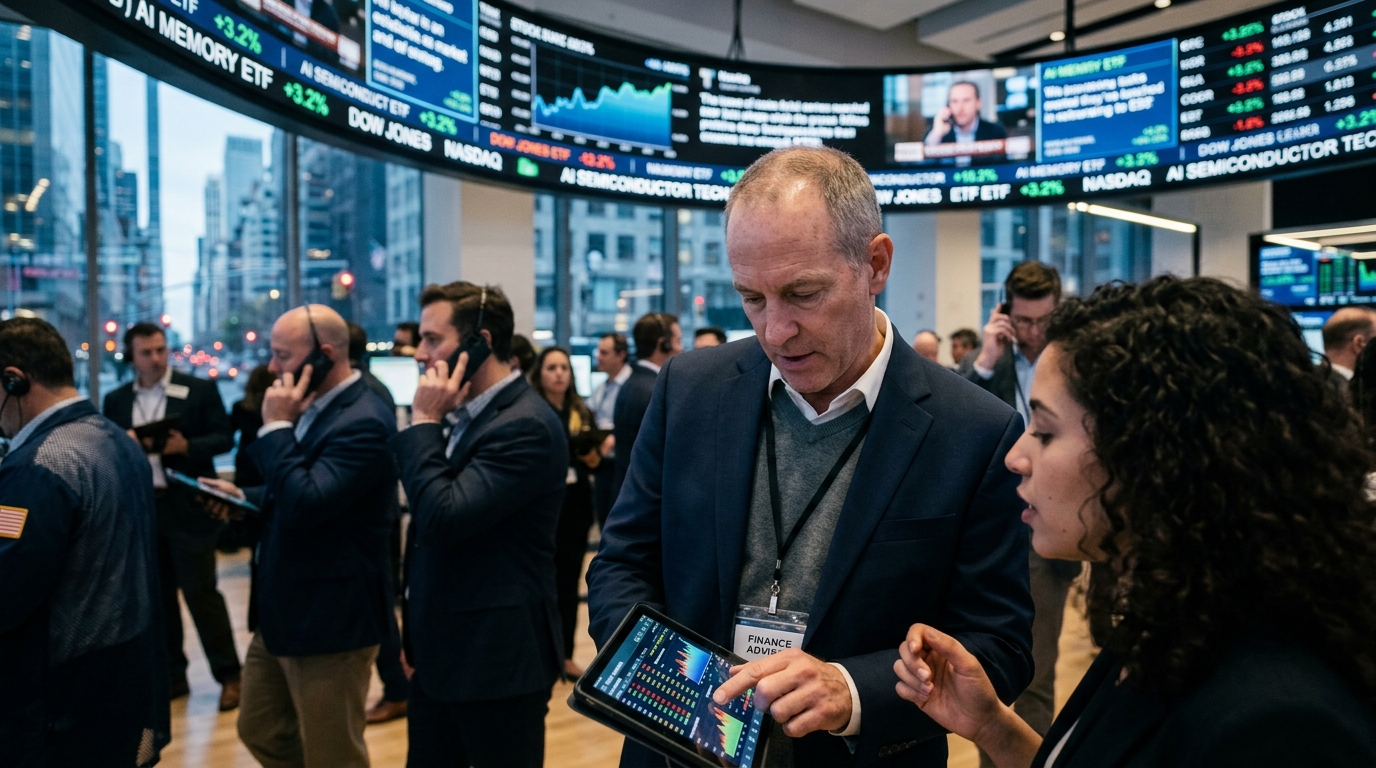
The investment frenzy surrounding Artificial Intelligence (AI) has entered a new, more mature, yet increasingly complex phase in 2026. While previous years were defined by the hunt for the "next Nvidia," today's market recognizes that true value lies in the infrastructure that allows Large Language Models (LLMs) to operate at scale. This is where the critical sector of High Bandwidth Memory (HBM) comes into play. With individual semiconductor stocks trading at levels that often intimidate retail investors—with prices approaching or exceeding $1,500 per share—the strategy is shifting from picking individual winners to buying entire ecosystems through specialized ETFs.
The "Memory Wall" and the New Market Reality
Why has memory become the "gold" of 2026? The answer lies in the so-called "Memory Wall." As processors (GPUs and TPUs) become exponentially faster, the ability to move data from memory to the processor has become the primary bottleneck. Without advanced HBM4 memory, the most sophisticated processors on the market sit idle for fractions of a second, wasting precious energy and computational power. This technical necessity has turned companies like Micron, SK Hynix, and Samsung into the ultimate arbiters of the global tech landscape.
However, investing in these companies individually carries significant risks. Geopolitical tensions in East Asia, fluctuations in raw material prices, and sudden shifts in production cycles can cause intense volatility. An ETF focusing on the memory and semiconductor supply chain offers the necessary diversification, allowing investors to benefit from the sector's growth without being exposed to the potential collapse of a single player.
The High-Price Trap and the Democratization of Investing
References to stocks hitting $1,500 are not just numbers; they represent a significant barrier to entry. For many individual investors, purchasing even a few shares at such prices creates an imbalanced portfolio. Conversely, ETFs like the VanEck Semiconductor ETF (SMH) or the iShares Semiconductor ETF (SOXX), which have recalibrated their weightings to include more players from the memory and advanced packaging sectors, offer a more rational path forward.
- Risk Diversification: Coverage spanning from chip manufacturing to lithography and assembly.
- Lower Entry Cost: The ability to participate in the AI upside at a fraction of the cost of a single high-priced share.
- Automatic Rebalancing: Fund managers adjust positions based on corporate performance, relieving the investor of constant monitoring duties.
"The semiconductor market is no longer a sprint to see who can build the fastest chip, but a marathon to see who can feed those chips with data efficiently," noted Wall Street analysts this quarter.
The Strategic Importance of ETFs in 2026
Looking toward the second half of 2026, the demand for AI infrastructure shows no signs of slowing down. Major cloud providers (Hyperscalers) continue to spend billions upgrading their data centers. In this environment, memory is no longer a simple commodity; it is a strategic asset. Specialized ETFs focusing on AI infrastructure offer exposure to companies involved in data center cooling, power management, and, of course, memory, creating a holistic investment product.
In conclusion, while headlines may focus on individual stocks breaking price records, the savvy investor of 2026 looks beneath the surface. The pivot to AI memory ETFs is not merely an alternative; it is an acknowledgment that the technological revolution is too vast to be contained within a single ticker symbol. Diversification, understanding technical constraints like the Memory Wall, and focusing on the entire value chain are the keys to preserving and growing capital in this explosive era.