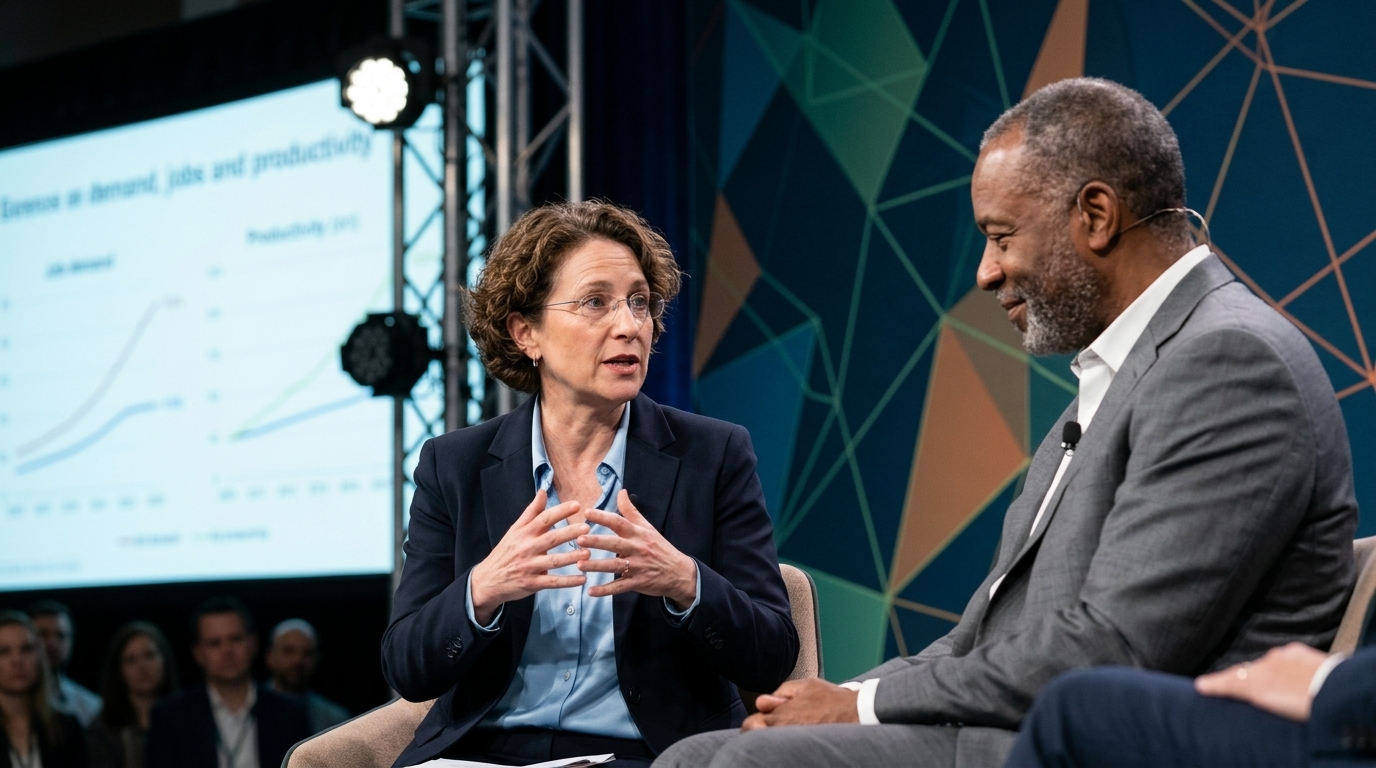
As we navigate through May 2026, the narrative surrounding Artificial Intelligence (AI) and its impact on the labor market has undergone a profound transformation. Moving beyond the initial existential dread of total automation, we are now observing a data-driven reality that challenges early assumptions. Svenja Gudell, Chief Economist at Indeed, recently highlighted a compelling paradox: the sectors identified as most "exposed" to AI—such as software development, IT operations, and digital marketing—are currently experiencing the most robust growth in job demand and compensation.
Redefining 'Exposure' in the Modern Workforce
For years, the term "AI exposure" was treated by analysts and the media as a warning sign. It was a metric used to quantify how much of a job could be performed by an algorithm, often implying a direct threat to employment security. However, Gudell’s analysis suggests that exposure is actually a leading indicator of growth. In industries where AI can automate routine tasks, the value of the human worker who orchestrates these tools has skyrocketed. AI is not replacing the software engineer; it is replacing the mundane hours spent debugging or writing boilerplate code, freeing the professional to focus on high-level architecture and complex problem-solving.
This surge in individual productivity is driving an aggressive hiring strategy among forward-thinking firms. When a single employee can deliver twice the output with the assistance of AI, the marginal cost of labor effectively decreases, making it more profitable for companies to expand their headcount to capture market share. Indeed’s data shows that job postings requiring AI literacy or situated within highly exposed sectors have significantly outpaced the broader market over the past twelve months.
The Emergence of the AI Wage Premium
A central pillar of Gudell’s findings is the emergence of a "wage premium" for roles in AI-exposed sectors. Workers who possess the skills to integrate AI into their daily workflows are seeing their salaries rise at rates significantly higher than the national average. This is not merely a result of a talent shortage, but a reflection of the increased economic value these workers provide. When a marketing specialist uses generative AI to quintuple their campaign output while maintaining quality, their worth to the organization increases proportionally.
- Software developers utilizing AI copilots report a 40% reduction in project delivery times.
- Financial analysts are now processing datasets that previously required entire departments.
- Creative professionals are shifting their focus toward strategy and curation, leaving the raw production to specialized models.
According to Gudell, this premium is likely to be structural rather than cyclical. As businesses realize that AI is a power multiplier, they are increasingly willing to pay top dollar for human talent that can ensure the safe, ethical, and efficient deployment of these technologies. The demand is shifting from mere execution to critical oversight and creative direction.
Challenges and the Imperative for Reskilling
Despite the optimistic data, Gudell issues a stern warning: this growth is not a rising tide that lifts all boats automatically. There is a growing risk of a "skills divide" between those who can leverage AI and those who cannot. While exposure is a boon for professionals with access to continuous learning resources, it remains a significant risk for those stuck in traditional paradigms. The 2026 labor market demands a state of perpetual education.
"We are not witnessing the end of work, but rather the end of work as we previously defined it. AI exposure is the new engine of economic activity," Gudell notes in her analysis.
From a global perspective, the challenge for policymakers is to ensure that the infrastructure for reskilling is as robust as the technology itself. The growth seen in exposed sectors serves as a vital reminder that technology, when integrated thoughtfully, does not eliminate the need for humans. Instead, it creates a new set of requirements—strategic thinking, emotional intelligence, and ethical judgment—that only human ingenuity can provide. The sectors most exposed to AI are not being hollowed out; they are being supercharged.