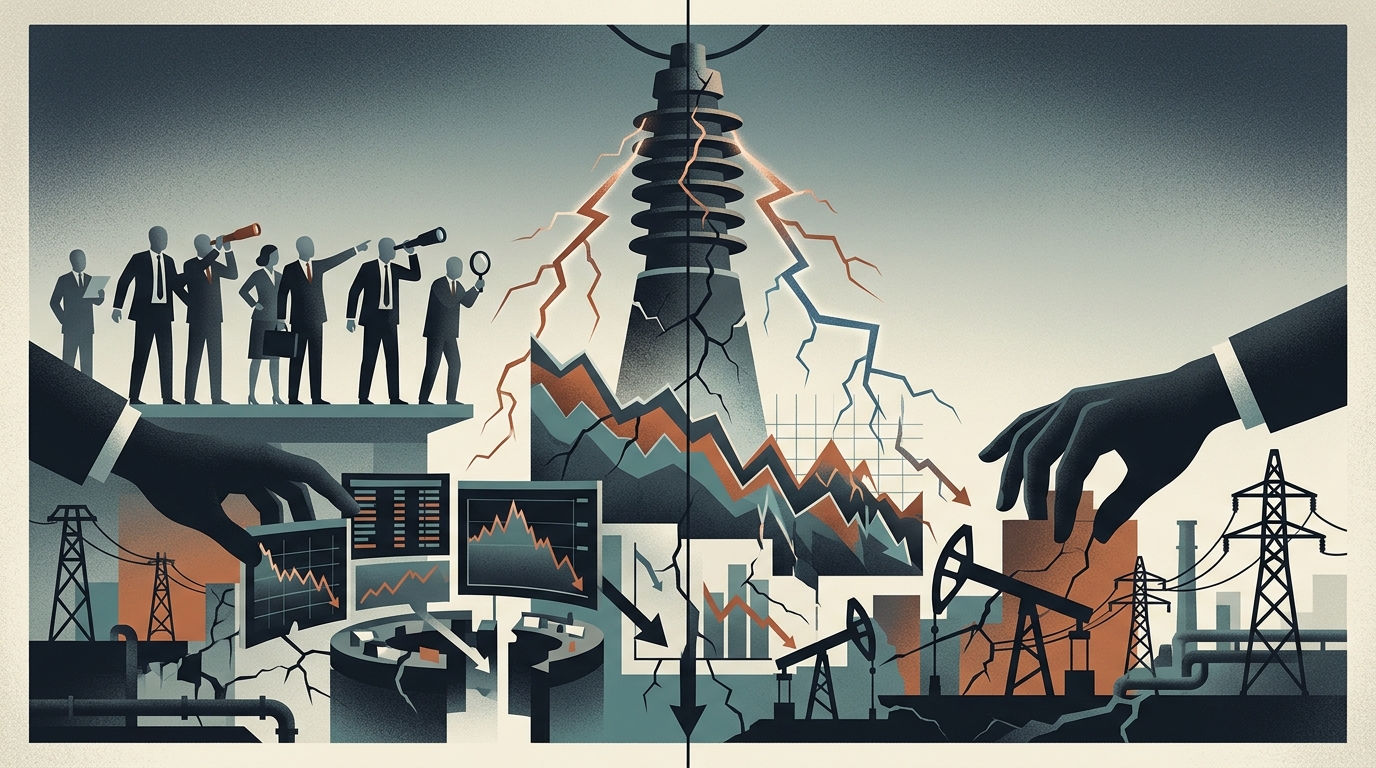
The global economy finds itself at yet another critical juncture, as the heads of the world's leading financial institutions issue a stark warning. Kristalina Georgieva of the International Monetary Fund (IMF) and Christine Lagarde of the European Central Bank (ECB) are cautioning that the recent surge in oil prices is not merely a transient fluctuation but a factor capable of derailing the long-awaited "soft landing" of the economy. Market jitters in bonds and the downturn in stock exchanges are the first symptoms of a deeper anxiety regarding inflation and interest rates.
Oil as a Pressure Lever
The rise in crude oil prices, fueled by geopolitical tensions and production cuts by OPEC+, has begun to trickle down into production and transportation costs. For central banks, this represents a recurring nightmare. While core inflation showed signs of receding in early 2026, the energy component threatens to reignite inflationary expectations. The ECB, in particular, finds itself in a difficult position, as the Eurozone remains highly vulnerable to energy imports.
Christine Lagarde, in a recent statement, emphasized that the "last mile" toward the 2% target is the most challenging. The rise in oil prices limits the room for interest rate cuts, forcing markets to recalibrate their expectations. Bonds, traditionally a safe haven for investors, are seeing their yields climb as investors price in the reality that interest rates will remain "higher for longer."
Turmoil in Bond and Equity Markets
The market reaction has been swift and intense. Sovereign bond yields, particularly US 10-year Treasuries and German Bunds, have seen significant increases, reflecting the fear that central banks will not be able to ease monetary policy as soon as previously anticipated. This, in turn, exerts suffocating pressure on stocks, especially in the technology and growth sectors, which are sensitive to borrowing costs.
- Bond yields are acting as a drag on stock market valuations.
- Investors are fleeing risk, seeking safety in cash and commodities.
- Volatility (VIX) has returned to levels reminiscent of past crises.
The IMF, for its part, is sounding the alarm on fiscal discipline. Georgieva stressed that governments no longer have the "buffers" they possessed during the pandemic. If energy costs remain high, fiscal spending to support households and businesses will further inflate public debt at a time when the cost of servicing it is already at peak levels.
The European Context and Challenges
For the Eurozone and especially its more debt-heavy members, this situation carries particular risks. Despite the recovery of investment-grade status in countries like Greece, reliance on oil and high energy prices burdens the trade balance and household budgets. The rise in bond yields directly affects the borrowing costs of sovereign states, making strict adherence to fiscal targets an imperative necessity.
"There is no room for complacency. Markets are nervous, and any exogenous shock can trigger chain reactions," an IMF official stated.
In conclusion, the warning from the IMF and ECB is not a simple theoretical exercise. It is a reminder that the global economy remains fragile. Investors are called to adapt to an environment where energy will remain expensive and money "dear," requiring strategic composure and careful positioning.