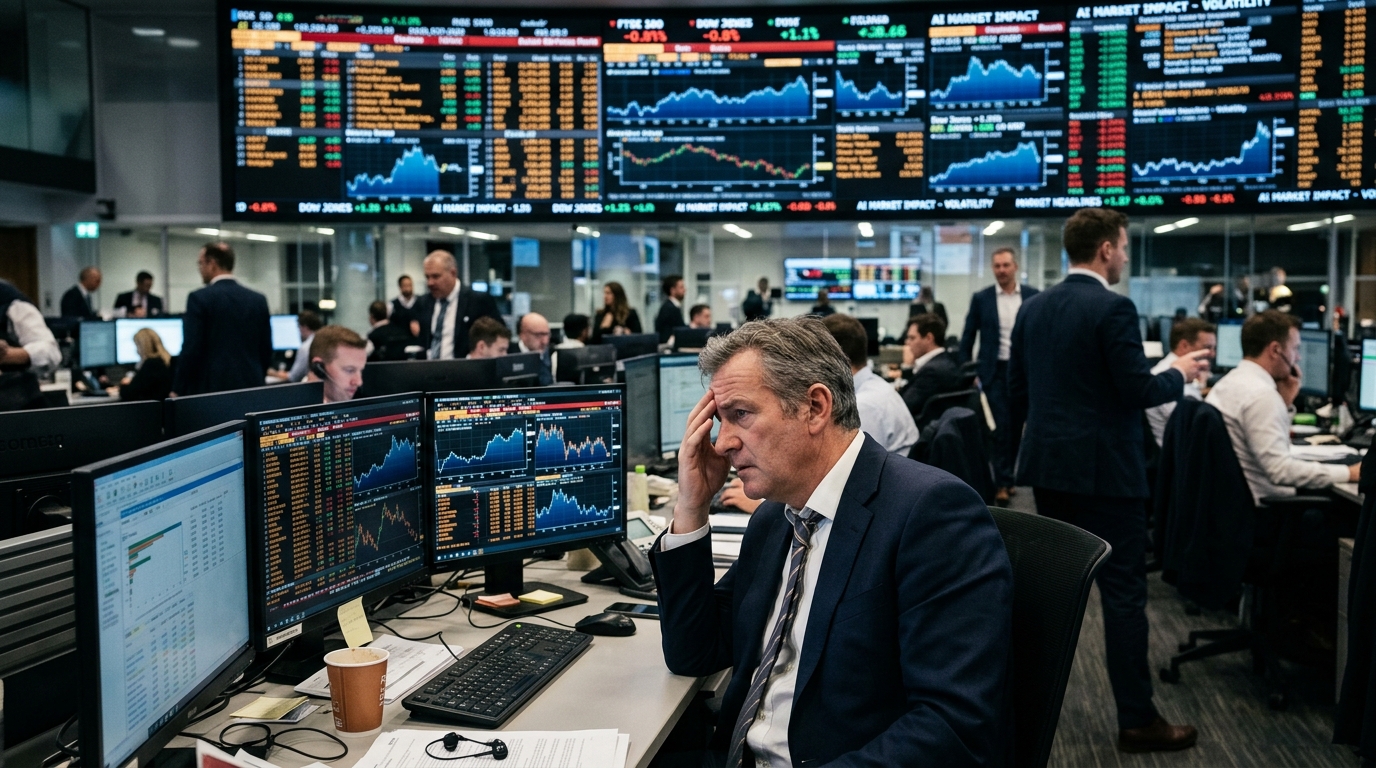
The history of financial markets is punctuated by moments where logic yields to exhuberance. Today, as we navigate the first half of 2026, the global economy stands at a crossroads that vividly mirrors the eves of past major crises. The S&P 500 and Nasdaq indices are clocking one record high after another, fueled by an almost religious faith in the capabilities of Artificial Intelligence (AI). Yet, beneath the surface of this euphoria, the voices of skeptics are growing louder, reviving the old adage: "If it looks like a bubble, walks like a bubble, and shouts like a bubble, it probably is a bubble."
The Golden Age of Semiconductors and the Expectation Trap
The current rally is not broad-based. It is a surge built upon a very specific value chain: semiconductors. Companies designing and manufacturing the "brains" of AI have seen their valuations skyrocket to dizzying heights. Nvidia, TSMC, and ARM are no longer just tech firms; they are the pillars upon which the entire edifice of the modern capital market rests. The problem, however, lies in the fact that their stock prices have priced in perfection for the next decade.
Analysts point out that the price-to-earnings (P/E) ratios in certain tech sectors have surpassed even the levels seen during the 2000 dot-com bubble. While it is true that, unlike in 2000, today's giants possess real profits and massive cash flows, the sheer velocity of the ascent suggests a speculative mania that transcends fundamentals. The demand for AI chips is indeed gargantuan, but history teaches us that semiconductor cycles are notoriously volatile. A minor dip in demand or a geopolitical entanglement in Taiwan could trigger a chain reaction of liquidations.
The Ghost of 2000 and Mass Psychology
To understand today, we must look at yesterday. In the late 1990s, the internet promised to change the world—and it did. But the market ran much faster than reality. Today, AI promises a similar, if not greater, productivity revolution. The question isn't whether AI is useful, but whether the value it generates can justify the trillions of dollars that have flowed into the markets over the last 18 months.
- Market Concentration: An extremely small number of companies are responsible for the lion's share of index gains.
- FOMO (Fear Of Missing Out): Institutional investors, under pressure to deliver returns, are forced to buy at inflated prices.
- Leverage: The increased use of borrowed funds to purchase tech stocks is dangerously reminiscent of periods preceding major corrections.
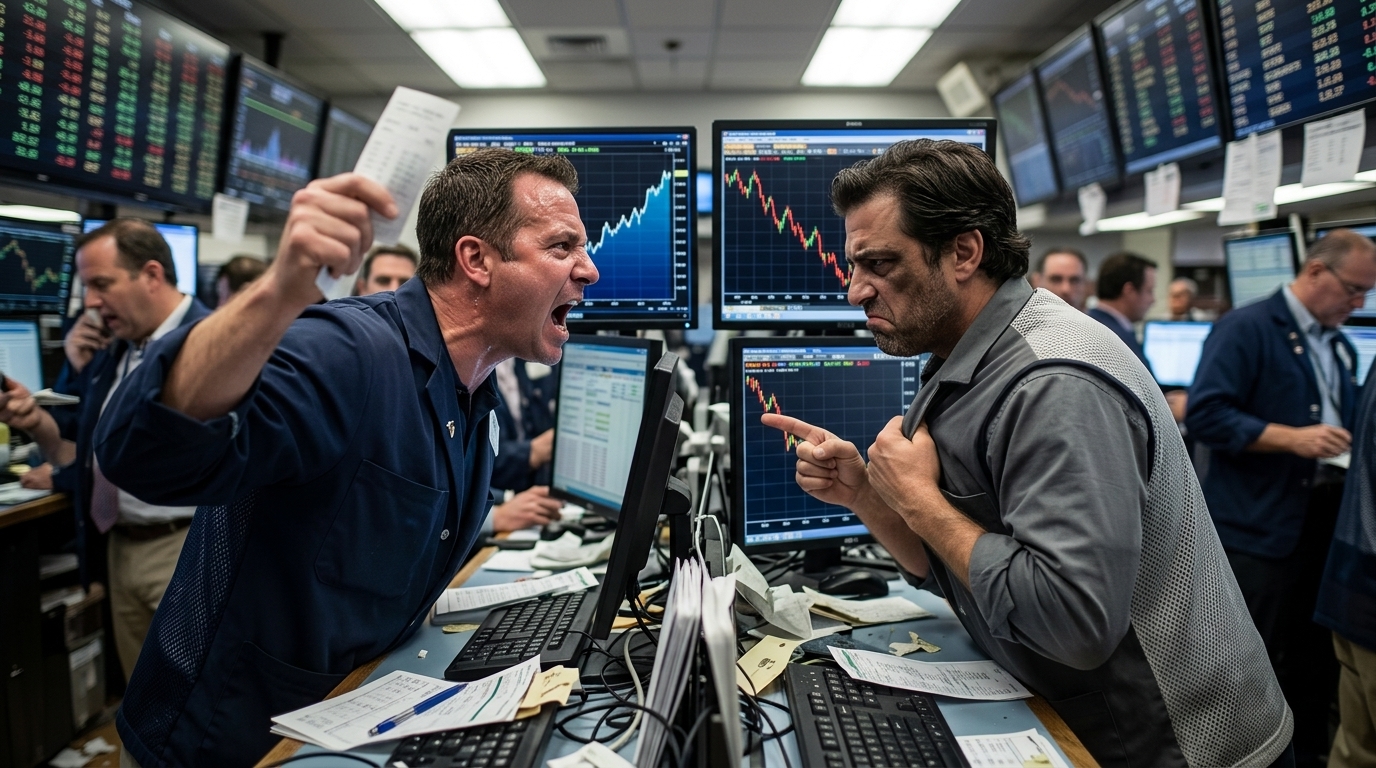
Mass psychology acts as a self-fulfilling prophecy. As long as prices rise, more investors are convinced that "this time is different." Yet, the law of gravity in markets is relentless. When liquidity begins to dry up—perhaps due to central banks maintaining high interest rates to combat stubborn inflation—the narrative of perpetual growth will be severely tested.
Real Economy vs. Stock Market Euphoria
While Wall Street and European indices celebrate, the real economy is sending mixed signals. Consumption is showing signs of fatigue, borrowing costs for small and medium-sized enterprises remain prohibitive, and the public debt of major economies is at staggering levels. The decoupling of stock markets from economic reality is one of the classic hallmarks of a bubble.
"The market can remain irrational longer than you can remain solvent," John Maynard Keynes famously said.
This phrase resonates today through the corridors of investment banks. Many fund managers know that valuations are irrational, but no one wants to be the first to leave the party. The "exit strategy" has become the most discussed topic in the private clubs of the City and Wall Street. If the bubble bursts, it won't be due to a sudden revelation, but because of the gradual realization that the return on investment (ROI) in AI will take much longer to materialize than speculators hoped.
Conclusion: Preparing for the Day After
Is the current situation a bubble? The answer is likely affirmative, but that doesn't mean a collapse is imminent tomorrow morning. Bubbles can inflate for years before they pop. However, the investor of 2026 must be cautious. Portfolio diversification, avoiding excessive leverage, and focusing on companies with healthy balance sheets rather than just attractive narratives are the only weapons against the coming storm. Euphoria is a poor counselor, and in market history, the end of the party is always more abrupt than its beginning.