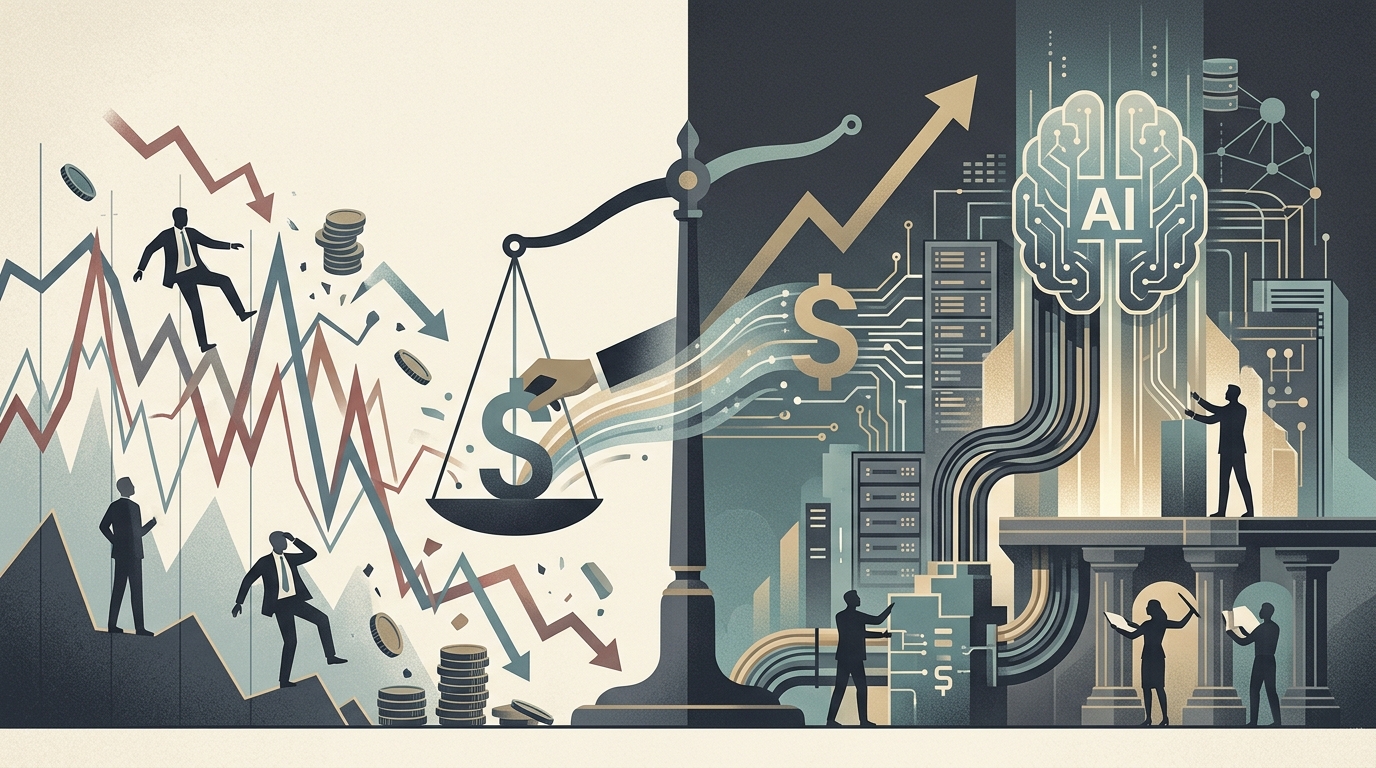
The era of experimental AI usage is officially over. According to the latest study from the IBM Institute for Business Value, global CEOs no longer view Artificial Intelligence as a mere productivity tool, but as the catalyst for a complete overhaul of the C-suite. The study, conducted among thousands of executives, highlights that traditional corporate structures are facing pressures unseen since the Industrial Revolution.
Redefining Traditional Roles
For decades, C-suite roles were clearly demarcated: the CFO managed finances, the CHRO handled human resources, and the CIO oversaw technological infrastructure. Today, these silos are collapsing. The IBM study indicates that the Chief Financial Officer (CFO) is transforming into a "data strategist." CFOs are now tasked with evaluating "Return on Intelligence" rather than just Return on Investment (ROI). Capital management is now inextricably linked to a company's ability to train and deploy proprietary AI models.
Similarly, the Chief Human Resources Officer (CHRO) stands at the center of the greatest challenge: reskilling. IBM estimates that 40% of the workforce will need to be reskilled over the next three years due to AI adoption. This means the CHRO is no longer an administrative role but a strategic architect of skills, responsible for ensuring the successful symbiosis of humans and machines.
The Rise of the Chief AI Officer and CIO/CTO Convergence
One of the most intriguing trends recorded in the research is the formalization of the Chief AI Officer (CAIO) role. While initially dismissed as a passing fad, the CAIO is evolving into a central figure bridging the gap between technical implementation and business strategy. Simultaneously, the roles of the CIO (Chief Information Officer) and CTO (Chief Technology Officer) are converging. Technology is no longer a support function; it is the product itself and the operational backbone of the enterprise.
- 75% of CEOs believe that competitive advantage will depend on who possesses the most advanced Generative AI.
- AI trust and ethics have become top priorities for corporate boards.
- Decision-making is shifting from intuition-based to real-time data analysis.
The Productivity Paradox and Emerging Challenges
Despite the optimism, the study highlights significant hurdles. CEOs admit that corporate culture is often the biggest obstacle to AI adoption. Resistance to change and the fear of job displacement create friction that leadership must manage with nuance. Furthermore, there is the issue of "technical debt." Many companies are attempting to build modern AI systems on top of legacy data infrastructures, leading to inaccuracies and ballooning costs.
"AI will not replace managers, but managers who use AI will replace those who do not," the report states emphatically.
Conclusion: The CEO as Orchestrator
In this new landscape, the CEO is transforming from a traditional commander into an "Orchestrator of Intelligence." Their primary responsibility is no longer the micro-management of departments, but ensuring that the flow of information and intelligence permeates the entire organization horizontally. Success in the AI era requires a new form of leadership: more agile, more technically literate, and paradoxically, more human, as empathy and critical thinking become the only elements that AI cannot (yet) replicate.