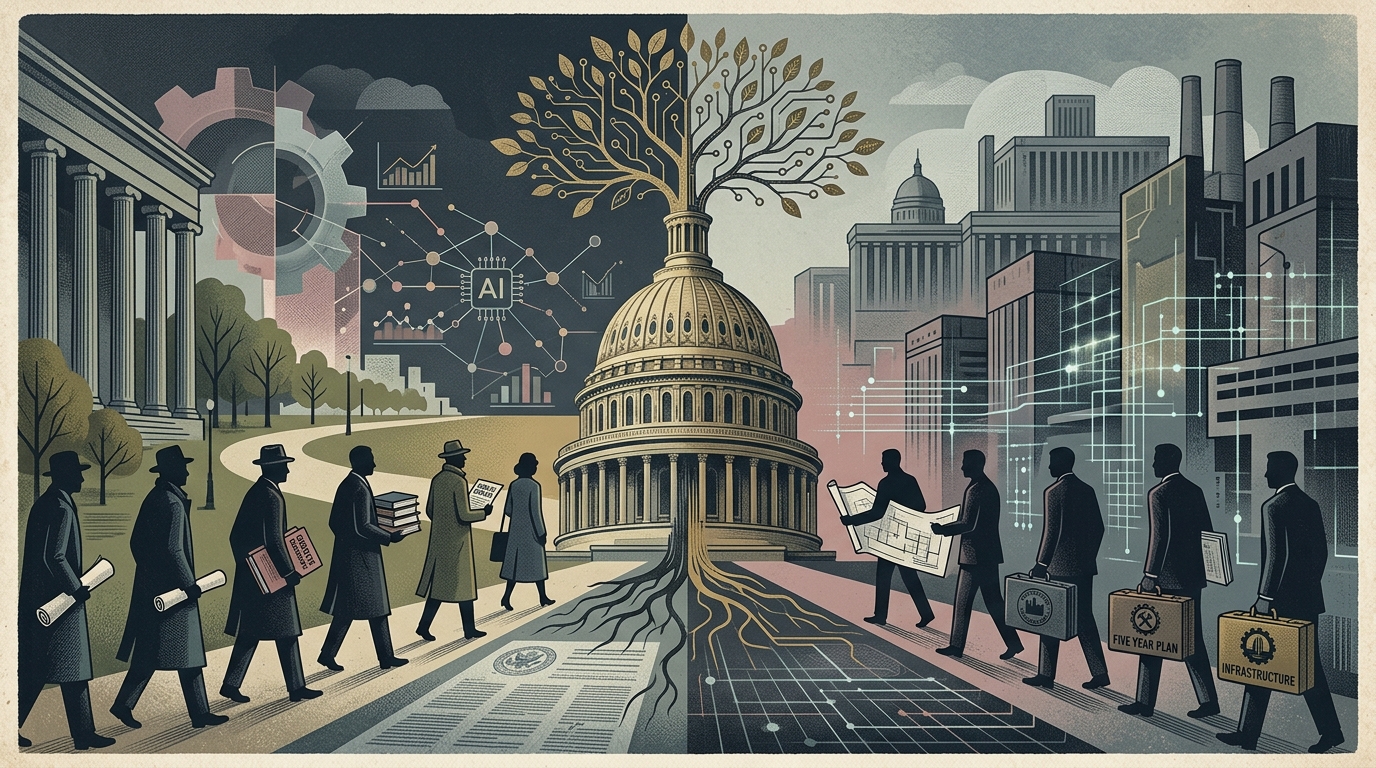
As Artificial Intelligence (AI) weaves itself deeper into the fabric of the global economy, the search for a sustainable regulatory framework has become urgent. Paradoxically, the answer may not lie in futuristic theory but in a well-tested reform from the financial sector: Open Banking. The transition from a closed, siloed banking system to a data-sharing ecosystem powered by APIs offers a compelling blueprint for how AI can be democratized while ensuring competition and consumer protection.
The Legacy of PSD2 and Data Sovereignty
Open Banking, institutionalized in Europe through the PSD2 directive, was built on a simple yet radical premise: transaction data does not belong to the bank; it belongs to the customer. This principle of 'data ownership' allowed third-party providers (fintechs) to develop innovative services, effectively breaking the monopoly of traditional financial institutions. Today, AI faces a similar concentration of power. Big Tech firms control the datasets and the compute, creating 'walled gardens' that stifle independent innovation.
Implementing an 'Open AI' model inspired by banking would mean that users could port their 'digital footprint'—their preferences, interaction history, and personal data—from one AI model (like GPT-4) to another (like Claude or Gemini) without losing context or personalization. This portability is the key to preventing consumer 'lock-in' and fostering a truly competitive marketplace.
Interoperability: The Bridge to Innovation
One of the most significant achievements of Open Banking was the enforcement of common technical standards, specifically APIs. In the AI world, the lack of interoperability is the single greatest hurdle. Every major large language model (LLM) operates as a black box with its own proprietary interfaces. If the Open Banking approach is adopted, regulators could mandate common communication protocols between AI systems.
- Transparent Access: Mandating access to training data logs for regulatory auditing purposes.
- Real-Time Consent: Enabling users to revoke permission for their data to be used in model training at any moment.
- Level Playing Field: Allowing smaller startups to build on top of existing AI infrastructures without requiring billions in upfront capital.
This approach would transform AI from a centralized service into a public infrastructure, much like the power grid or the internet, where value is generated by the services built 'on top' of the network rather than by controlling the network itself.
The Risks and the Ethics of Surveillance
However, transplanting the Open Banking model to AI is not without its perils. While banking data is primarily numerical and structured, AI data is often unstructured, deeply personal, and highly sensitive. 'Openness' carries the risk of mass surveillance if rigorous safeguards are not in place. The financial sector's experience shows that API security is often the weakest link. In AI, a data breach through an 'open' interface could reveal not just a bank balance, but an individual's personality, private thoughts, and psychological profile.
"The challenge is not just to open the data, but to ensure that the key to the gate remains exclusively in the hands of the citizen," note technology policy analysts.
In conclusion, Open Banking taught us that regulation can be a catalyst for innovation when it focuses on user empowerment rather than technological restriction. As AI continues to evolve, the adoption of these principles will determine whether we live in a world of digital feudal lords or in an open, competitive digital economy.