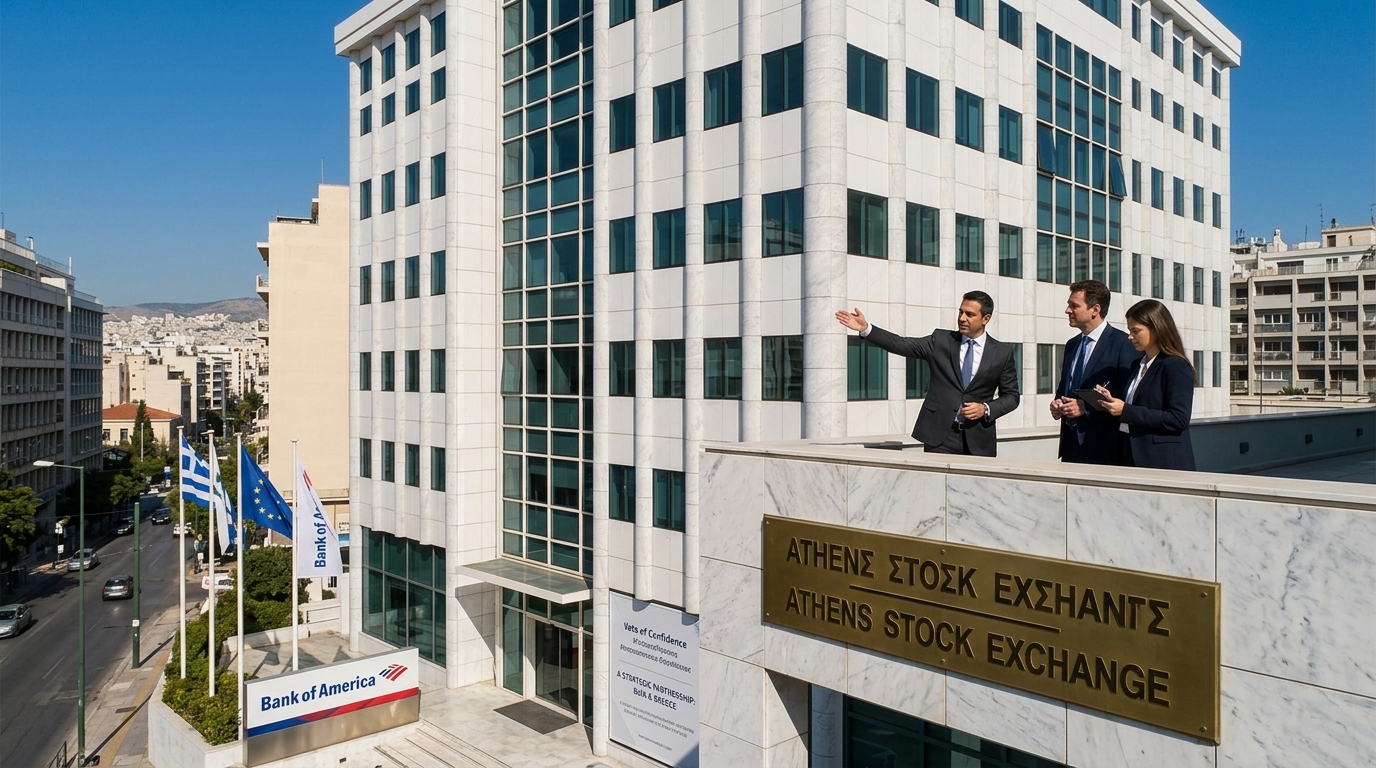
The Greek economy is no longer the "black sheep" of the Eurozone, nor a speculative play for high-risk gamblers. According to the latest report from Bank of America (BofA), Greece has transformed into a "quality story," securing the third spot in the equity market rankings for the EEMEA region (Eastern Europe, Middle East, and Africa), trailing only South Africa and Turkey.
The Metamorphosis of the Greek Market
Greece's ascent on the global investment chessboard is no coincidence. BofA emphasizes that the country has managed to shed the label of being "cheap but dangerous" and now offers characteristics that institutional investors crave: stability, earnings visibility, and robust fiscal discipline. The transition from value investing (buying undervalued assets) to quality investing (investing in high-performing, stable companies) represents the most significant signal of maturity for the Greek capital market.
Analysts at the American bank point out that Greece benefits from a combination of factors rarely seen in the region's emerging or developing markets. Political stability, coupled with a commitment to structural reforms, has created a low-risk environment that allows Greek stock valuations to be compared with those of developed markets in Western Europe, despite Greece still being technically classified as an emerging market by some indices.
The Banking Catalyst and Investment Grade Status
The banking sector remains the central pillar of this resurgence. After a decade of restructuring, Greek banks now boast capital adequacy and profitability ratios that are the envy of many European giants. The successful completion of the Hellenic Financial Stability Fund's (HFSF) divestment from systemic banks sent a powerful message to international markets: the crisis cycle is officially over.
- Return to Dividends: For the first time in 16 years, Greek banks are rewarding shareholders, confirming their organic health.
- NPE Reduction: Non-performing exposures have been reduced to single digits, aligning with the European average.
- Excess Liquidity: Increased deposits and funding through the Recovery and Resilience Facility (RRF) create fertile ground for credit expansion.
The regaining of investment grade status acted as the ultimate "accelerator." It didn't just lower borrowing costs for the state and businesses; it opened the door to a new pool of capital—the so-called "real money" funds—which are legally prohibited from investing in junk-rated countries. This influx of high-quality capital is what is fundamentally changing the character of the Athens Stock Exchange.
Energy, Infrastructure, and Digital Transformation
Beyond banking, Greece's "quality story" is built on specific sectors showing outward-looking growth and high profit margins. The energy sector, led by companies like Metlen (formerly Mytilineos) and PPC (Public Power Corporation), is turning Greece into an energy hub for Southeast Europe. The shift to Renewable Energy Sources (RES) and strategic investments in grids are key arguments for Bank of America's bullish stance.
"Greece is no longer a story of recovery from disaster, but a story of sustainable growth in a volatile global environment," the report notes.
Furthermore, the state's digital transition and the attraction of tech giants like Microsoft, Google, and Amazon for the creation of data centers provide the Greek economy with a technological depth it lacked in previous decades. This ecosystem boosts productivity and diversifies GDP, reducing traditional reliance on tourism and shipping.
Challenges and the Geopolitical Context
Despite the optimism, BofA does not ignore the risks. Geopolitical instability in the Eastern Mediterranean and Ukraine, persistent inflation, and a shortage of skilled labor remain significant hurdles. However, Greece now appears to have the "antibodies" to absorb these shocks. Fiscal outperformance, with primary surpluses exceeding targets, provides the necessary safety net.
In conclusion, Greece's ranking in 3rd place on the EEMEA list by Bank of America serves as a seal of credibility. The country is winning over investors not because it is cheap, but because it is proving it can consistently produce value. The challenge for 2024 and 2025 is to maintain this momentum and ensure that macroeconomic success trickles down to the real economy and citizens' disposable income.