The global financial architecture is facing an unprecedented challenge. As we move through the second quarter of 2026, the integration of Artificial Intelligence (AI) into the arsenal of cybercriminals is no longer a science fiction scenario, but a daily, existential threat to market stability. Recent analysis by Eurasia Review highlights what many central bankers have long feared: AI is acting as a power multiplier for attacks that could trigger a systemic collapse.
The Automation of Chaos: The New Arsenal
Traditional cyber defense methods, based on static rules and historical data, are proving inadequate against attacks that evolve in real-time. Attackers are now utilizing Large Language Models (LLMs) to create phishing campaigns that are practically indistinguishable from official corporate communications. What once required a team of experts and weeks of reconnaissance is now executed in seconds by sophisticated algorithms.
Furthermore, the use of deepfakes—both audio and video—has breached the authentication protocols of major financial institutions. We have already witnessed cases where finance executives authorized multimillion-dollar transfers, believing they were speaking with their CEOs via video call. This erosion of trust in digital identity is the 'master key' to destabilizing the entire financial system.
Systemic Risks and the Domino Effect
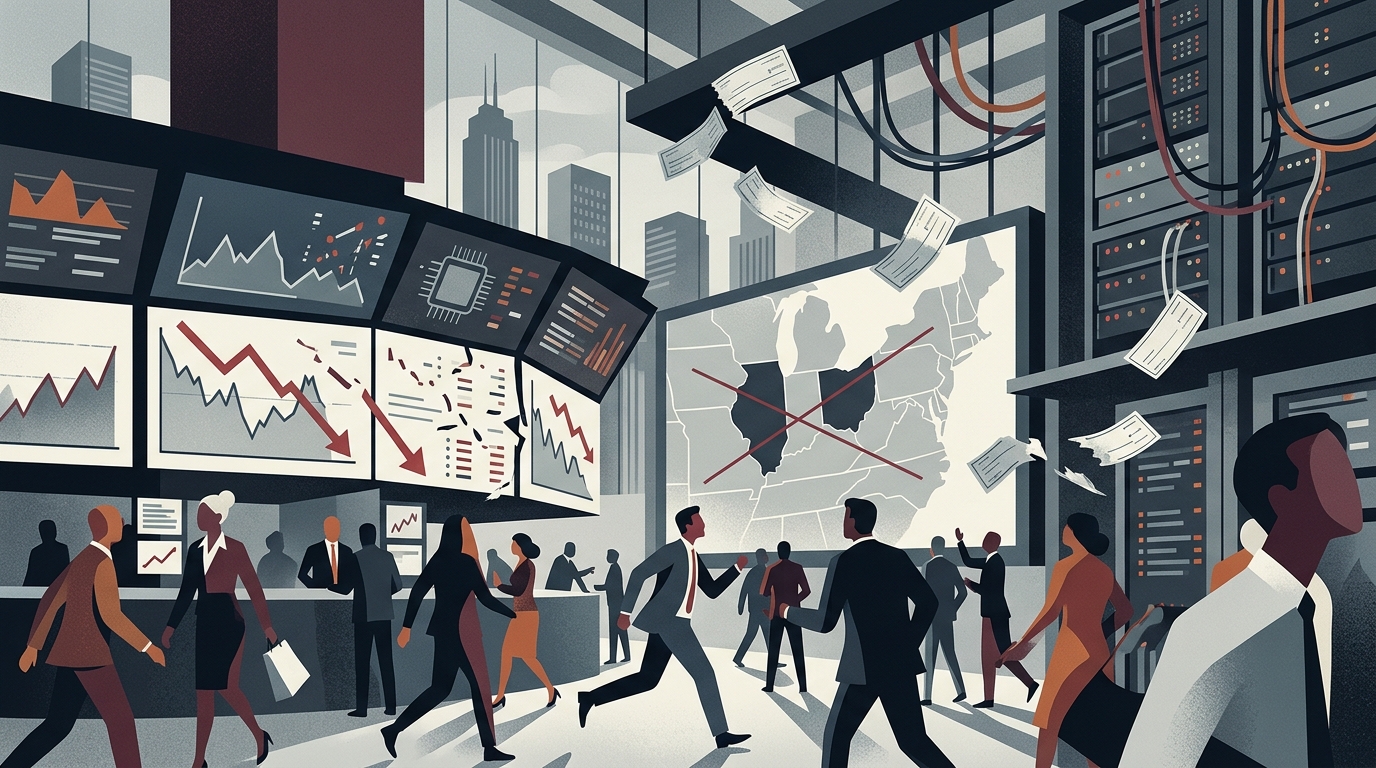
The problem is not limited to individual banks. The interconnectedness of the modern financial system means that a successful AI-driven attack on a critical hub—such as a clearinghouse or a major payment network—could trigger a chain reaction. AI can identify and exploit vulnerabilities across multiple institutions simultaneously, potentially creating a 'digital bank run' scenario.
- Automated vulnerability discovery in open-source software used by thousands of financial institutions.
- Market manipulation through AI-driven disinformation targeting algorithmic trading bots.
- Resource exhaustion (DDoS) attacks that dynamically adapt to bypass firewall defenses.
Regulators, including the European Central Bank and the IMF, are warning that bank capital requirements may need to be revised to account for 'AI operational risk.' Resilience is no longer measured solely by liquidity ratios, but by the ability to respond to a cyberattack moving at the speed of light.
Market Reaction and the Cost of Defense
For corporations, the cost of cybersecurity has skyrocketed. It is no longer enough to purchase off-the-shelf software; firms must now develop 'Defensive AI' capable of countering 'Offensive AI' in real-time. This cyber arms race is absorbing resources that could otherwise be directed toward innovation, significantly impacting the sector's profitability.
"We are at a tipping point where the technology that promised to democratize finance is becoming the primary weapon for its deconstruction," the report notes.
In conclusion, the stability of 2026 depends on the ability of nations and institutions to collaborate. Isolated defense is a recipe for failure. Only through shared threat intelligence and the rigorous regulation of AI model development can we ensure that the global economic structure remains standing in the face of the gathering digital storm.