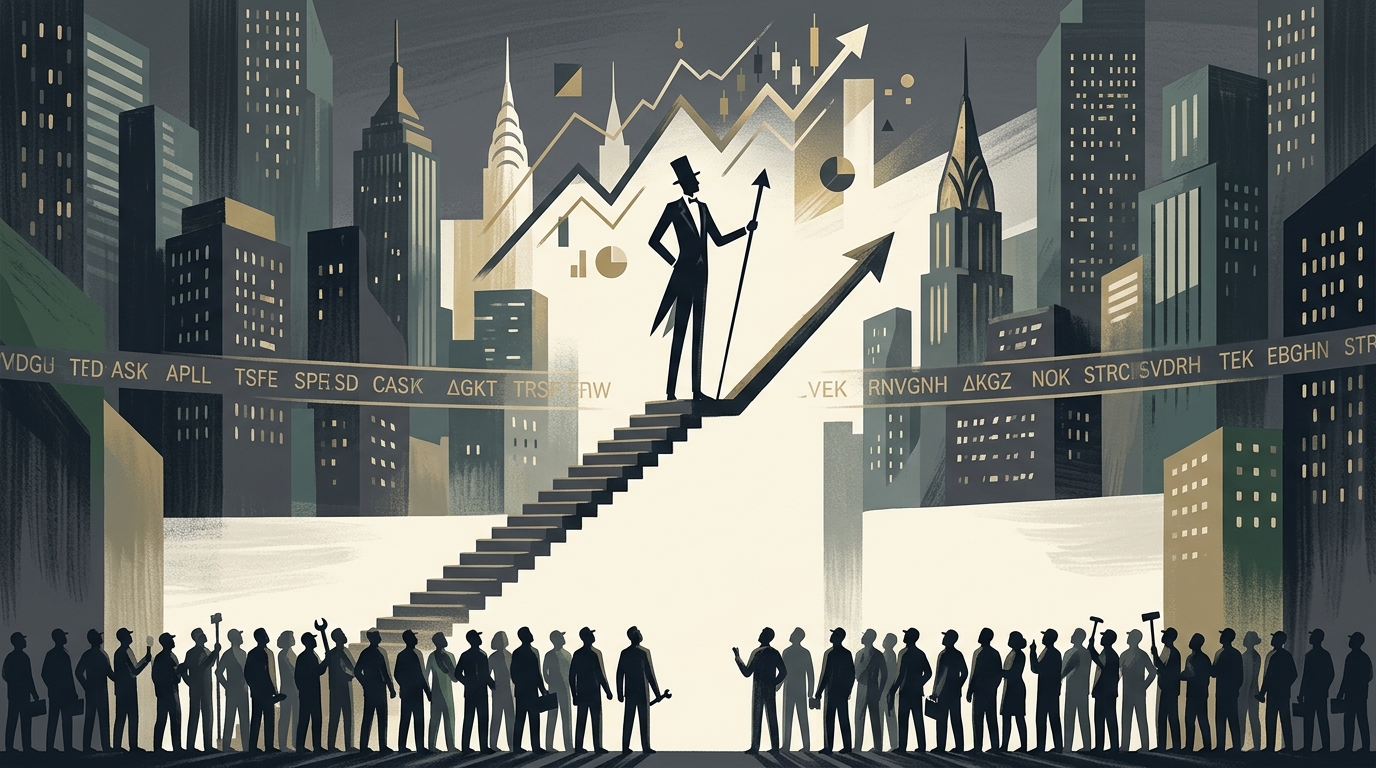
As the final economic figures for 2025 are tallied, a familiar but unsettling pattern is emerging in the boardrooms of the world’s largest corporations. Despite years of rhetoric regarding a more equitable "stakeholder economy," the divide between corporate leadership and the rank-and-file workforce is not just persisting—it is widening at a pace not seen since the beginning of the decade. According to new data, median Chief Executive Officer (CEO) compensation rose by 13% last year, reaching a staggering $4.75 million, while worker wages struggled to keep pace with inflation and technological disruption.
The Digital Performance and the AI Bonus
This surge in executive pay is no accident. The year 2025 was defined by the aggressive integration of Artificial Intelligence into corporate workflows, a move that significantly boosted productivity and profit margins. Shareholders, invigorated by reduced operating costs and enhanced efficiency, were quick to reward the architects of these strategies. However, deep-dive analysis suggests that much of this "performance" was derived from workforce reductions and placing increased pressure on remaining employees to produce more with fewer resources.
- Median CEO pay jumped 13%, vastly outstripping the 3.2% average wage growth seen by general employees.
- The technology and finance sectors recorded the widest disparities, with some CEOs earning over 350 times the salary of their median worker.
- Stock-based awards accounted for 70% of the total compensation increase, buoyed by a resilient, AI-driven bull market.
This disproportionate growth raises fundamental questions about social cohesion. When the success of a firm—built on the collective efforts of thousands—translates into wealth primarily for those at the top of the pyramid, the "social contract" of employment begins to fray. Workers increasingly view automation not as a tool for empowerment, but as a mechanism for wealth concentration that benefits an already privileged elite.
Corporate Governance and the Ethics of Inequality
Proponents of high executive compensation argue that the market for CEO-level talent is global and fiercely competitive, requiring significant financial incentives to attract and retain leaders capable of navigating a volatile geopolitical landscape. However, the pushback from institutional investors and activist shareholders is reaching a fever pitch. The "Say on Pay" movement has become more aggressive, with 2025 seeing a record number of shareholder votes against executive pay packages compared to previous years.
"The current trajectory is fundamentally unsustainable. We cannot maintain a healthy economy when the rewards for innovation are monopolized by a tiny minority, while the risks of disruption are borne entirely by the workforce," says a leading corporate governance analyst.
The gap is not merely a matter of fairness; it is a matter of economic efficiency. Research consistently shows that companies with extreme pay disparities often suffer from lower employee morale, higher turnover rates, and, over the long term, diminished innovation. Creativity requires a sense of shared purpose, which is systematically undermined when a CEO earns in a single day what an average employee earns in an entire year.
Political Ramifications and the Future of Work
On the political front, the debate over taxing excessive compensation and implementing mandatory CEO-to-worker pay ratios is returning to the spotlight. In the European Union, proposals are circulating for stricter transparency and the linking of bonuses to Environmental, Social, and Governance (ESG) targets rather than just short-term stock performance. In the United States, the SEC is under pressure to expand disclosure requirements, forcing companies to explain exactly how executive pay aligns with the overall financial health of their workforce.
As we move into the latter half of the 2020s, the challenge for corporations will be to prove that they can grow without leaving society behind. Artificial Intelligence offers a path toward mass prosperity, but if the distribution of its fruits remains as skewed as the 2025 data suggests, the resulting social and labor backlash could destabilize the very foundations of corporate growth. Future leadership will be judged not just by earnings per share, but by the ability to bridge the divide that today's corporate structures have so aggressively created.