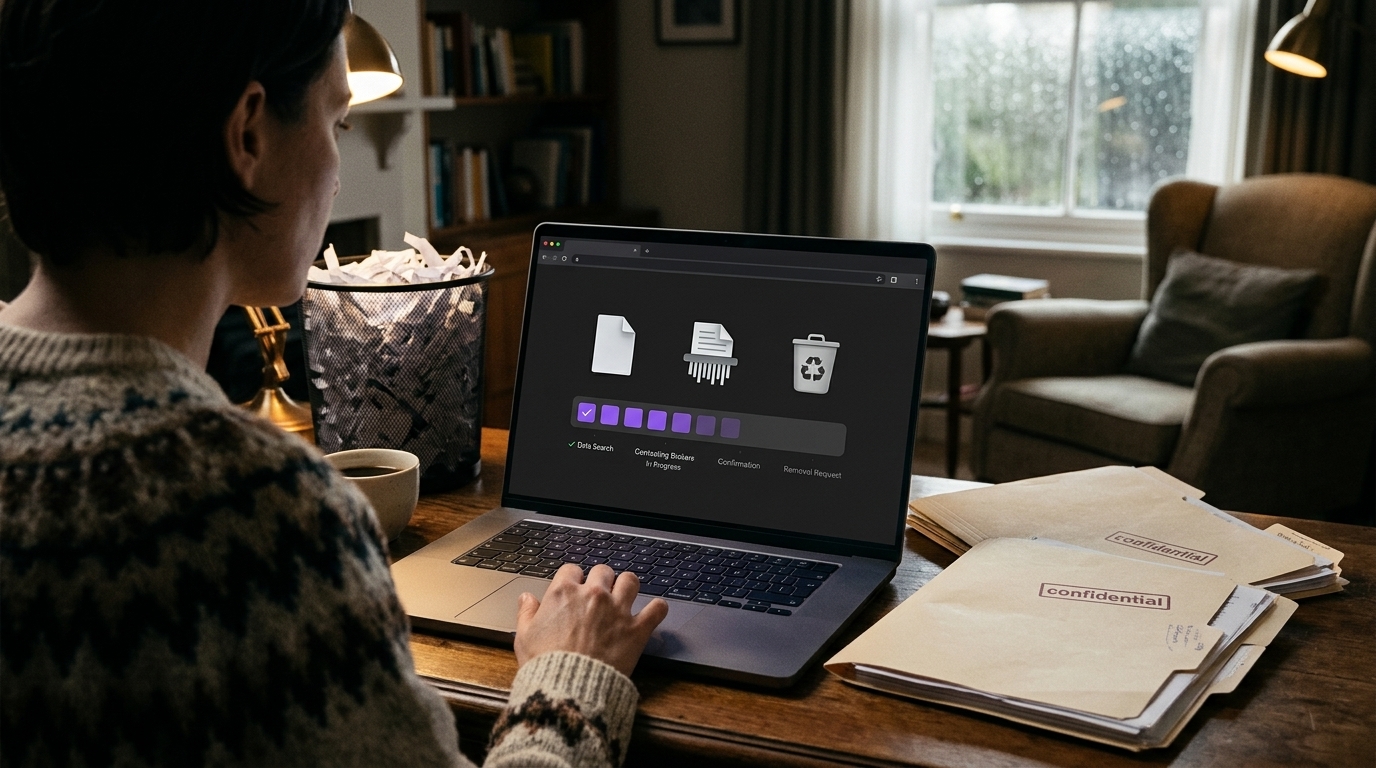
In the modern digital landscape, privacy has shifted from a fundamental right to a luxury subscription. The rise of data brokers has created a shadow industry worth billions, where our personal information—from home addresses to purchase histories—is bought and sold without our explicit consent. In this environment, services like DeleteMe promise to take on the arduous role of a "digital janitor," scrubbing our details from the databases that fuel spam, doxing, and indiscriminate surveillance.
The Anatomy of an Invisible Threat
Data brokers are companies that aggregate information from public records, social networks, and commercial transactions. Sites like Whitepages, Spokeo, and MyLife act as the storefronts for this activity, allowing anyone, for a small fee, to find sensitive data on almost any citizen. The problem isn't just the nuisance of telemarketing calls; it's safety. For victims of harassment, journalists, or public figures, the ease of access to their home address constitutes an existential threat.
DeleteMe, which has been operating since 2011, promises to automate the opt-out process from these sites. Instead of the user manually filling out hundreds of forms—a process that could take weeks of full-time work—the service uses a combination of algorithms and human operators to submit removal requests on their behalf.
The Experience of "Disappearing"
The process begins by providing the very data you wish to protect. It is the first paradox: to be deleted, you must trust DeleteMe with your name, past addresses, phone numbers, and emails. Once registered, the service scans hundreds of people-search sites. Within a few days, the user receives a detailed report showing where their data was found and the status of the removal request.
"The sensation of seeing dozens of listings with your personal address marked as 'pending removal' offers an illusion of control in a chaotic digital world."
However, the reality is more complex. Deletion from a site does not mean permanent disappearance. Data brokers often "regenerate" profiles when they find new data points or when their sources change. This turns privacy protection into an endless game of "Whack-a-Mole." DeleteMe is aware of this, which is why the subscription is annual: it continues to scan the web every three months to ensure the data hasn't resurfaced.
The Legal Void and the Global Context
While the situation in the US often resembles the "Wild West," the European Union's General Data Protection Regulation (GDPR) provides stronger legal tools. Nevertheless, many data brokers operate outside the EU or exploit gray areas. Services like DeleteMe remain useful even for European citizens with digital footprints on international platforms. The difference is that in Europe, deletion is a legal right (the Right to be Forgotten), whereas in the US, it is often a courtesy provided by companies under the pressure of public opinion or local laws like California's CCPA.
Is it Worth the Cost?
At a cost of approximately $129 per year for an individual, DeleteMe is not cheap. For the average user, its value depends on how much they prize their time. Can you do the work yourself? Yes, most sites offer opt-out pages. Will you? Probably not, due to the deliberate bureaucratic friction imposed by brokers.
DeleteMe cannot erase you from Google, government records, or the dark web if your data has been leaked via a hack. What it does, however, is clean the "first layer" of your digital presence—the part accessible to a nosy neighbor, a potential stalker, or a scammer looking for easy phishing targets. In an era where information is the new oil, investing in a "digital broom" might be the most rational move for one's peace of mind.