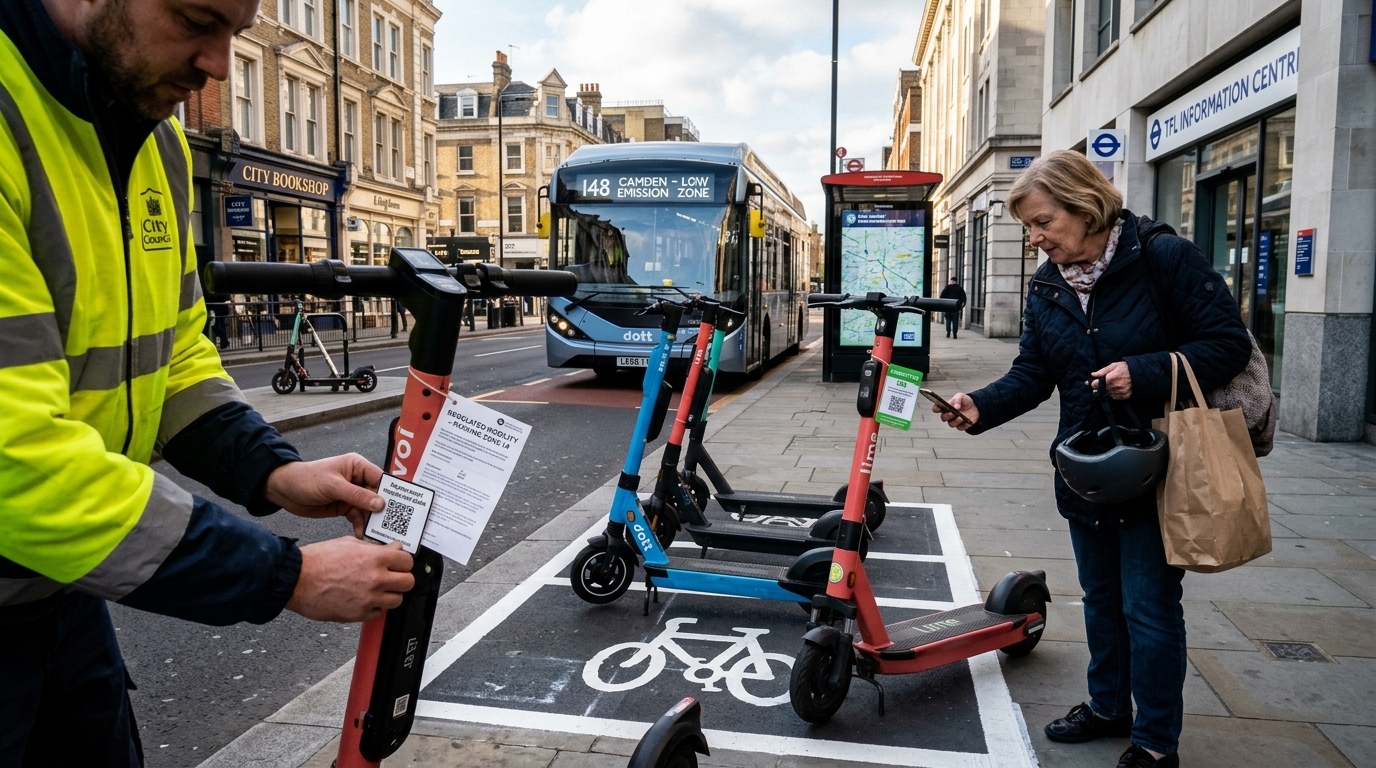
The era of electric scooters weaving recklessly through Athens' traffic or being abandoned haphazardly on sidewalks appears to be reaching its conclusion. The Greek Ministry of Infrastructure and Transport has launched a public consultation on a new bill aimed at transforming Light Personal Electric Vehicles (LPEVs) from a source of urban friction into a regulated component of the city's transport network.
The Age Threshold and Minor Safety
One of the most significant changes introduced by the legislation is the ban on e-scooter use for individuals under the age of 17. Until now, the use of these vehicles by teenagers and children existed in a legal gray zone, leading to a spike in accidents involving young people who often lack formal traffic education. The choice of 17 as the minimum age is strategic, aligning with the age for supervised car driving in Greece, signaling that the state now views the e-scooter as a legitimate vehicle rather than a toy.
Furthermore, the use of helmets is becoming mandatory for all users, regardless of age or the type of road they are traveling on. Compliance will be strictly monitored by the Traffic Police, with substantial fines expected for violators. This move aims to curb serious head injuries, which statistically represent the vast majority of severe trauma in e-scooter accidents globally.
Mandatory Insurance: Accountability for Damages
Perhaps the most debated provision of the new bill is the requirement for mandatory third-party liability insurance. Previously, when an e-scooter collided with a pedestrian or a car, securing compensation was a convoluted and often futile process. Under the new regulations, every owner or rental company must hold an insurance policy covering personal injury and property damage.
This measure is expected to reshape the market. Shared mobility companies will see their operational costs rise, a burden that may eventually be passed on to the consumer. For private owners, the requirement elevates the status of the e-scooter to that of a moped, instilling a sense of responsibility that was previously lacking in the micro-mobility sector.
Speed Limits, Infrastructure, and the 'Paris Model'
The bill confirms a maximum speed limit of 25 km/h for e-scooters. In areas with high pedestrian density, municipalities will have the authority to impose even stricter limits, as low as 6 km/h. Parking is also a focal point, with the legislation outlining specific docking or parking zones to prevent the obstruction of sidewalks and ramps for people with disabilities.
Greece is opting for a middle-ground approach. While cities like Paris chose a total ban on rental e-scooters following a public referendum, Greek authorities are choosing regulation over prohibition. However, urban planners warn that without the simultaneous development of dedicated bike lanes, legislation alone cannot guarantee safety. As long as e-scooters are forced to share the road with heavy vehicles and buses, the inherent risk remains high.
The Enforcement Challenge
The primary concern remains the enforcement of these new rules. Greek legislative history is filled with well-intentioned laws that failed due to a lack of oversight. How will Traffic Police verify a rider's age in real-time? How will they confirm insurance coverage without visible license plates? The bill proposes the use of QR codes or special stickers, but the practical implementation of such a tracking system will be the ultimate test of the reform's success.
In conclusion, the new framework for electric scooters is a necessary adaptation to technological progress. Micro-mobility is essential for reducing urban emissions and traffic congestion, but it cannot thrive at the expense of public safety. The transition from 'recreational gadget' to 'urban vehicle' is now official.