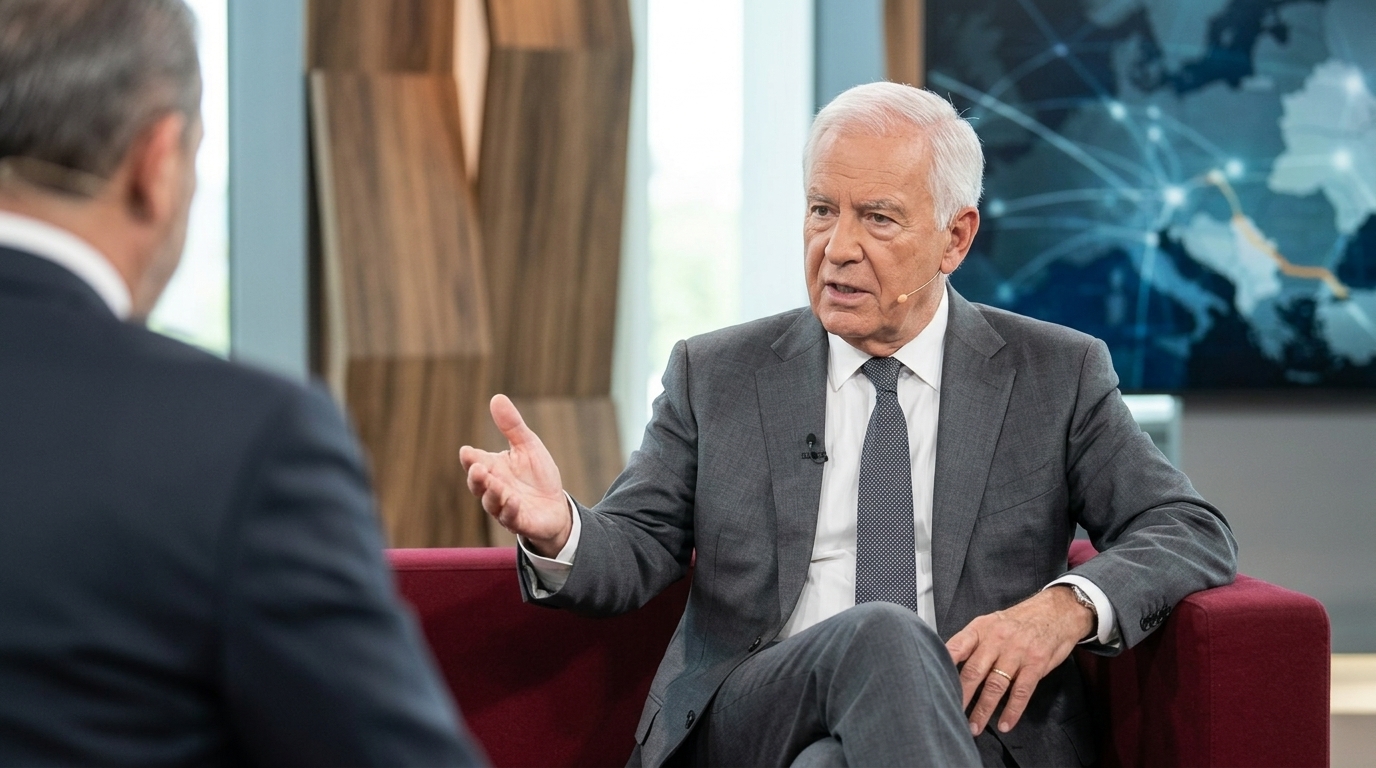
In a period of intense geopolitical turmoil and economic uncertainty, the statements of leading figures in Greek business carry significant weight. At the recent Economist conference, Alexandros Exarchou, Vice Chairman and CEO of the AKTOR Group, presented a realistic, if not sobering, picture of the European Union's future, focusing on the structural weaknesses that threaten its stability.
The "Difficult Winter" and the Energy Trap
Mr. Exarchou did not mince his words regarding the prospects of the European economy. He warned of a "difficult winter," which is not only related to weather conditions but primarily to the persistent inflationary pressures fueled by energy costs. According to his analysis, Europe remains trapped in a dependency that makes it vulnerable to exogenous factors, despite efforts for a green transition.
His criticism focused on the lack of a unified and effective European strategy that could shield member states from fluctuations in international natural gas prices. "The inflation we are experiencing is not transitory, but structural," he noted, emphasizing that the increase in production costs is inevitably passed on to the consumer, undermining purchasing power and social cohesion.
The Vertical Corridor: A Geopolitical Shield
One of Mr. Exarchou's most important references concerned the "Vertical Corridor," a vital project aimed at interconnecting natural gas systems from Greece to Ukraine. The AKTOR Group, through its construction arms, plays a central role in implementing the infrastructure that supports this vision.
The Vertical Corridor is not just a pipeline; it is a strategic choice for decoupling Southeast and Central Europe from Russian natural gas. By utilizing LNG terminals in Greece (such as Alexandroupolis) and the flow towards the North, the region acquires a new energy architecture. Mr. Exarchou stressed that the success of this endeavor depends on the speed of implementation of the interconnections and close cooperation between the countries of the region, which will make Greece a true energy hub.
CrediaBank: The Fifth Pillar of the Banking System
Beyond construction and energy, Mr. Exarchou spoke extensively about developments in the banking sector, focusing on the creation of CrediaBank. The merger of Attica Bank with Pancreta Bank, under the umbrella of Thrivest, is one of the most ambitious projects in the Greek market in recent years.
The goal of CrediaBank is to become the "fifth banking pillar," offering an alternative to the oligopoly of systemic banks. Mr. Exarchou highlighted the importance of supporting small and medium-sized enterprises (SMEs), which often find the doors of large banks closed. "The Greek economy cannot grow if its backbone is not funded," he stated, noting that CrediaBank will focus on flexibility and the personal relationship with the customer—elements that have been lost in the altar of digitalization and the strict criteria of systemic institutions.
The Need for Investment and the Draghi Report
Concluding his speech, the head of AKTOR linked domestic developments to the broader European context, making an indirect reference to the proposals of the Draghi report on competitiveness. Europe needs massive investments in infrastructure, defense, and technology to avoid falling behind the US and China.
For Greece, the challenge is twofold: to effectively absorb the resources of the Recovery Fund and simultaneously create a friendly environment for private investment. Mr. Exarchou made it clear that the AKTOR Group is ready to play a leading role in this effort, transforming into a multifaceted group that covers the full range of the country's developmental needs, from concessions and energy to banking and real estate.