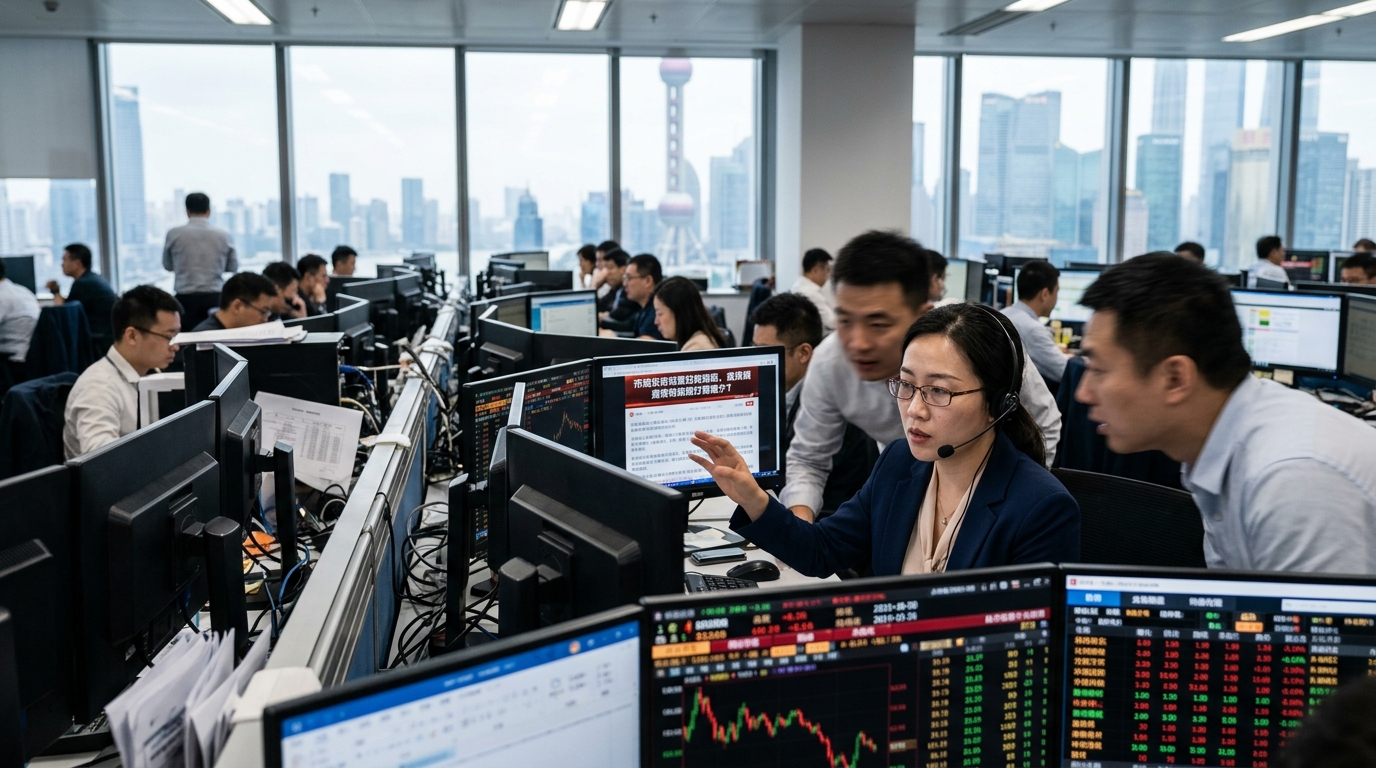
In the heart of China's tech ecosystem, a quiet yet transformative revolution is underway, threatening to upend the economic foundations of the entire Artificial Intelligence industry. DeepSeek, a startup that has already earned the respect of the global open-source community, has announced a drastic reduction in usage fees for its new flagship model, triggering a ruthless price war that is forcing giants like Alibaba, Baidu, and Tencent to urgently recalibrate their strategies.
The Architecture of Disruption
DeepSeek's move is far from a mere marketing stunt; it is the culmination of profound technological optimization. The new DeepSeek-V3 model, which directly challenges OpenAI's GPT-4o across numerous benchmarks, is now being offered at a price that represents a mere fraction of its competitors' costs. The company utilizes a sophisticated Mixture-of-Experts (MoE) architecture, which allows the model to activate only a subset of its parameters during the processing of each request, thereby dramatically lowering computational overhead.
This efficiency is paramount in an environment where access to high-end hardware, such as Nvidia's H100 GPUs, is constrained by US export restrictions. Chinese developers have been forced to become more inventive with their software stack, and DeepSeek appears to have found the 'sweet spot' between high performance and low cost. As industry analysts note, DeepSeek’s pricing makes AI accessible even to the smallest enterprises, effectively turning AI from a luxury enterprise tool into a daily commodity.
The Domino Effect and the 'Race to the Bottom'
The market's reaction was instantaneous. Within hours of DeepSeek's announcement, Alibaba Cloud implemented its own price cuts for the Qwen model series, while Baidu announced that several of its lighter Ernie models would now be provided free of charge for enterprise clients. What we are witnessing is a classic 'race to the bottom,' where profit margins are squeezed to the bone in a desperate bid to capture market share.
- 'Scorched Earth' Strategy: Large incumbents are sacrificing short-term profitability to price out smaller competitors and startups.
- Democratization of Access: Falling prices enable thousands of startups to integrate AI into their products without the fear of financial depletion.
- Pressure on the West: While OpenAI and Anthropic maintain premium pricing based on brand prestige, the pressure from China may eventually force a revision of their international pricing strategies.
Geopolitical and Economic Implications
The price war in China isn't just about dollars and cents; it’s a power play in an era where technological supremacy is synonymous with national security. DeepSeek’s ability to produce world-class models with significantly lower training costs shatters the narrative that only US-based firms with unlimited capital can lead in the AI space.
"We aren't just seeing a price cut; we are seeing the maturation of an entire industry learning to do more with less," says a leading tech analyst in Beijing.
However, there are inherent risks. Extreme margin compression could lead to reduced R&D investment in the long run if companies cannot recoup the massive costs of training next-generation models. Furthermore, the reliance on state support in China could further distort competition, potentially creating 'zombie' AI firms that survive solely on subsidies rather than genuine innovation.
The Future: From Model to Application
As the cost per 'token' (the fundamental unit of AI measurement) approaches zero, the market's focus is shifting from who possesses the most powerful model to who can build the most useful application on top of it. DeepSeek, through its aggressive policy, is forcing the entire ecosystem to move faster toward implementation and commercial utility, leaving behind theoretical debates about parameter counts.
In conclusion, DeepSeek's move represents a milestone. It signals the end of the 'hyper-profit' era for AI infrastructure providers and the beginning of a new chapter where intelligence will be as cheap and ubiquitous as electricity. For the rest of the world, the message is clear: China is not just trying to catch up; it is attempting to leapfrog the West by fundamentally changing the rules of the game.