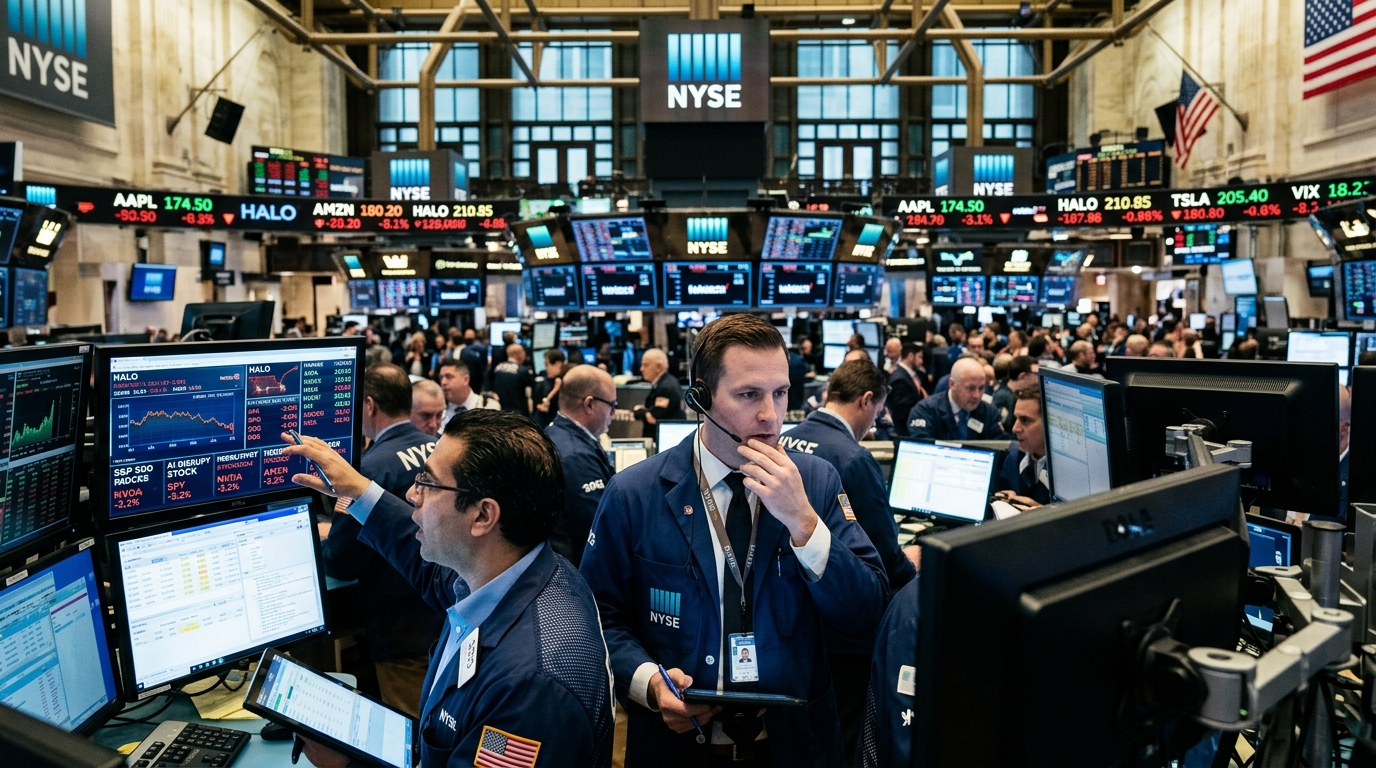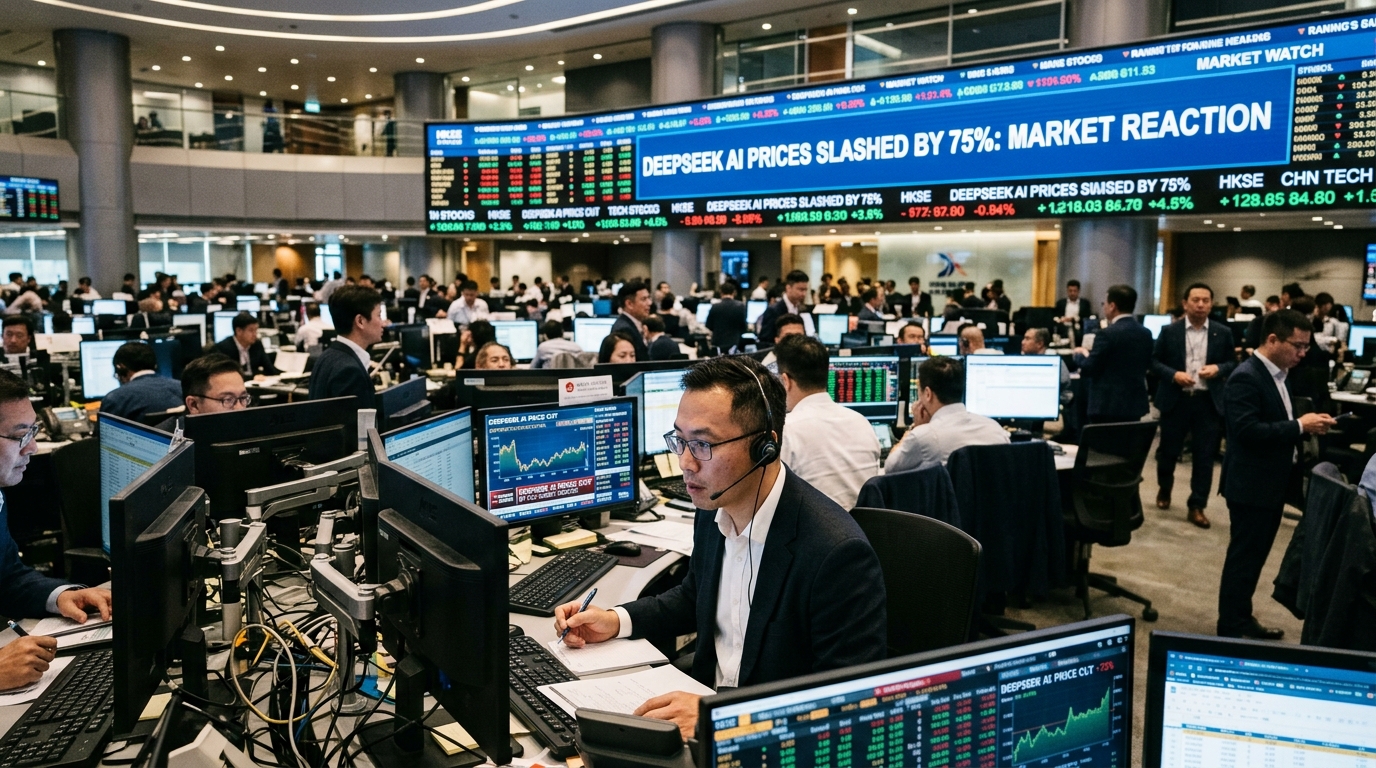
In a move that many analysts are calling the opening salvo of an unprecedented "price war," Chinese AI startup DeepSeek has announced a staggering 75% price cut for its flagship model, DeepSeek-V2. This development is not merely a commercial shift; it is a strategic disruption that upends the global AI industry's economic foundations, putting immense pressure on American titans like OpenAI and Google, as well as domestic rivals like Baidu and Alibaba.
DeepSeek, a company birthed from the quantitative trading world via High-Flyer Quant, has proven that algorithmic efficiency can effectively bypass hardware constraints. In an era where U.S. sanctions limit China's access to Nvidia's top-tier silicon, DeepSeek has engineered an architecture that delivers GPT-4 level performance at a fraction of the operational cost.
The Mixture-of-Experts (MoE) Advantage
The secret sauce behind DeepSeek’s aggressive pricing lies in its Mixture-of-Experts (MoE) architecture. Rather than activating the entire neural network for every single query, the model selectively engages only a specialized subset of parameters relevant to the task. This drastically reduces the computational overhead and, consequently, the cost per token.
With the new pricing structure, the cost for 1 million input tokens is a mere 1 yuan (approximately $0.14), while output tokens are priced at 2 yuan. To put this in perspective, these rates are nearly ten times cheaper than comparable models from OpenAI in the global market. This move forces the industry to confront a critical question: Is artificial intelligence a high-margin luxury good, or is it rapidly becoming a commodity utility, akin to electricity or bandwidth?
"We aren't just seeing a price cut; we are witnessing the demystification of the cost of intelligence," says a senior tech analyst in Beijing. "DeepSeek is signaling to the world that access to advanced reasoning should not be a gatekept luxury."
Geopolitics and the Chinese 'Involution'
DeepSeek’s announcement triggered an immediate chain reaction within the Chinese tech ecosystem. Within hours, ByteDance (the parent company of TikTok), Alibaba, and Baidu announced their own price slashes, with some tiers seeing 90% reductions or even becoming free for enterprise users. This phenomenon, often referred to in China as "involution" (neijuan)—a state of hyper-competition where companies expend vast resources to maintain market position—suggests that firms are willing to bleed short-term profits to secure a foothold in the future’s core infrastructure.
On the international stage, this creates a significant headache for Silicon Valley. While OpenAI and Anthropic have focused on scaling model capabilities at all costs, the Chinese approach is pivoting toward accessibility and integration. If global developers begin flocking to Chinese APIs due to sheer cost-efficiency, the Silicon Valley "moat" around the AI application ecosystem could begin to erode.
Implications for Developers and the Global Market
For startups and developers, this price war is a windfall. Lower operational costs mean they can build and test complex, multi-agent workflows that were previously cost-prohibitive. However, there is a strategic catch: if "intelligence" becomes cheap and ubiquitous, the value proposition shifts away from the model itself and toward proprietary data and specialized user experiences.
In conclusion, DeepSeek’s move signals the end of the high-margin era for Large Language Models (LLMs). As we progress through 2026, the market must adapt to an environment where computational intelligence is abundant and inexpensive. The challenge for industry players will no longer be who possesses the largest model, but who can deliver the most reliable, integrated, and economically viable solution at scale. The race to the bottom has begun, and the winners will be those who can survive on the thinnest of margins.