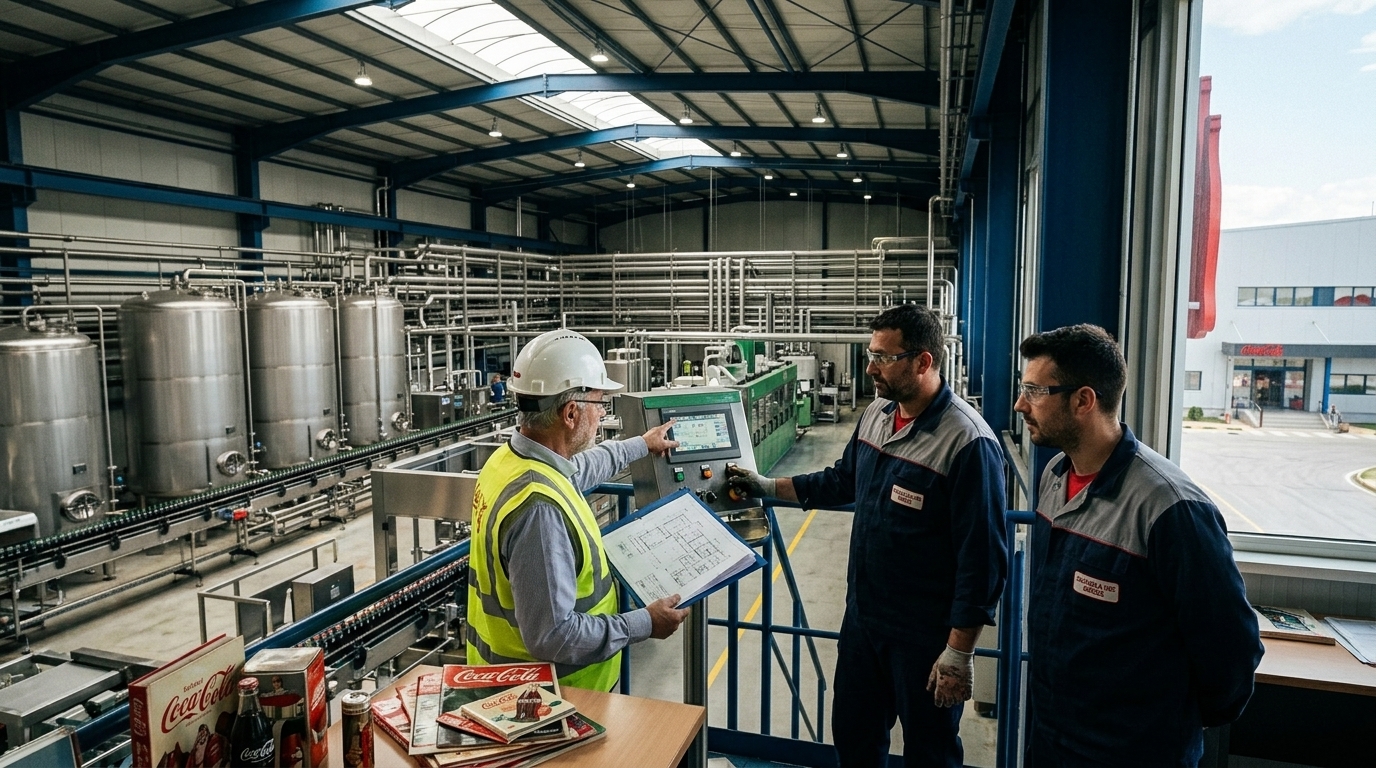
At a time when the Greek economy is seeking stable foundations for its transition to a sustainable growth model, Coca-Cola HBC (Hellenic Bottling Company) reaffirms its role as a cornerstone of domestic industry. The €180 million investment plan for the next five years is not merely a capital expenditure; it is a strategic declaration of confidence in the prospects of the Greek market and the pivotal role the country can play as an export hub for the broader Southeastern European region.
The Landmark Investment in Schimatari
The centerpiece of this new chapter is the "Mega-Plant" in Schimatari, which is already the largest soft drinks and juice factory in Greece. The recent inauguration of the new, state-of-the-art PET production line represents the culmination of an effort to fully automate and digitize the production process. This new line is not only the fastest within the group but also one of the most technologically advanced in Europe, incorporating artificial intelligence systems for quality control and energy optimization.
The investment in Schimatari aims to increase production capacity by 20%, allowing the company to meet growing demand both domestically and in the 28 countries where the Group operates. The strategic choice to strengthen Schimatari is inextricably linked to reducing the environmental footprint, as proximity to Athens and the use of new technologies drastically reduce CO2 emissions from transport and production.
Logistics and Digital Transformation
Beyond production, Coca-Cola HBC is investing in a new, flagship logistics center in Attica. This center, operating with the latest technology in automated storage and retrieval systems (AS/RS), is expected to reshape the company's distribution network. According to market analysts, supply chain optimization is critical in an environment of intense inflationary pressures and increased energy costs.
- Automation: Use of robotic systems for order preparation and sorting.
- Smart Data: Real-time data utilization for precise demand forecasting.
- Green Logistics: Gradual fleet replacement with low-emission and electric vehicles.
Digitization also extends to the point of sale. Through the "Smart Coolers" program, the company is deploying next-generation refrigerators that communicate directly with the control center, providing updates on inventory and maintenance needs. This technology ecosystem creates a competitive advantage that is difficult to replicate, while simultaneously enhancing the profitability of partner retailers.
Sustainability and Circular Economy
A central pillar of the investment plan is the transition to a waste-free economy. Coca-Cola HBC has committed that by 2030, 100% of its packaging will be recyclable, while a significant percentage of PET bottles are already produced from recycled plastic (rPET). The investment in the new production line at Schimatari directly supports this goal, as it allows for the use of lighter packaging and easier integration of recycled materials.
"Our investment in Greece is not just about the numbers; it's about people and the environment. We want to be the catalyst for an industry that generates value while respecting the planet," corporate management sources state.
The company's social impact is equally significant. With more than 1,500 direct employees and thousands more through the supply chain, Coca-Cola HBC remains one of the largest private-sector employers in Greece. The "Empowered" program, aimed at enhancing youth skills, is part of the broader corporate social responsibility strategy, linking business success with social prosperity.
Conclusions and Outlook
The €180 million plan positions Coca-Cola HBC at the forefront of the Greek Industry 4.0 landscape. In an environment of global uncertainty, focusing on local production, technological upgrades, and sustainability is the only viable path forward. The success of this venture will be judged not only by financial results but also by the company's ability to lead the green transition in the food and beverage sector in Greece.