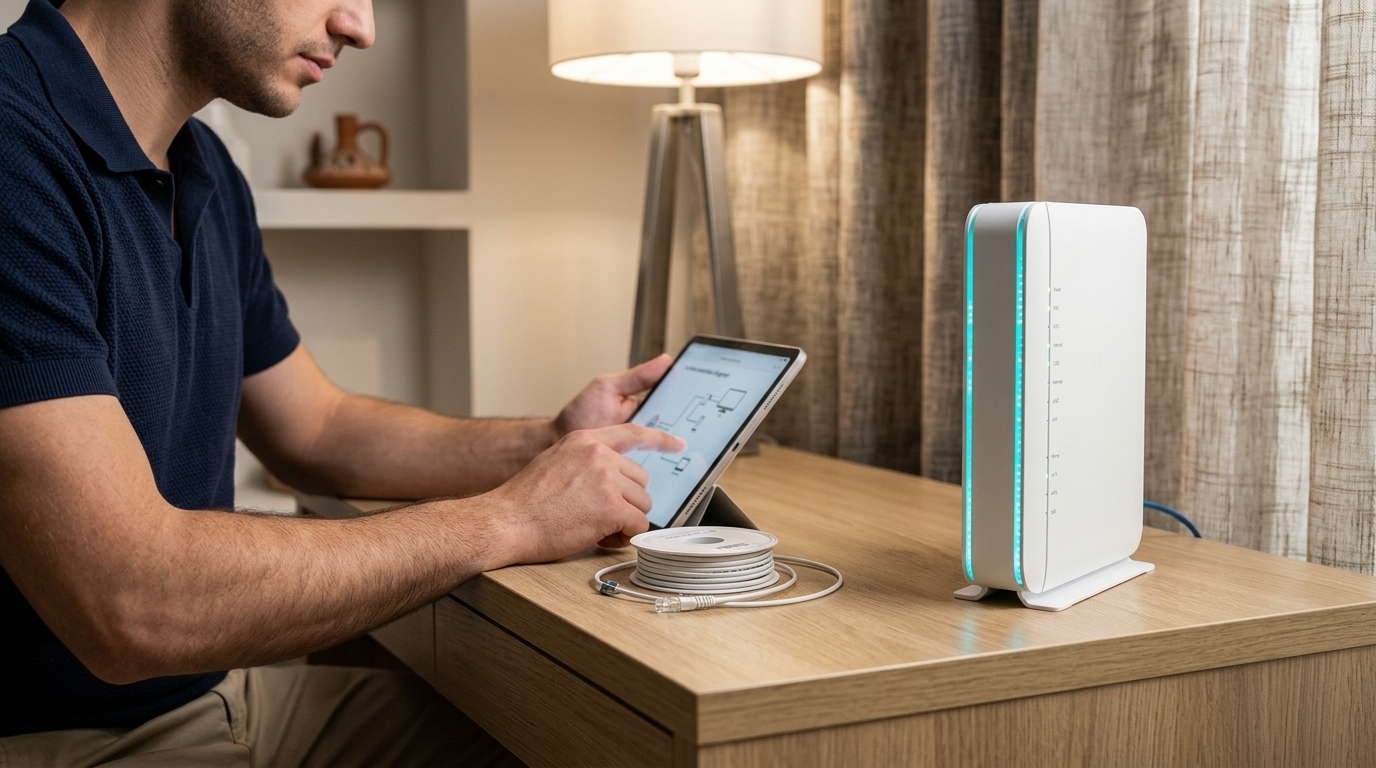
The era when the Public Power Corporation (PPC) was identified exclusively with the production and distribution of electricity is officially over. In a move that completely reshapes the telecommunications map in Greece, PPC is dynamically entering the fixed telephony market, offering new programs that combine high-speed fiber optic internet and unlimited communication. This strategic choice is not just an expansion of activities, but a head-on collision with traditional providers (OTE, Vodafone, Nova), armed with its massive customer base and infrastructure.
The New Program and Its Features
PPC's new venture focuses on providing integrated solutions for the modern household. The core fixed telephony package announced offers unlimited calls to all national landlines and mobile phones, covering communication needs without hidden charges. Additionally, for users who maintain contacts abroad, the company provides the option to add a service (Add On) of 1,000 minutes for international calls, a move aimed at both immigrants living in Greece and businesses with international activities.
This service "snaps" onto the fiber optic network being developed by its subsidiary, PPC FiberGrid. Utilizing HEDNO's (the distribution network operator) aerial network allows the company to deploy FTTH (Fiber to the Home) networks at speeds that far exceed conventional solutions, reaching up to 1 Gbps in selected areas. This gives PPC a significant cost and implementation speed advantage over its competitors, who rely mainly on underground routing.
The "One-Stop-Shop" Strategy
But why would a power company invest billions in telecommunications? The answer lies in the international trend of "convergence." Large providers worldwide aim to become the home's sole supplier. By offering electricity, natural gas, internet, and telephone in a single bill, PPC increases customer "stickiness." It is much harder for a consumer to switch providers when all their basic home services are concentrated in one company.
Furthermore, PPC leverages the data and contact it has with millions of households. By digitizing its services through the MyDEI application, the company aspires to create an ecosystem of services. Consumers will be able to manage energy consumption, pay their phone bills, and control their smart home devices within a single environment. This holistic approach changes the game, as PPC is no longer just selling kilowatt-hours, but "comfort and connectivity."
Competition and Challenges
PPC's entry into the market is causing ripples. Traditional telecom providers are facing a player with massive liquidity and access to infrastructure they cannot easily match. The market expects a "price war," which in the first phase will benefit the consumer, as Greece remains one of the most expensive countries in Europe regarding the cost of data and broadband connections.
However, PPC also faces significant challenges. Customer service in the telecommunications sector is much more demanding than in energy. Technical internet failures require immediate response, which will test the company's structures. Also, the regulatory framework of the EETT (Hellenic Telecommunications and Post Commission) is strict, and competitors are certain to exhaust every legal means to limit PPC's dominance, citing issues of unfair competition due to its dominant position in energy.
The Future: Towards a Digital Ecosystem
This move is just the beginning. Analysts estimate that PPC will soon expand into other services, such as home insurance, security services, and e-mobility management. In reality, PPC is transforming into a tech giant that uses electricity as a "vehicle" to enter every aspect of the citizen's daily life. If it manages to combine the reliability of its infrastructure with a modern, customer-centric approach, then the Greek telecommunications market will never be the same again.
In conclusion, PPC's entry into fixed telephony is a milestone for the Greek economy. It is proof that former state monopolies can evolve into flexible free-market players, challenging the status quo and offering new options to citizens. The bet now is implementation: the quality of service will determine whether PPC becomes the new leader in telecommunications or remains a powerful player in energy with "supplementary" services.