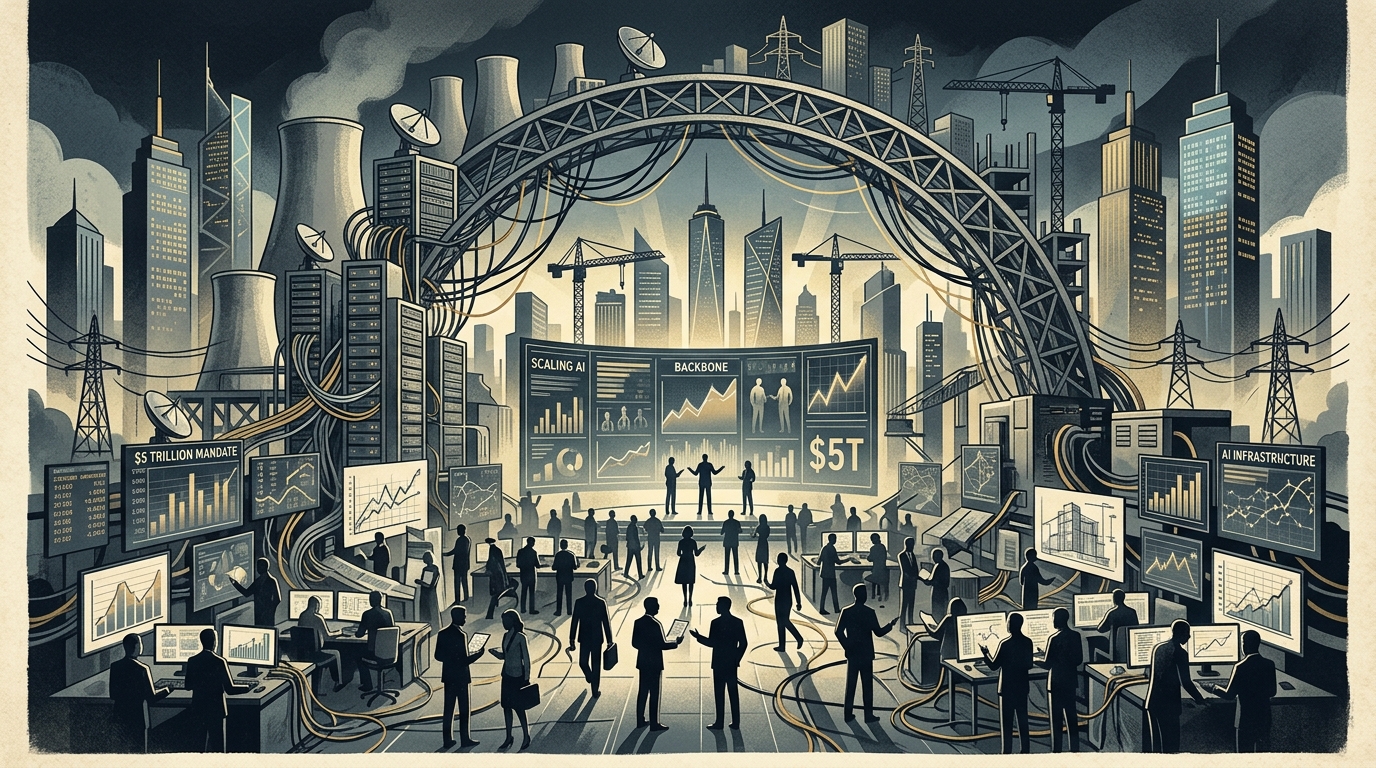
As we navigate the summer of 2026, the initial euphoria surrounding the Generative AI explosion is giving way to a more sober, if not skeptical, reality. CEOs of the world’s largest corporations, having poured billions of dollars into infrastructure, software licenses, and specialist hiring over the past three years, are now under intense shareholder pressure. The question is no longer "what can AI do?" but "when will we see the profits on the balance sheet?"
The End of Experimentation and the Era of Accountability
For two years, businesses operated under a regime of FOMO (Fear Of Missing Out). The urge to demonstrate to investors that they were "modernizing" led to the hasty adoption of technologies without clear Return on Investment (ROI) roadmaps. Today, the landscape has shifted radically. CEOs are now demanding rigorous Key Performance Indicators (KPIs) before greenlighting new AI budget allocations.
According to recent surveys of Fortune 500 companies, over 60% of executives state that their expectations for productivity gains have yet to materialize at the expected scale. While AI has proven exceptional at isolated tasks—such as code generation or first-tier customer support—integrating it into complex corporate workflows remains a costly and elusive challenge.
The Productivity Paradox and Infrastructure Costs
One of the primary hurdles to profitability is the staggering cost of operation. Training and maintaining Large Language Models (LLMs) require computational power that consumes vast amounts of energy and capital. GPU prices remain elevated, and cloud computing providers have increased their rates to recoup their own massive infrastructure investments.
- The difficulty of measuring "soft" productivity (time savings that don't directly translate to cost reduction).
- The high failure rate of AI projects that never progress beyond the "Proof of Concept" (PoC) stage.
- The shortage of skilled personnel capable of bridging the gap between technical capability and business strategy.
Many CEOs are discovering that saving 15 minutes of an employee's day adds nothing to the bottom line if that time isn't reinvested into revenue-generating activities. This "productivity paradox" echoes the introduction of personal computers in the 1980s, where it took years for the benefits to manifest in macroeconomic data.
Pivot Toward Specialized Models and Vertical AI
The new strategy emerging in 2026 is the abandonment of general-purpose, hyper-expensive models in favor of smaller, specialized models (Small Language Models - SLMs). These models are trained on specific proprietary data, operate at a fraction of the cost, and offer higher accuracy in specialized fields such as law, medicine, or supply chain management.
"We don't need a digital philosopher that writes poetry. We need an algorithm that predicts warehouse shortages with 99% accuracy," remarked the CEO of a major European retail chain.
The market is now punishing reckless spending. Tech vendors providing AI solutions are being forced to alter their pricing models, offering performance guarantees or linking their fees to the actual savings achieved by the client. This maturation of the market is essential to avoid a "bubble" reminiscent of the dot-com era.
Conclusion: The Path Forward
The demand for proof does not signal the end of artificial intelligence, but rather its coming of age. The companies that will survive and thrive in this new environment are those that treat AI not as a magic wand, but as another capital investment tool that must justify every dollar spent. The focus is shifting from the "wow factor" to the "bottom line," and this is perhaps the healthiest development for the tech ecosystem in years.