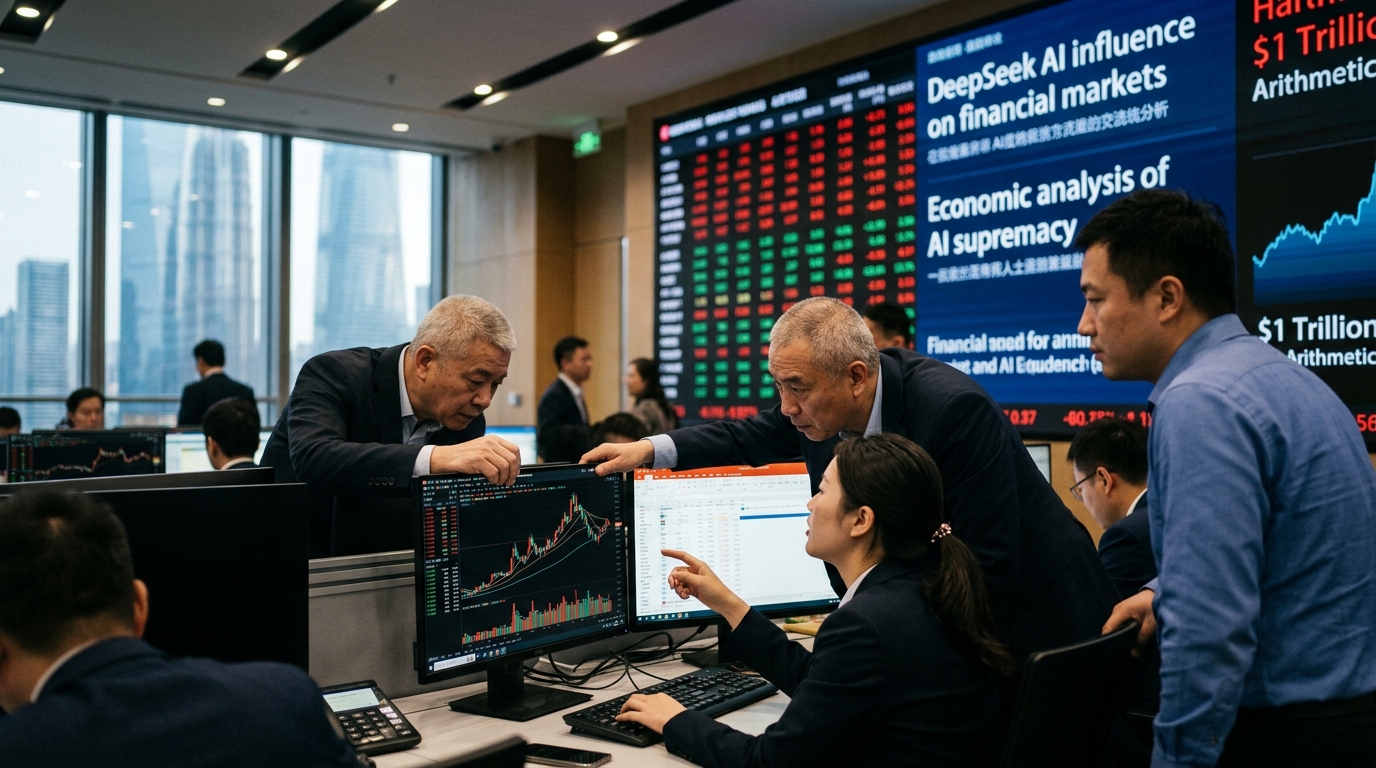
In the hallowed halls of Silicon Valley, the dominant narrative of the past few years has been straightforward: Artificial Intelligence requires billions. Billions in Nvidia GPUs, billions in kilowatt-hours of energy, and billions in venture capital. However, the emergence of DeepSeek, a Chinese AI lab backed by High-Flyer Quant, has shattered this consensus, proposing a radically different approach that could save the Chinese economy up to $1 trillion over the next decade.
The question is no longer just who has the smartest model, but who can train it at the lowest cost. DeepSeek proved that with clever architecture and mathematical optimization, a model competing with OpenAI's GPT-4o can be trained at a fraction of the cost. This 'efficiency revolution' represents Beijing's most potent weapon in the technological cold war with Washington.
Deconstructing the Scaling Dogma
For years, OpenAI and Google followed 'scaling laws' which dictated that increasing data and compute power leads linearly to better results. This triggered a frantic arms race, with American firms planning $100 billion data centers. DeepSeek, however, chose the path of algorithmic innovation over brute force.
By employing techniques like Multi-head Latent Attention (MLA) and Mixture-of-Experts (MoE), DeepSeek drastically reduced memory and compute requirements during both training and inference. While a typical Western flagship model might have cost hundreds of millions of dollars to train, DeepSeek achieved comparable performance for just $6 million. If this ratio is applied at a national scale, China can meet its AI goals without spending the $1 trillion originally estimated for infrastructure and semiconductor imports.
A Geopolitical Shield Against Sanctions
US restrictions on high-end Nvidia chip exports (such as the H100 and B200) were designed to 'throttle' Chinese AI development. Washington's strategy rested on the assumption that without top-tier compute, China would inevitably fall behind. DeepSeek has proven this assumption flawed.
By optimizing code efficiency, Chinese researchers can now achieve GPT-4 level results using older generation chips or less powerful domestic alternatives. This isn't just a technical victory; it's a geopolitical pivot. The 'trillion-dollar barrier'—the massive cost China would have had to pay to circumvent sanctions—is crumbling in the face of algorithmic ingenuity. These saved resources allow Beijing to redirect capital toward other critical sectors, such as robotics and next-generation lithography.
Economic Implications and the GPU Market
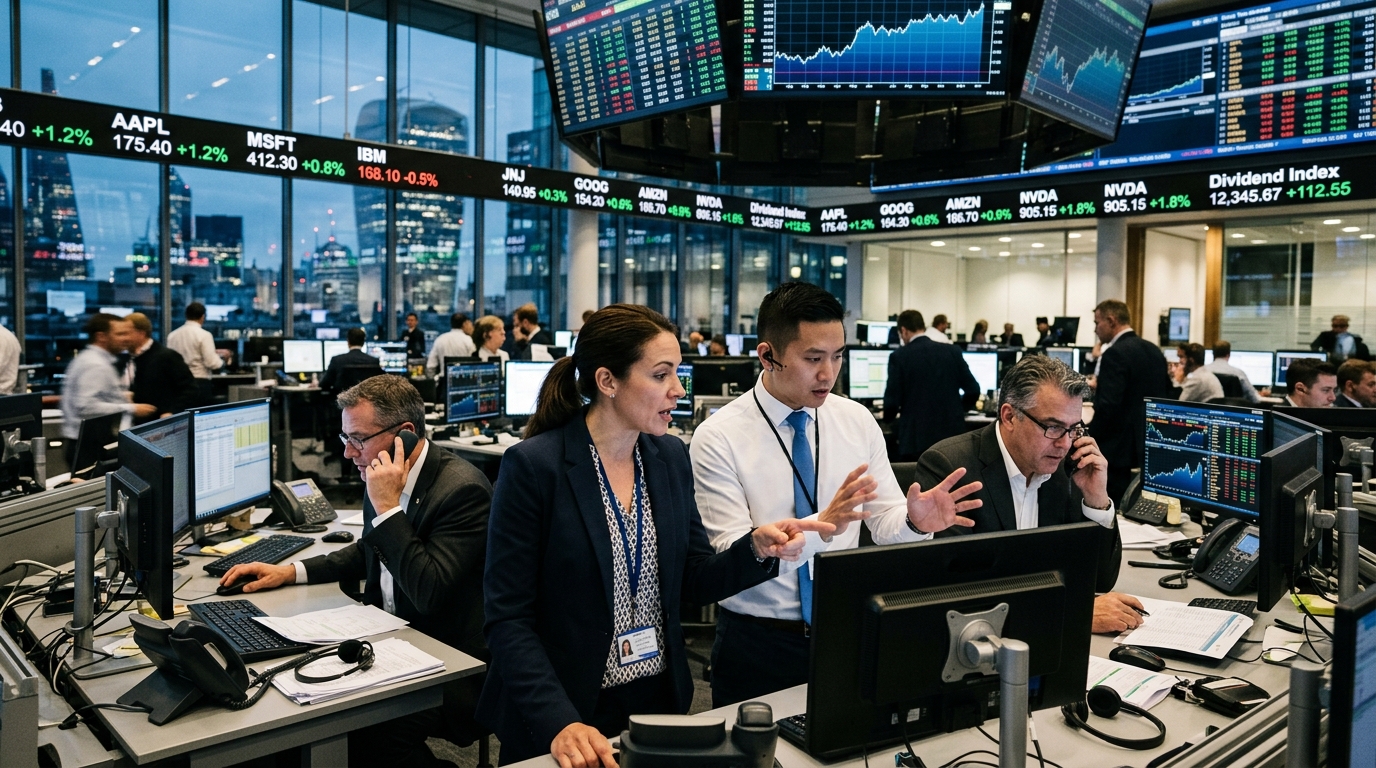
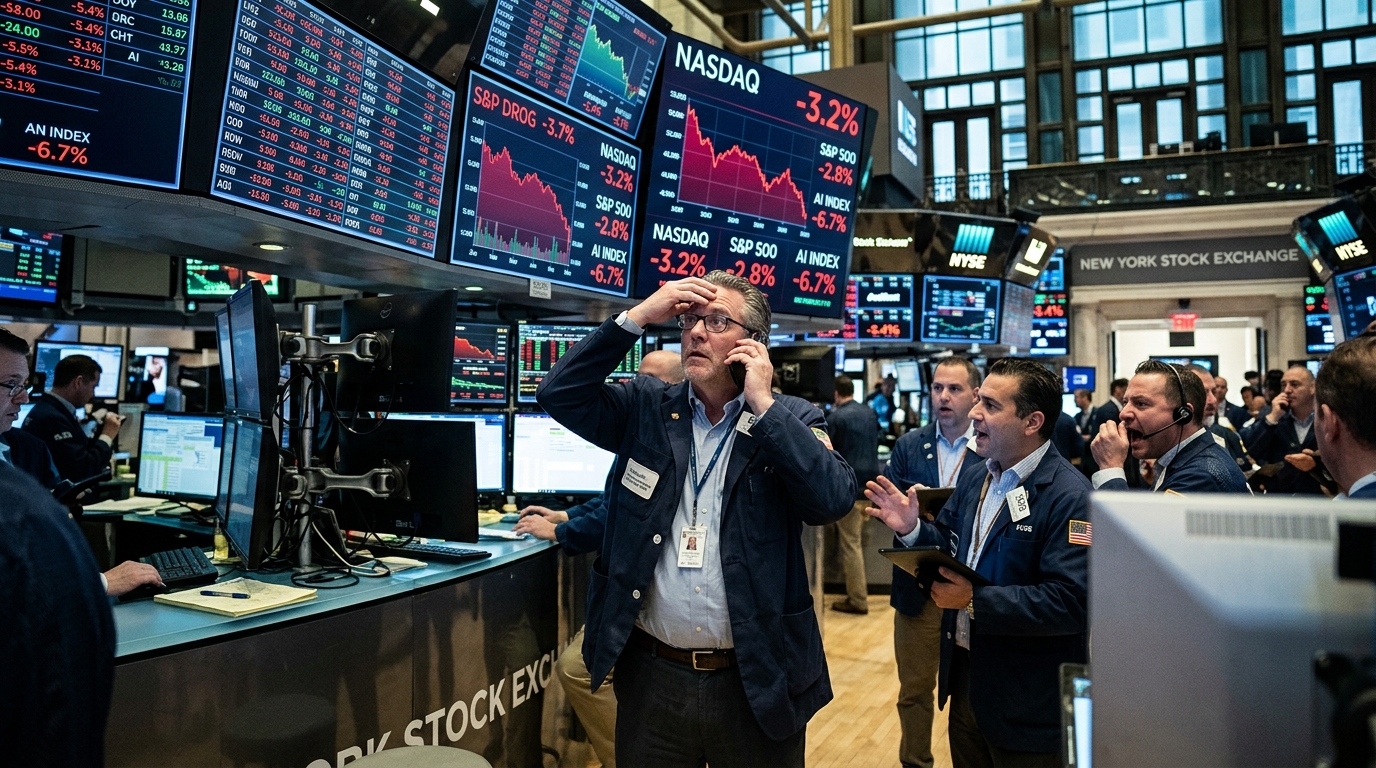
DeepSeek's success sends a warning shot to the markets. If efficiency becomes the new benchmark, the frenzy for GPU hoarding may cool down. Companies whose valuations are predicated on exclusive access to massive compute clusters might see their moat evaporate. For China, the ability to produce world-class AI at low cost means that adoption by small and medium-sized enterprises (SMEs) will be faster and more widespread.
In an environment where productivity is the ultimate goal, DeepSeek offers a model for the 'democratization' of high-end tech, albeit under the auspices of the Chinese state. The cost per token (the unit of AI output) has already begun to plummet, squeezing the profit margins of American giants and forcing Wall Street to re-evaluate its investment strategies in the sector.
Conclusion: The Return of Quality Over Quantity
The DeepSeek story reminds us that in technology, brute force rarely defeats an elegant solution in the long run. China, forced by circumstance and sanctions, has found a path that may prove more economically sustainable. The '$1 trillion' cited in analyses isn't just a figure; it represents the cost of a dependency that China is successfully evading. As we enter the second half of the AI decade, the winner may not be the one with the most GPUs, but the one who knows how to use them most effectively.