In a move that sent shockwaves through Wall Street's financial circles, Bank of America (BofA) has issued a radical revision of its estimates for United States monetary policy. According to the latest report from the bank's analysts, the Federal Reserve is expected to maintain interest rates at steady, elevated levels without further cuts until 2027. This forecast stands in stark contrast to the optimism prevalent early last year, when markets were betting on a swift return to the era of cheap money.
Inflation Persistence and Economic Resilience
The primary driver behind this pessimistic—or realistic, as many argue—forecast is the structural nature of inflation in the post-pandemic era. Despite the aggressive rate hikes that preceded this period, the American economy is exhibiting unexpected resilience. The labor market remains tight, with unemployment at historic lows, fueling wage growth and, consequently, consumer spending.
BofA points out that the 'neutral rate' (r-star)—the interest rate level that neither stimulates nor restricts the economy—has shifted higher. This means that rates previously considered 'restrictive' are now the new normal. The report emphasizes that the Fed has no reason to rush into rate cuts as long as growth remains above the long-term average and inflation refuses to stabilize at the 2% target.
Fiscal Dominance and the US Debt Burden
A factor often overlooked, but which BofA places at the center of its analysis, is US government fiscal policy. With deficits widening and public debt galloping, the federal government continues to inject liquidity into the economy through subsidies and defense spending. This 'fiscal dominance' largely offsets the Fed's efforts to cool the economy.
- Continuous bond issuance to fund the deficit keeps yields high.
- Geopolitical instability requires increased defense spending, which is inherently inflationary.
- The 'green transition' requires massive capital investments that maintain high demand for money.
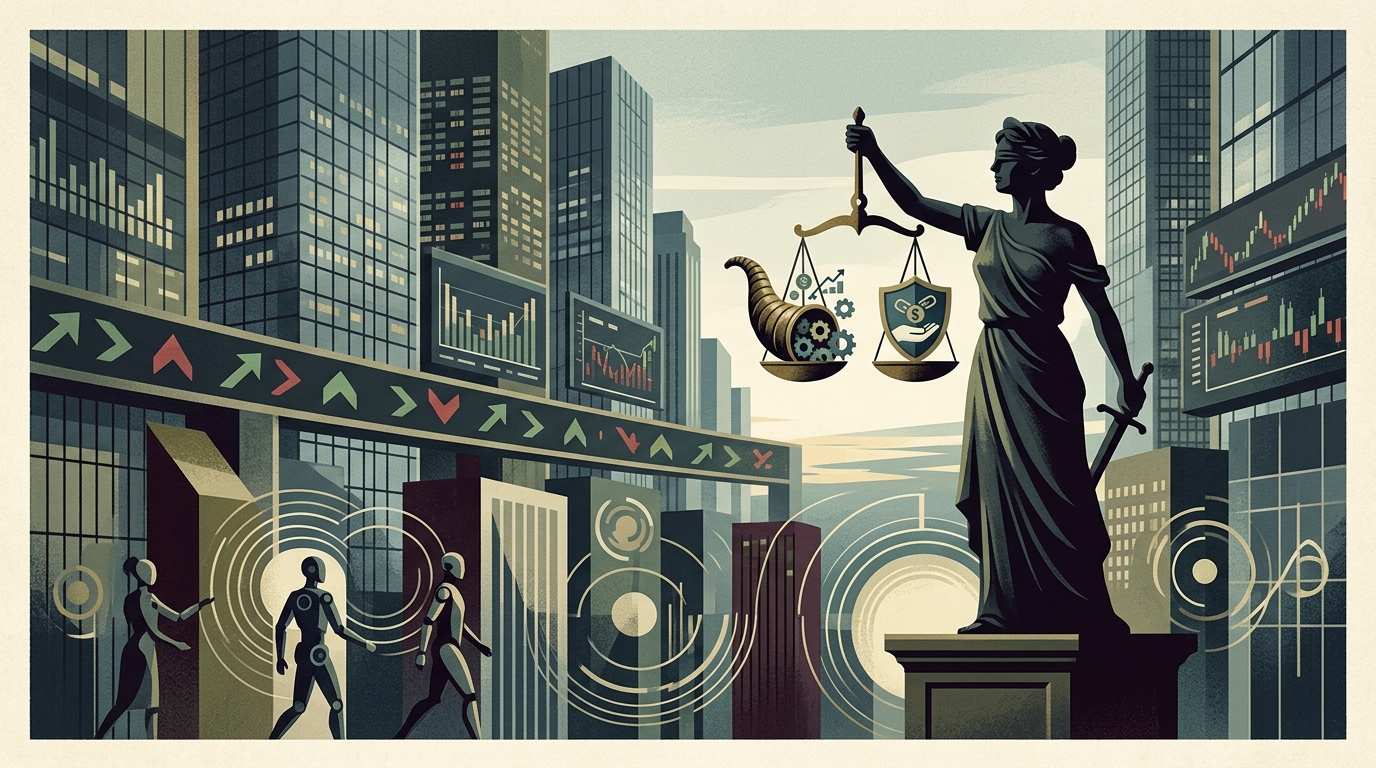
According to analysts, the Fed is trapped: if it cuts rates prematurely, it risks a 1970s-style inflation resurgence. If it keeps them high, it increases the debt servicing cost for the state itself. The decision to 'freeze' appears to be the path of least resistance and risk.
Implications for Global Markets and International Trade
Bank of America's message is not confined within US borders. The dollar, bolstered by high yields, is expected to remain strong, putting pressure on emerging market currencies and the Euro alike. For the European Central Bank (ECB), diverging from the Fed is a constant headache. An ECB that cuts rates while the Fed holds steady would lead to Euro depreciation, effectively importing inflation through energy costs denominated in dollars.
For global corporations, a rate freeze until 2027 means that the cost of capital will remain at levels not seen in over a decade. Hopes for cheaper corporate refinancing are evaporating. However, the silver lining is that fixed-income investors will continue to enjoy attractive yields, and banks will maintain healthy net interest margins, strengthening their balance sheets against potential credit shocks.
"We are no longer in a world where central banks can bail out markets at the first sign of weakness. Discipline is the new keyword," the report states.
In conclusion, BofA's analysis serves as a warning shot for investors still clinging to hopes of a return to the status quo ante. The 2024-2027 period looks set to be defined by interest rate stability, fiscal stringency, and the necessity for genuine corporate profitability, moving away from the 'narcotic' effect of zero-cost capital. The transition to this new equilibrium will likely be painful but necessary for long-term financial health.