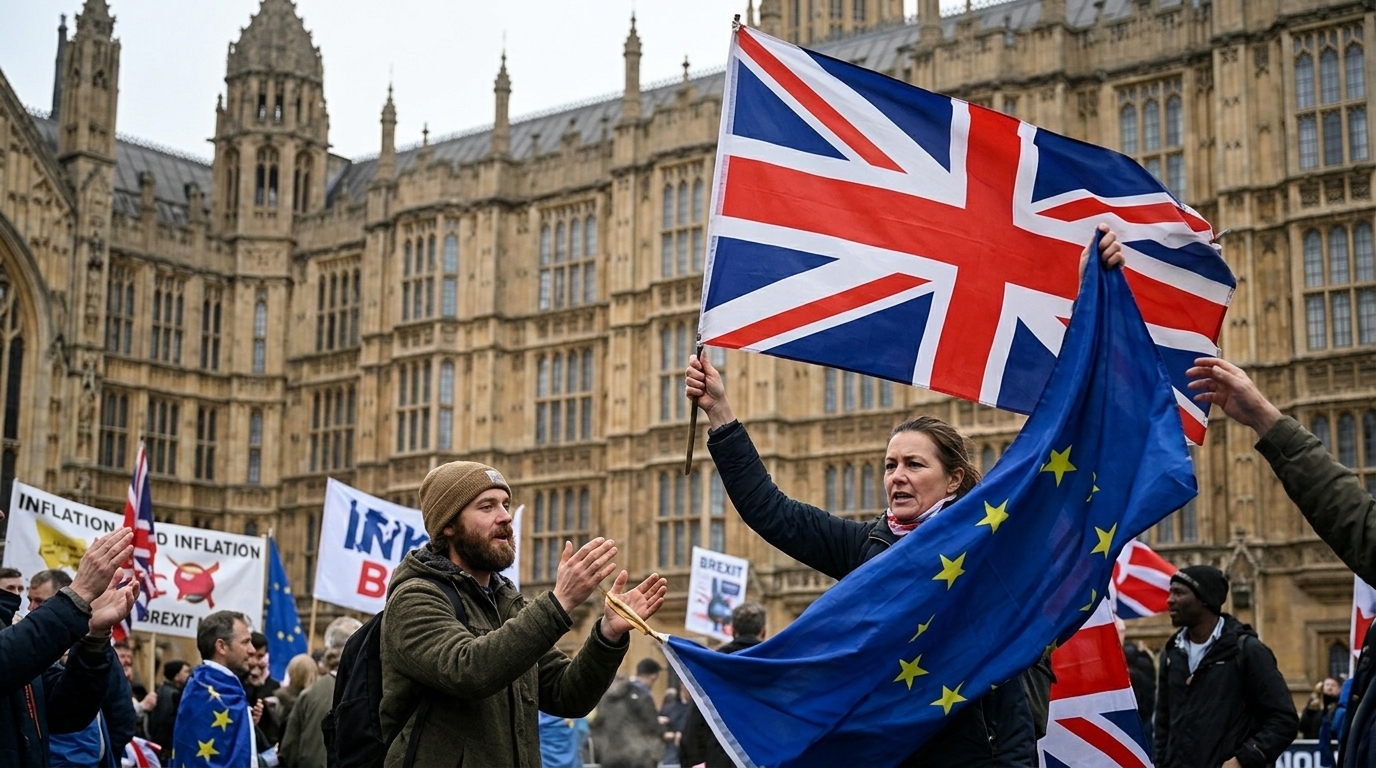
The debate over the economic consequences of Brexit is no longer a theoretical exercise in political posturing, but a harsh reality reflected in the Bank of England's (BoE) balance sheets. Hu Pill, the central bank's Chief Economist, recently made an admission that many in London's political sphere have sought to avoid: Brexit is a primary driver making inflation in the United Kingdom more persistent and harder to combat compared to the Eurozone or the United States.
According to Pill, leaving the single market has created structural supply-side weaknesses that limit the economy's ability to grow without triggering price increases. This phenomenon, often described as a reduction in the "potential growth rate," means the BoE must maintain higher interest rates for longer to suppress demand, as supply—both in terms of labor and goods—remains suffocatingly constrained.
The Labor Market Crisis and the End of Free Movement
One of the most critical areas where Brexit has left an indelible mark is the labor market. The termination of the free movement of workers from the EU has created severe shortages in sectors such as hospitality, agriculture, and construction. While Brexit proponents argued this would lead to wage increases for British workers, the reality is more complex. Wage hikes, without a corresponding increase in productivity, have translated directly into inflationary pressures.
Businesses, faced with staff shortages, are forced to offer higher pay to attract the limited available talent, a cost that is passed directly to the consumer. As the BoE analysis points out, labor market tightness in the UK is "uniquely acute." The loss of access to a flexible labor pool from the continent means the British economy has lost the pressure-relief valve it once possessed during periods of economic overheating.
- Reduction in the labor force due to stricter immigration rules.
- Increased costs for recruitment and training of domestic staff.
- A wage-price spiral fueling services inflation.
Trade Barriers and the Rising Cost of Living
Beyond labor, the trade in goods has suffered a significant blow. Although the Trade and Cooperation Agreement (TCA) avoided tariffs, it introduced a plethora of non-tariff barriers. Customs checks, rules of origin, and new sanitary standards have added bureaucratic weight and costs to imports from the EU, which remains the country's largest trading partner.
These additional costs act as an indirect tax on imports. For small and medium-sized enterprises (SMEs), the complexity of the new procedures is often prohibitive, leading to reduced competition and, consequently, higher prices for products on supermarket shelves. The BoE observes that food inflation in the UK has remained at higher levels than in many European countries, partly due to these trade frictions inherent in the "Hard Brexit" model that was pursued.
"Brexit was not a one-off shock, but a permanent change in the country's economic parameters, reducing efficiency and increasing production costs," City analysts note.
Investment Stagnation and Productivity
The third leg of this problematic equation is investment activity. Since the 2016 referendum, business investment in the UK has remained stagnant. Uncertainty regarding the future relationship with the EU and regulatory divergence have deterred companies from investing in new technologies and infrastructure that would improve productivity.
Without investment, productivity remains low, meaning the economy cannot produce more with the same resources. This supply-side stagnation is the "Achilles' heel" of the British economy in the BoE's attempt to return inflation to its 2% target. When demand increases even slightly, limited productive capacity immediately leads to price hikes. Hu Pill emphasizes that this "erosion of supply" is a direct consequence of the new economic geography created by Brexit.
In conclusion, the Bank of England finds itself in an extremely difficult position. It must use the blunt tool of interest rates to treat a problem that is largely structural. While global inflation is receding as energy prices stabilize, the UK faces a "domestic aftertaste" of inflation, fueled by choices made over the past decade. The battle against inflation in Britain is not just monetary, but also deeply political, requiring an honest reassessment of trade and labor relations with the rest of Europe.