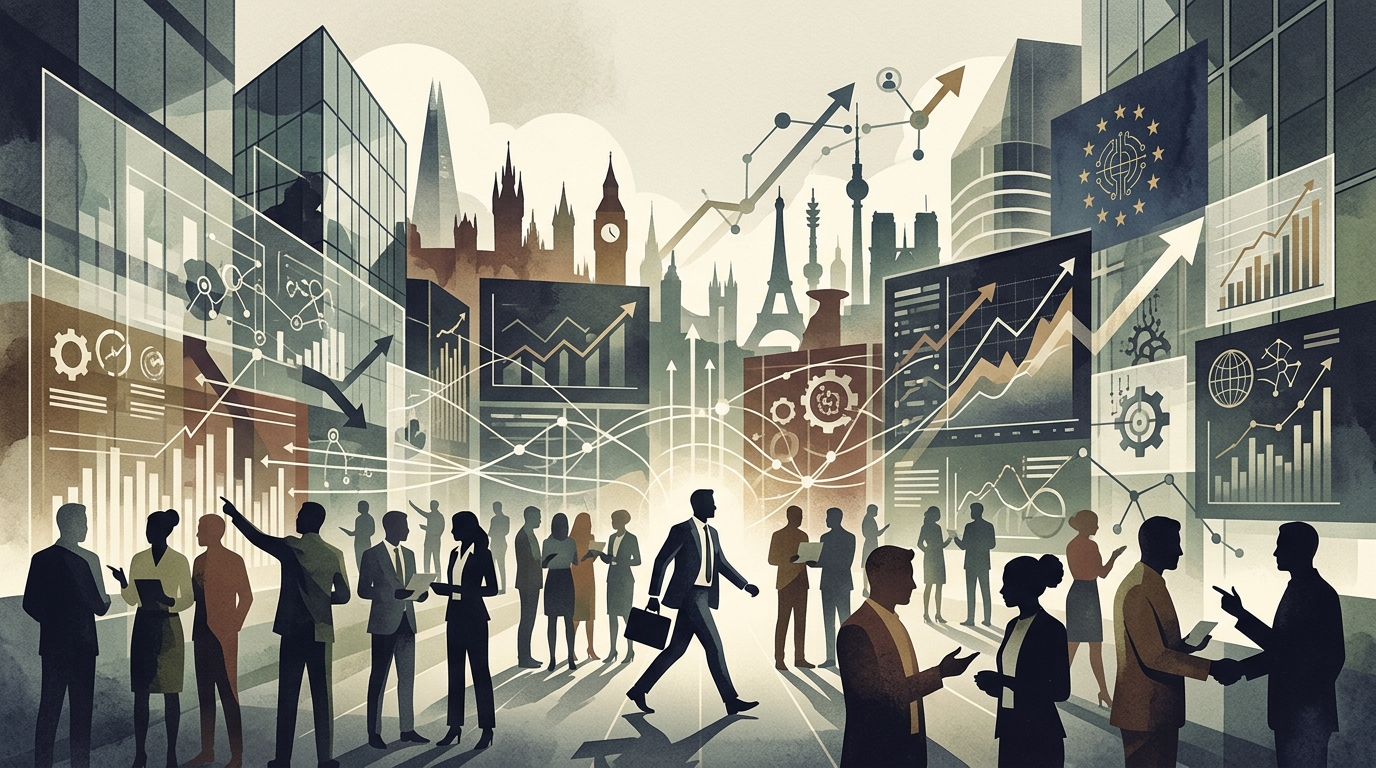
Against the backdrop of the Panathēnea Festival 2026, an event that has established itself as the epicenter of innovation dialogue in Southeastern Europe, Ben Blume, Partner at Atomico, offered a penetrating look into the future of European business. His discussion with Fortune Greece was not merely an analysis of investment trends, but a manifesto for the maturation of an ecosystem that for decades struggled to escape the shadow of Silicon Valley. According to Blume, the companies that truly stand out today share one common trait: an immediate transcendence of national borders, not just in terms of market reach, but primarily in mindset and talent acquisition.
The Transition from 'Copycat' to Primary Innovation
For years, the European startup scene was accused of merely replicating successful American models (the so-called 'copycat model'). Blume argues that this era is definitively over. The new generation of founders he meets daily possesses a blend of deep technical expertise and an 'unbridled confidence' that was missing from their predecessors. This is partly due to the 'flywheel effect': executives who matured in European unicorns like Spotify, Adyen, or Skype are now founding their own companies, transferring invaluable scaling knowledge.
Particular emphasis is placed on Deep Tech and Artificial Intelligence. Europe, with its world-class academic institutions and tradition in hard sciences, is now at the forefront. "We are no longer looking for the European version of Uber," he notes characteristically. "We are looking for the company that will solve climate change through new materials or the one that will redefine data security in the age of quantum computing."
Greece as a Strategic Hub of the New Era
Blume's presence in Athens in 2026 is no coincidence. The Greek tech scene has demonstrated remarkable resilience and extroversion. The Atomico Partner recognizes that Greece has managed to convert 'brain drain' into 'brain circulation.' Greeks from abroad are returning or collaborating with local teams, creating a bridge between Silicon Valley, London, and Athens. For Atomico, a company's geographical location is now secondary to the quality of its code and the vision of its founders.
- Access to capital is no longer the main hurdle; finding specialized talent at scale is.
- European regulators, despite criticism, are creating a framework of certainty (e.g., the AI Act) that favors responsible businesses in the long run.
- Sustainability (ESG) has transformed from an optional feature into a fundamental investor requirement.
The Challenge of Scaling Up
Despite the optimism, Blume remains a realist regarding the challenges. The biggest thorn for Europe remains the 'funding gap' in later stages (Series B and C). While seed investments are abundant, companies often feel compelled to seek American capital to become global players. Atomico is actively working toward creating a stronger European capital network capable of supporting tomorrow's champions all the way to their IPO.
"The next Google or the next Microsoft will not look like the previous ones. It will be decentralized, it will have ethics at its core, and most likely, it will have European DNA," Blume concludes.
In a world becoming increasingly fragmented geopolitically, technology remains the only language that can transcend borders. Ben Blume's analysis underscores that Europe is no longer a mere observer, but the architect of a new, fairer, and more technologically advanced reality.