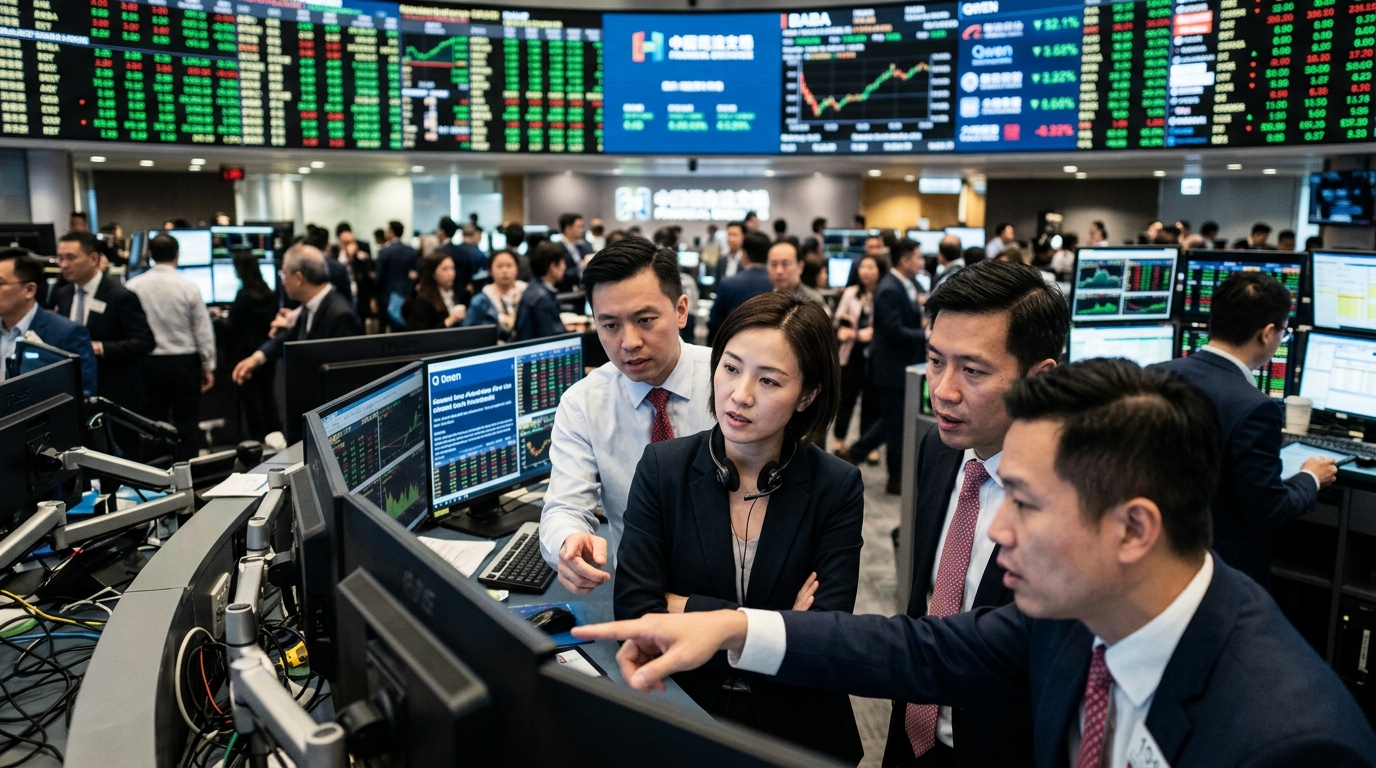
Alibaba Group Holding (BABA) stands at a critical juncture. After years of regulatory scrutiny from Beijing and losing market share to aggressive upstarts like PDD Holdings, the once-unchallenged leader of Chinese e-commerce is searching for a new identity. This identity appears inextricably linked to Qwen (Tongyi Qianwen), the company’s large language model (LLM), which is now being integrated into every facet of its ecosystem. For shareholders, this pivot is not merely a technological upgrade; it is an existential necessity for survival and growth in the age of Artificial Intelligence.
The Open-Source Strategy as a Trojan Horse
Alibaba has chosen a different path than OpenAI or Google: the open-source route. By releasing various versions of Qwen to the developer community, the company aims to make its model the de facto standard for the Chinese industry. This move mirrors Meta’s strategy with Llama. The more developers and enterprises build on top of Qwen, the more powerful the Alibaba Cloud ecosystem becomes.
For investors, this translates into "sticky" revenue. Once a business integrates Qwen into its operations, switching to another model becomes costly and complex. Alibaba Cloud, which recently implemented aggressive price cuts, aims to capture the largest possible market share, sacrificing short-term margins for long-term dominance. This strategy is crucial, as cloud computing is the growth engine intended to offset the maturation of the e-commerce sector.
Real-World Integration: From DingTalk to Tmall
The true value of Qwen for shareholders lies not just in API sales, but in internal optimization. Alibaba is embedding AI into three core pillars:
- E-commerce (Taobao/Tmall): AI is used to personalize user experiences, generate content for merchants, and optimize the supply chain. Increasing the conversion rate by even 1% can mean billions in additional GMV.
- DingTalk: The enterprise communication platform is being transformed into an "intelligent assistant" that automates workflows, making it indispensable for Chinese businesses.
- Alibaba Cloud (MaaS): The Model-as-a-Service framework allows third-party companies to train their own models on Alibaba’s infrastructure, creating a new high-margin revenue stream.
"AI is not just an add-on feature for us; it is the fundamental technology that will define Alibaba's next decade," CEO Eddie Wu recently stated, emphasizing the company's commitment.
Risks and the Geopolitical Minefield
Despite technological progress, shareholders remain cautious due to exogenous factors. US restrictions on exports of advanced semiconductors (such as NVIDIA’s H100s) act as a drag on training even more powerful models. Alibaba is forced to pivot toward domestic solutions, such as Huawei’s Ascend processors, which, while impressive, still lag in terms of the software ecosystem.
Furthermore, domestic competition is ruthless. Baidu with Ernie Bot and Tencent with Hunyuan are vying for the same market share. Alibaba, however, possesses a unique advantage: data. As the largest player in e-commerce, it holds a treasure trove of consumer habit data, which is invaluable for training models targeting both B2B and retail sectors.
Conclusion: Value Play or Value Trap?
For shareholders, the success of Qwen is the key to a re-rating of the stock. Currently, Alibaba trades at multiples reminiscent of a low-growth utility company, despite its massive cash flows. If management can prove that AI can revitalize e-commerce and make Cloud profitable at scale, the stock could see significant upside. However, the path will be challenging, as the company must balance Beijing’s demands for control with the need for innovation that transcends borders.