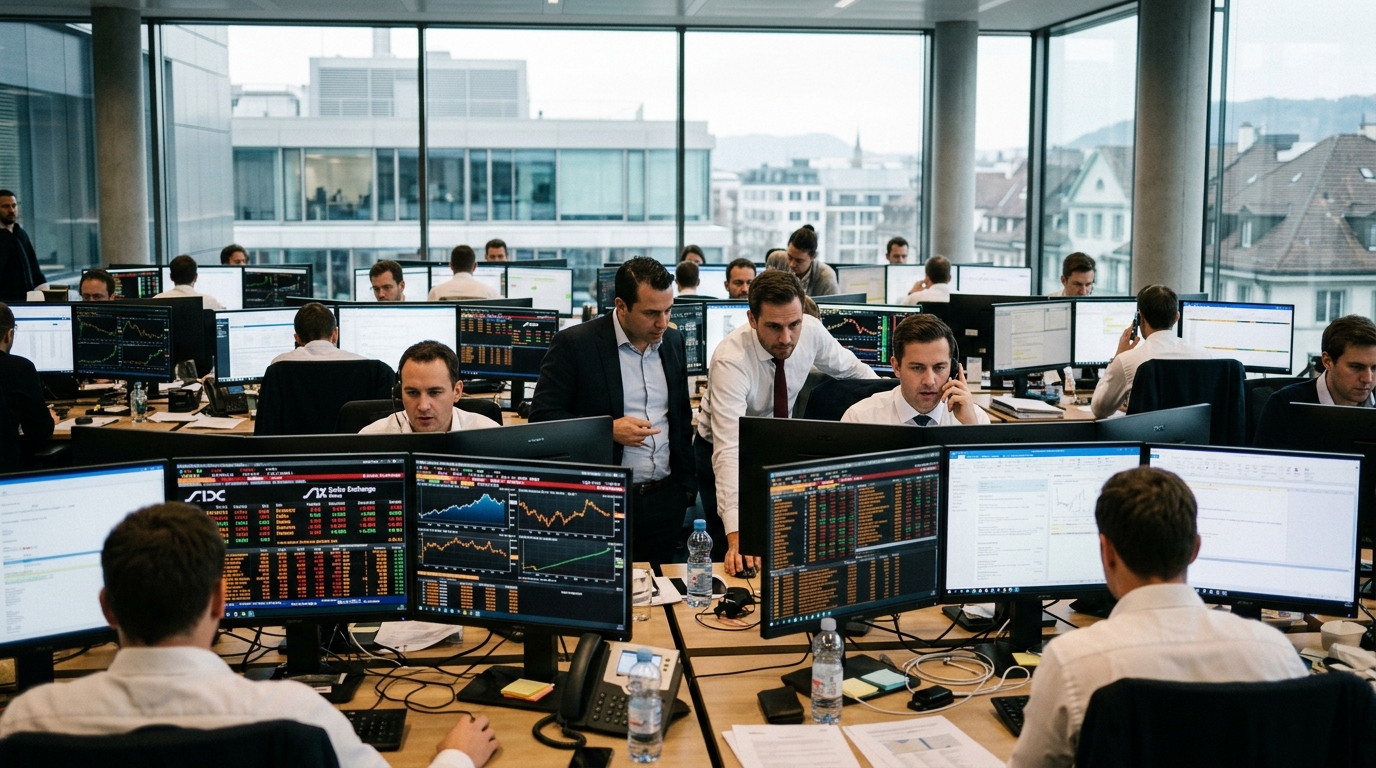
For decades, Switzerland has been the gold standard of economic stability, precision, and prosperity. With a model built on specialized services, pharmaceuticals, and high-end watchmaking, the Alpine nation has managed to maintain the world's highest per capita income while remaining insulated from major geopolitical upheavals. However, the advent of Artificial Intelligence (AI) poses a critical question: can the Swiss model survive in a world where intellectual labor is being automated at an unprecedented pace?
The Digital Transformation of the Financial Sector
Banking is the backbone of the Swiss economy. Zurich and Geneva are not just cities; they are global symbols of wealth management. AI promises to revolutionize this sector by providing tools for analyzing vast amounts of data, predicting market trends, and personalizing investment advice. Yet, this progress carries inherent risks. The automation of white-collar jobs could lead to a significant reduction in the banking workforce. Traditional wealth managers might find themselves replaced by algorithms that operate 24/7 at a fraction of the cost, threatening the social contract of a country that relies on high employment and premium wages.
Pharmaceutical Innovation and 'Smart' Research
In contrast to the banking sector, the Swiss pharmaceutical industry—home to giants like Roche and Novartis—sees AI as a powerful ally. The use of Generative AI in drug discovery can reduce research timelines from years to months. The ability of AI models to simulate molecular interactions allows for the faster development of treatments for rare diseases, bolstering Basel's competitiveness as a global life sciences hub. Here, AI acts not as a replacement, but as a force multiplier for Swiss scientists, ensuring the country remains at the cutting edge of global innovation.
The Challenge of 'Sovereign AI' and Neutrality
A unique aspect of the Swiss strategy is the concept of 'Sovereign AI.' In a world where technology is primarily controlled by the US and China, Switzerland seeks to develop its own infrastructure. The Swiss Federal Institute of Technology (ETH Zurich) is leading the charge in developing models that respect privacy and Swiss legislation. Maintaining control over data and algorithms is now considered as vital as holding gold reserves in the central bank. Digital neutrality could become the country's new 'brand,' attracting companies wary of the technological hegemony of major powers.
Social Implications and the Future of Work
Despite technocratic optimism, the risk of social destabilization remains. Switzerland has one of the highest costs of living in the world, supported by correspondingly high salaries. If AI devalues human labor in critical sectors, the Swiss middle class could face immense pressure. The government is called upon to invest massively in retraining the population, transforming workers from simple users into 'overseers' of AI systems. The success or failure of this transition will determine whether the country remains a paradise of prosperity or sinks into an identity crisis.
"Artificial intelligence is not just a productivity tool for Switzerland; it is the ultimate test of our ability to remain relevant in a century that does not forgive delay."
In conclusion, Switzerland possesses the capital, the education, and the political stability to lead the AI revolution. However, the complacency of past success could prove to be a trap. The prosperity of the coming decades will no longer be based solely on the secrecy of bank accounts, but on the intelligence of the algorithms running in the data centers of the Alps.