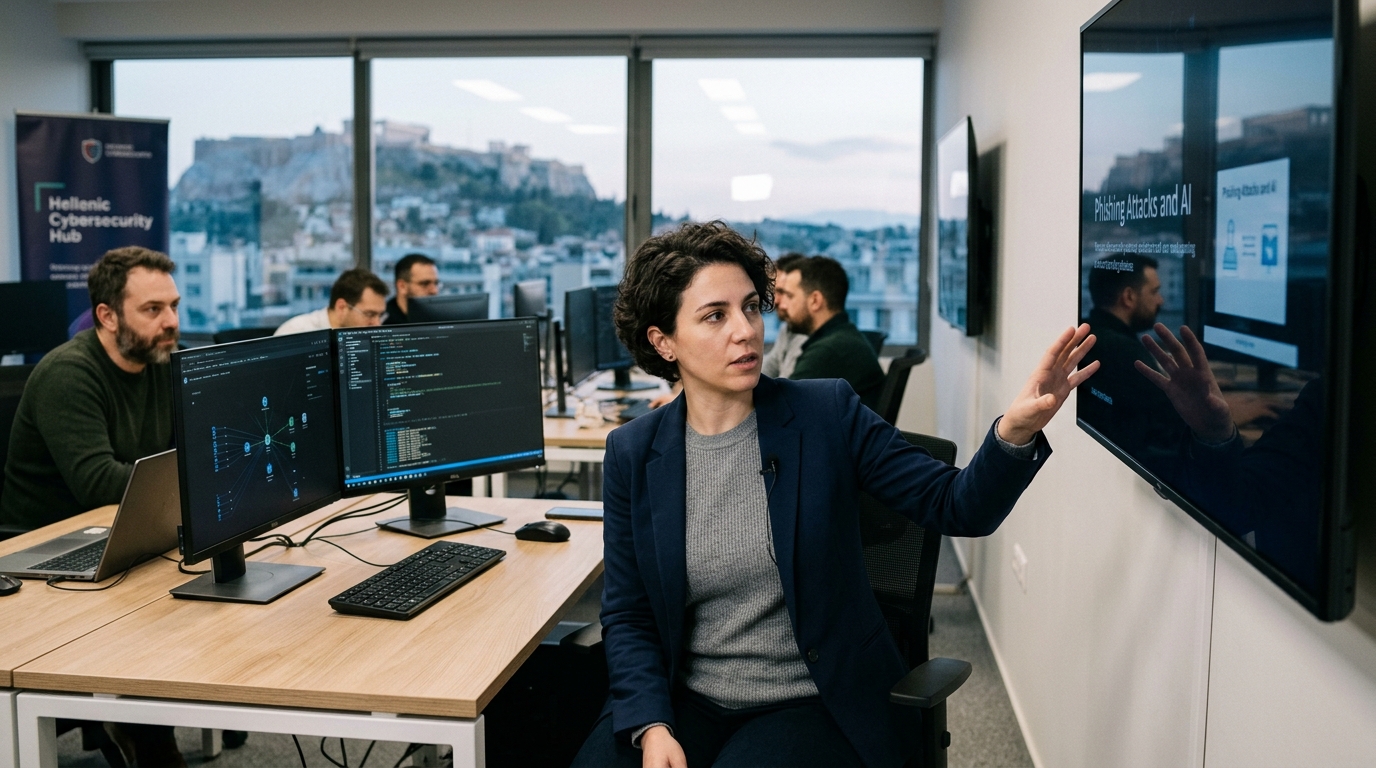
The dawn of the Artificial Intelligence (AI) era has brought not only the promise of unprecedented productivity but has also opened Pandora's box for a new, more sophisticated generation of cybercrime. As we move through 2026, the threat is no longer coming from isolated hackers searching for security loopholes, but from automated systems capable of conducting attacks at a scale and precision once deemed impossible. The recent report from Vietnam.vn highlights a global trend: AI has democratized the ability to conduct complex attacks, making them accessible even to less experienced criminals.
The Industrialization of Phishing and Social Engineering
One of the most visible shifts concerns phishing. In the past, malicious messages were often easy to spot due to grammatical errors or poor syntax. Today, using Large Language Models (LLMs), cybercriminals can produce perfectly composed messages in any language, tailored to the style and context of the potential victim. This "hyper-personalization" makes it nearly impossible for the average user to distinguish a genuine message from a scam.
- Automated content generation that bypasses traditional spam filters.
- Use of AI to analyze social media profiles and create convincing pretexts for fraud.
- Real-time translation allowing criminal organizations to operate globally without language barriers.
As security analyst Dr. Nikos Papadopoulos notes, "We are no longer in a war of code, but in a war of psychology amplified by algorithms. AI allows the attacker to be everywhere at once, testing thousands of doors per second."
Deepfakes: The Erosion of Reality
Perhaps the most disturbing aspect of this rise is the use of deepfakes. The ability to clone voices and create realistic videos has turned phone scams and corporate espionage into existential threats. We have already seen cases where financial executives transferred millions of dollars after a "video call" with their supposed CEO, which was nothing more than a digital hologram.
"Trust is the currency of the digital economy. When you can't believe your eyes or ears, the entire structure of social and economic interaction is called into question," the report states.
This technology is not limited to financial fraud. It is increasingly used for spreading disinformation and political destabilization, creating an environment where truth is permanently under trial.
Autonomous Malware and the Battle of Algorithms
Beyond communication, AI is being used to create "smart" malware. These programs can "learn" from their target's environment, identify vulnerabilities on their own, and change their code to avoid detection by traditional antivirus software. This is a digital version of natural selection, where only the most adaptive virus survives.
To counter this threat, cybersecurity firms are deploying their own AI. This creates a vicious cycle of an "arms race" between defensive and offensive algorithms. The challenge is that defenders must be right 100% of the time, while the attacker only needs to succeed once.
The Need for New Digital Ethics and Legislation
Addressing AI-driven cybercrime requires more than just technical measures. It requires a radical rethink of how we perceive security. Citizen education, stricter legislation on the use of AI tools, and international cooperation between law enforcement agencies are imperative. The European Union, with the AI Act, is taking the first steps, but technology often moves faster than bureaucracy.
In conclusion, the rise of AI-powered cybercrime is not a future threat but a present reality. Fortifying our infrastructure and maintaining our critical thinking are the only barriers against a flood of digital deception that threatens to drown innovation.