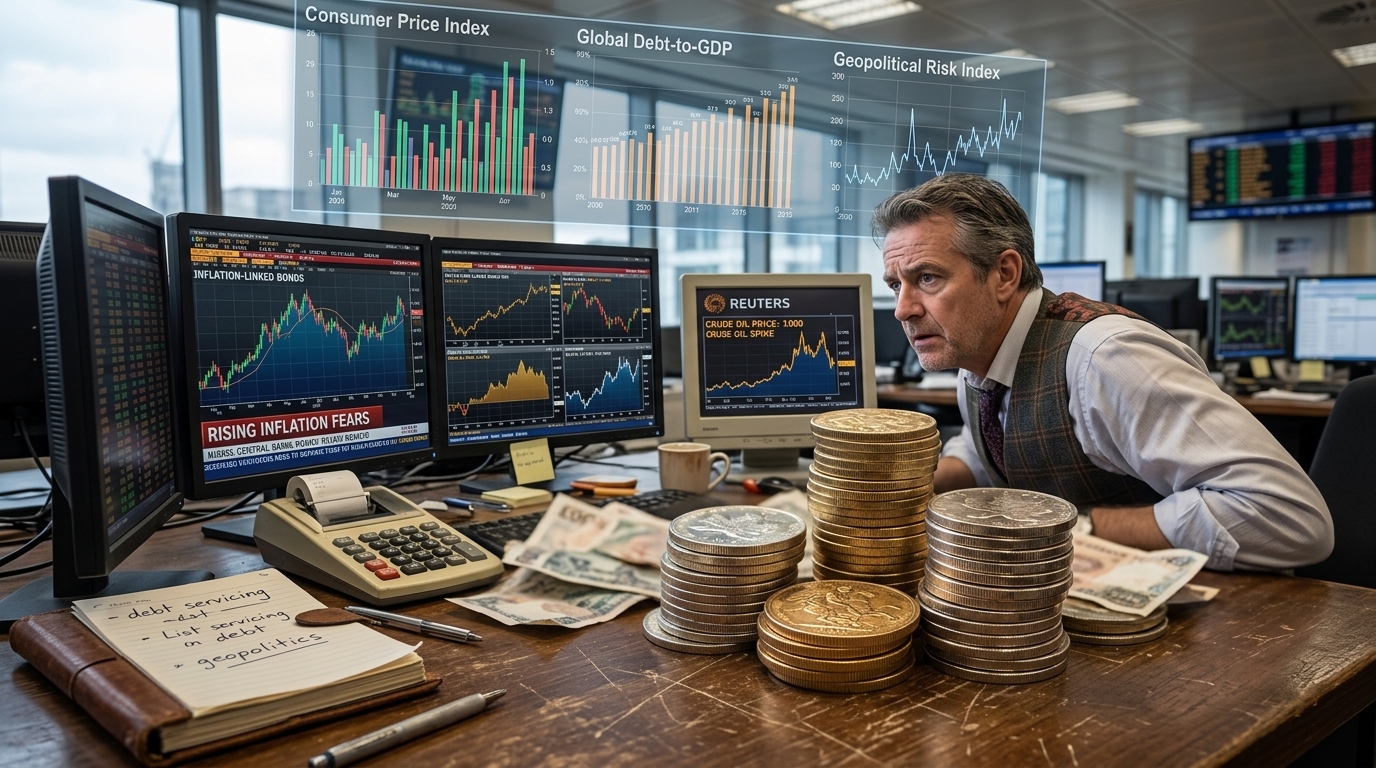
As we move through the second quarter of 2026, the world stands at a critical juncture. The escalation of conflicts in the broader Iran region has sent shockwaves through international markets, yet one phenomenon stubbornly refuses to retreat: the AI Supercycle. While traditional economic sectors grapple with the uncertainty of closed straits and threatened oil fields, the AI industry is displaying unprecedented resilience, albeit accompanied by a permanent and structural shift in how technological power is produced and distributed.
The Transition from Oil to Silicon
For decades, Middle Eastern geopolitics were inextricably linked to the flow of "black gold." Today, while oil remains vital, the global economy depends equally on computational power. The current crisis involving Iran has acted as a catalyst, accelerating a process already underway: the decoupling of the AI supply chain from geographically unstable regions. Major tech companies, the so-called "Hyperscalers," no longer view AI as luxury software but as an existential infrastructure that must be protected at all costs.
Data analysis shows that investments in data centers and semiconductors have not only held steady but increased by 15% over the last six months. This occurs because AI is now seen as the tool that will allow nations to overcome the economic consequences of war through automation and resource optimization. However, the price of this resilience is a complete reorganization of production networks.
The Rise of Friend-shoring and Energy Autonomy
The most significant change we are witnessing is the definitive abandonment of "low-cost" globalization in favor of "high-security" globalization. "Friend-shoring"—moving production to friendly nations—has become the new dogma. India, Vietnam, and Eastern Europe are emerging as new assembly hubs, while the US and EU accelerate domestic production of advanced chips through massive government subsidies.
- Reshoring Production: The "Chips Act" strategies in the US and Europe are now taking on the character of national defense.
- Energy Fortification: New data centers are being built next to Small Modular Reactors (SMRs) to avoid dependence on power grids affected by fluctuating natural gas prices.
- Raw Material Diversification: Dependence on rare earth elements controlled by rival blocs is being reduced through new recycling methods and synthetic materials developed by AI itself.
This shift means the AI supply chain is becoming more "local" but also more expensive. Consumers and businesses must adapt to an environment where the cost of technology incorporates a "risk premium" for geopolitical stability.
AI as a Tool of War Economy
We cannot ignore the fact that war itself fuels the demand for AI. From autonomous defense systems to cybersecurity and real-time intelligence analysis, Artificial Intelligence is the power multiplier on the modern battlefield. The conflict with Iran has highlighted the need for systems that can make decisions in milliseconds, pushing companies like Nvidia, OpenAI, and Palantir to new levels of profitability.
"The AI supply chain is no longer just a network of factories; it is a digital shield. Whoever controls the flow of data and the energy that drives it, controls the outcome of the conflict," says a senior geostrategy analyst.
In conclusion, the AI Supercycle is not merely an economic bubble that can burst with a geopolitical crisis. On the contrary, it is the new foundation of global power. The supply chain has changed forever: it has become more resilient, more fragmented, and more closely tied to the national security of major powers. 2026 will go down in history as the year Artificial Intelligence decoupled from the fate of traditional commodities and charted its own autonomous path.