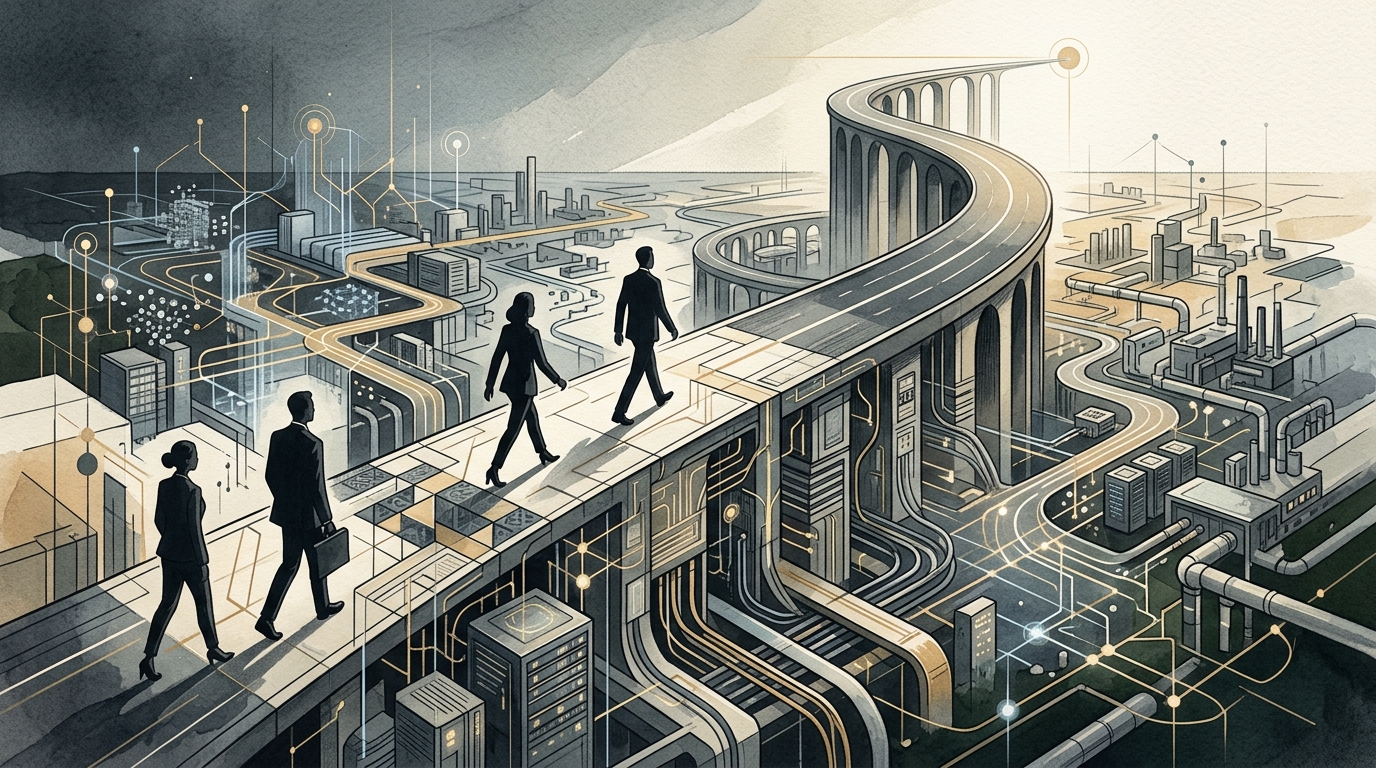
As we navigate May 2026, the global conversation regarding Artificial Intelligence (AI) has matured from existential dread to a pragmatic analysis of labor market survival. Recent insights from INSEAD Knowledge emphasize that we are not witnessing a temporary disruption, but a fundamental restructuring of work itself. For the modern professional, the critical question is no longer whether AI will replace them, but which specific tasks will be automated and how they can pivot toward areas where human cognition remains supreme.
The Anatomy of the Shift: Tasks over Jobs
AI doesn't typically replace entire job titles; it automates tasks. This distinction is vital for career protection. Roles previously considered "safe"—such as legal research, junior software engineering, and financial auditing—are facing the most significant pressure. However, data suggests that workers who adopt AI as a "co-pilot" experience a dramatic surge in productivity. To future-proof a career, one must identify the components of their role: if your work is primarily data retrieval and synthesis, it is at risk. If it requires synthesizing data with social empathy, ethical judgment, and complex strategic vision, your market value in 2026 is higher than ever before.
Investing in the 'Human Edge'
What can workers practically do to insulate themselves? INSEAD suggests a tripartite strategy:
- Cultivating Meta-skills: The ability to learn how to learn. In an era where technical skills have a half-life of less than two years, strategic adaptability is the ultimate competitive advantage.
- Prioritizing Social Intelligence: AI can draft a sophisticated memo, but it cannot navigate a boardroom conflict, inspire a demoralized team, or build deep-rooted client trust. Negotiation, leadership, and EQ remain uniquely human domains.
- Deep Domain Expertise: AI is broad but often shallow. A professional with deep knowledge of specific regulatory environments, cultural nuances, or niche industrial processes remains indispensable. They are the ones capable of auditing AI outputs for accuracy and relevance.
The Human-Machine Symbiosis
Protection from automation does not mean tech-avoidance; it requires active engagement. Workers must achieve "AI literacy." This doesn't necessarily mean learning to code, but rather understanding the limitations, biases, and prompt-engineering requirements of the models they utilize. In a global economy increasingly driven by efficiency, the employee who can leverage AI to reduce operational friction becomes a critical asset. Furthermore, a new role is emerging: the ethical overseer. As algorithms make choices regarding hiring or creditworthiness, the human-in-the-loop becomes the guarantor of fairness and transparency.
"AI won't take your job. A human using AI will take your job."
This adage, frequently cited in INSEAD’s executive programs, encapsulates our current reality. Protecting oneself involves elevating one's role from a "doer" to an "orchestrator." While governments and institutions must provide the safety nets for this transition, the primary responsibility for upskilling remains with the individual. Continuous education is no longer a luxury—it is a survival mechanism in the age of automation.