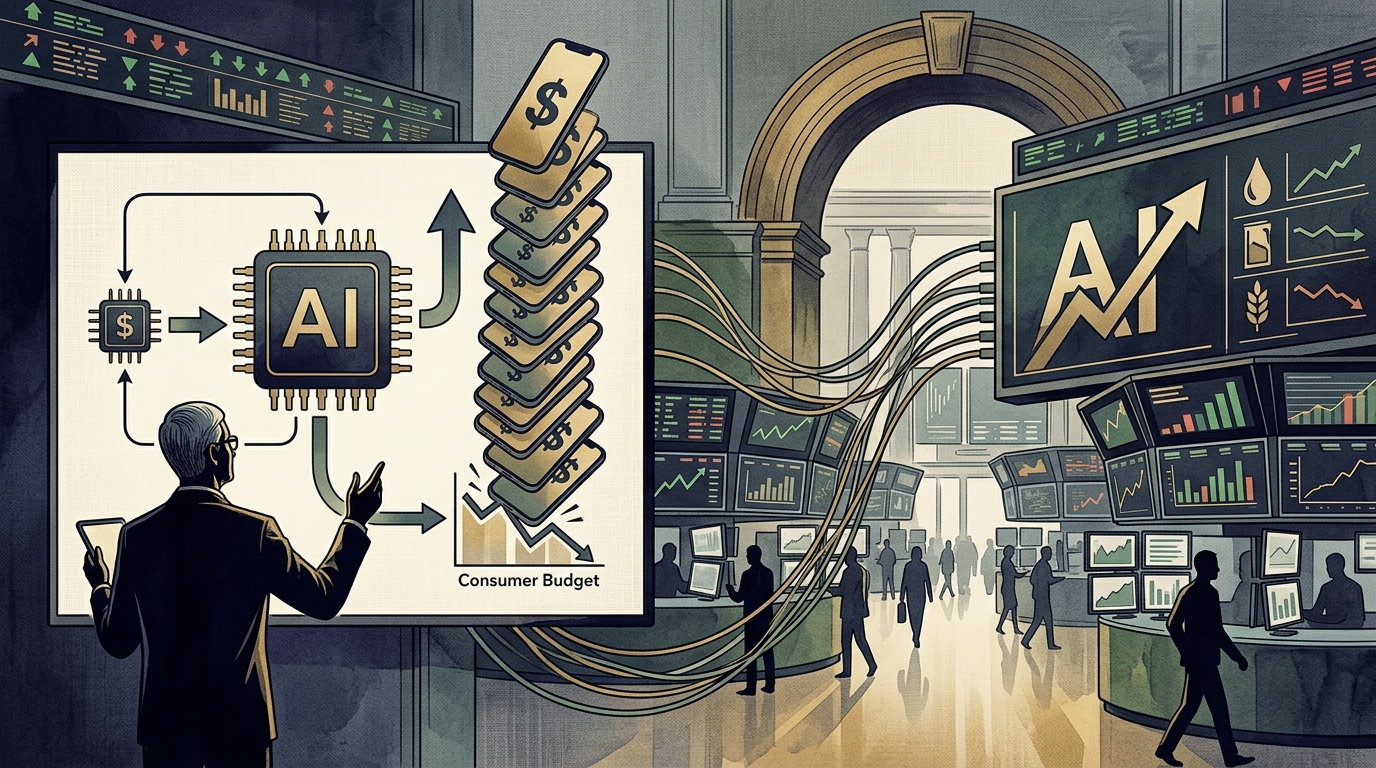
The era of 'free' technological progress seems to be coming to an end as Apple, the Cupertino giant, prepares the ground for a new reality: more expensive artificial intelligence. Tim Cook, in a rare moment of bluntness during a recent investor update, sounded the alarm over rising component costs, fueled by the global frenzy for Artificial Intelligence (AI). This is no longer a theoretical threat, but an immediate economic pressure shifting from data centers to retail shelves.
The 'Golden' Memory and the Supply Chain Siege
The core issue lies in semiconductor prices, specifically DRAM and NAND Flash memory chips. The advent of Apple Intelligence, the suite of AI tools integrated into the company's new operating systems, requires unprecedented levels of RAM to function locally on the device. While older models could survive with 6GB of RAM, the new era mandates a minimum of 8GB, or even 12GB for future Pro versions. This increased need coincides with a global shortage as memory manufacturers like Samsung and SK Hynix prioritize the production of High Bandwidth Memory (HBM) for Nvidia's GPUs that power Large Language Models (LLMs).
- Raw material cost increase of 15-20% year-on-year.
- Competition with cloud providers (AWS, Azure) for the same production capacity.
- Need for more sophisticated cooling systems due to the heat generated by AI processing.
Tim Cook admitted that Apple is 'carefully looking' at its pricing structure as profit margins are being squeezed. For a company that has built its empire on consistent and high margins, rising component costs represent an existential challenge that is typically passed on to the end consumer.
The Paradox of Local Processing
Apple's strategic choice to run most AI functions 'on-device' for privacy reasons comes with a heavy price tag. Local processing requires more powerful processors (NPUs - Neural Processing Units) and more energy, factors that drive up manufacturing costs. Had Apple chosen a cloud-based solution, the cost would be operational (OpEx) and spread over time. Now, the cost is capital (CapEx) and embedded directly into the hardware.
"We cannot ignore market forces. The demand for AI silicon is out of control, and this affects every link in our chain," Cook stated, implying that the $999 era for the flagship model might soon be a thing of the past.
Wall Street analysts estimate that the production cost of the iPhone 16 and the upcoming iPhone 17 could increase by up to $100 per unit. In a global market already strained by inflation, such an increase could test consumer loyalty to the Apple ecosystem.
The Strategy of 'Premium' Survival
How will Apple respond? History shows that the company prefers to raise the price of 'Pro' models while keeping basic models at more affordable levels, thereby creating a wider feature gap. However, with AI becoming the primary selling point, even the 'standard' iPhone must feature the expensive hardware required. This means the entire product lineup could move up the pricing scale.
Furthermore, there is the possibility that Apple might introduce subscription models for advanced AI features, attempting to offset hardware costs through software revenue. This would represent a radical shift in the company's business model, turning the iPhone from a one-time purchase into a portal for recurring payments. The challenge for Tim Cook is to balance innovation and accessibility at a time when technology is becoming more expensive than ever.