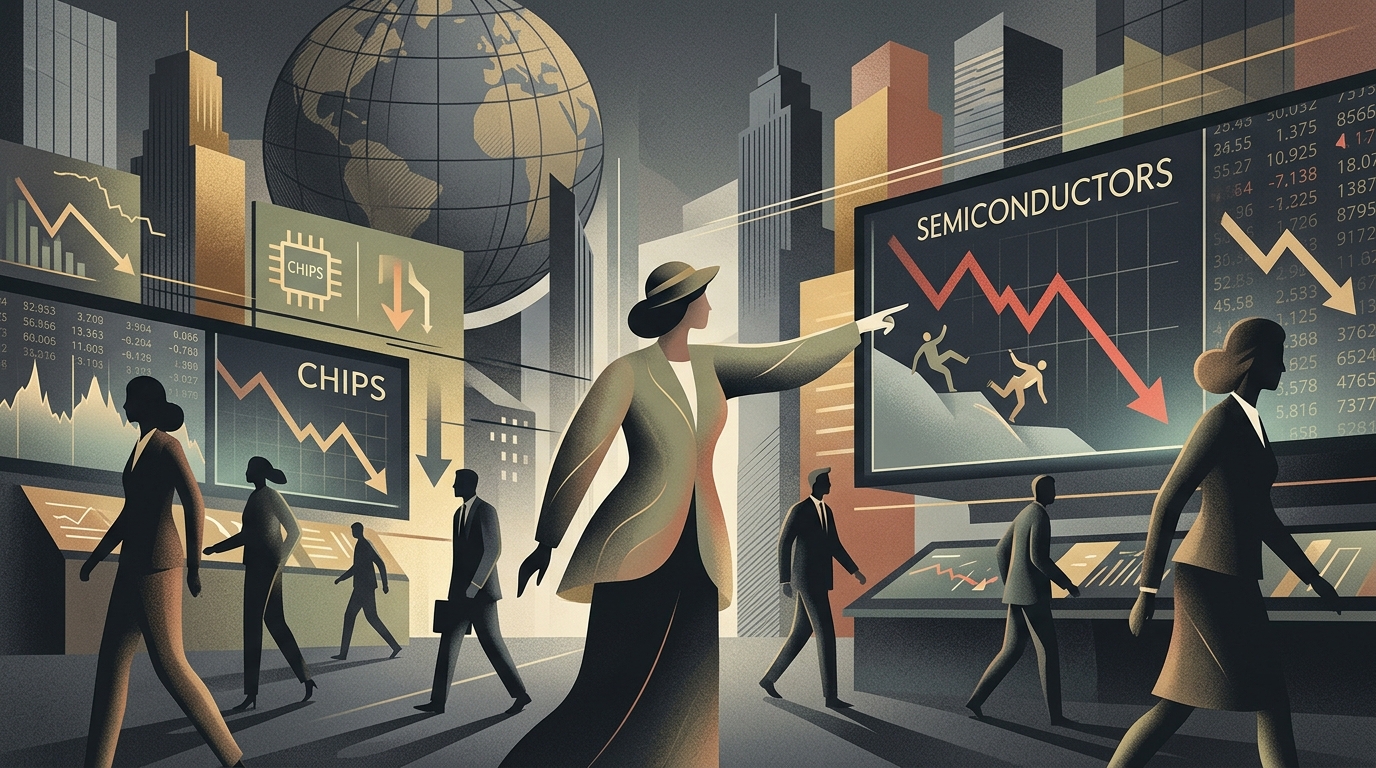
As of mid-2026, the global economy finds itself in a state that many analysts describe as "creative turbulence." Investments in Artificial Intelligence (AI) are no longer measured in millions, but in hundreds of billions of dollars annually. From Microsoft and Google to Amazon and Meta, the race for dominance in computing power and large language models has forged a new economic reality. However, behind the glittering stock market figures, a profound anxiety permeates the social fabric: the fate of human labor.
The Investment Fever and the Infrastructure Bubble
The question dominating the boardrooms of major investment banks is whether we are witnessing a new industrial revolution or a technological bubble akin to the dot-com crash of the early 2000s. Capital expenditure (CapEx) for data centers, next-generation chips from NVIDIA, and energy infrastructure has skyrocketed. Companies are betting that AI will become the operating system of tomorrow's economy, automating everything from software coding to medical diagnosis.
Yet, the return on investment (ROI) remains a significant point of contention. While productivity in certain sectors, such as software development, has increased by 30-40%, the broader economy has yet to see the dramatic surge that justifies the trillions spent. Analysts warn that if AI does not begin to generate immediate, measurable profits for businesses outside the tech sector, the market correction will be severe.
The Threat of Automation: Myth or Reality?
Concerns about job displacement are not new, but the nature of the threat has shifted. Unlike previous industrial revolutions that primarily affected manual labor, AI targets "knowledge work." Lawyers, data analysts, graphic designers, and administrative staff are seeing their tasks performed by algorithms in seconds. According to recent reports from the International Monetary Fund, approximately 40% of jobs worldwide are exposed to AI, with this figure reaching 60% in advanced economies.
- Displacement, not necessarily elimination: Many economists argue that AI will create new categories of professions that we cannot even imagine today.
- The skills gap: The challenge lies in the speed of the transition. Workers who cannot adapt to new tools risk permanent marginalization.
- The middle-class crisis: There is a fear that AI will lead to further labor market polarization, with a few high-skilled positions and many low-paid service jobs.
The Greek Perspective and the Challenge of Adaptation
For Greece, the stakes are twofold. On one hand, AI offers a unique opportunity to close the productivity gap that has plagued the country for decades. The digitalization of the state and the empowerment of small and medium-sized enterprises with AI tools could provide a significant boost to GDP. On the other hand, the Greek economy relies heavily on tourism and services—sectors where human contact remains critical, but administrative support is vulnerable to automation.
"Artificial Intelligence will not replace humans, but the human using AI will replace the one who does not," a market executive recently noted.
The need for a national strategy focusing on reskilling is more urgent than ever. The educational system must shift from rote memorization to critical thinking and the management of AI systems. If Greece does not invest in human capital, it risks becoming a mere consumer of foreign technologies, missing the chance to participate in the value-added of the new era.
Conclusion: A New Social Contract
History teaches us that technological progress is inevitable, but the distribution of its benefits is a matter of political choice. The billions invested today in AI must be accompanied by investments in social cohesion. The debate over Universal Basic Income (UBI) or the reduction of working hours is returning to the forefront, not as a utopian idea, but as a necessary response to an economy where capital intensity outweighs labor intensity. The challenge of 2026 is not just technological; it is profoundly human and political.