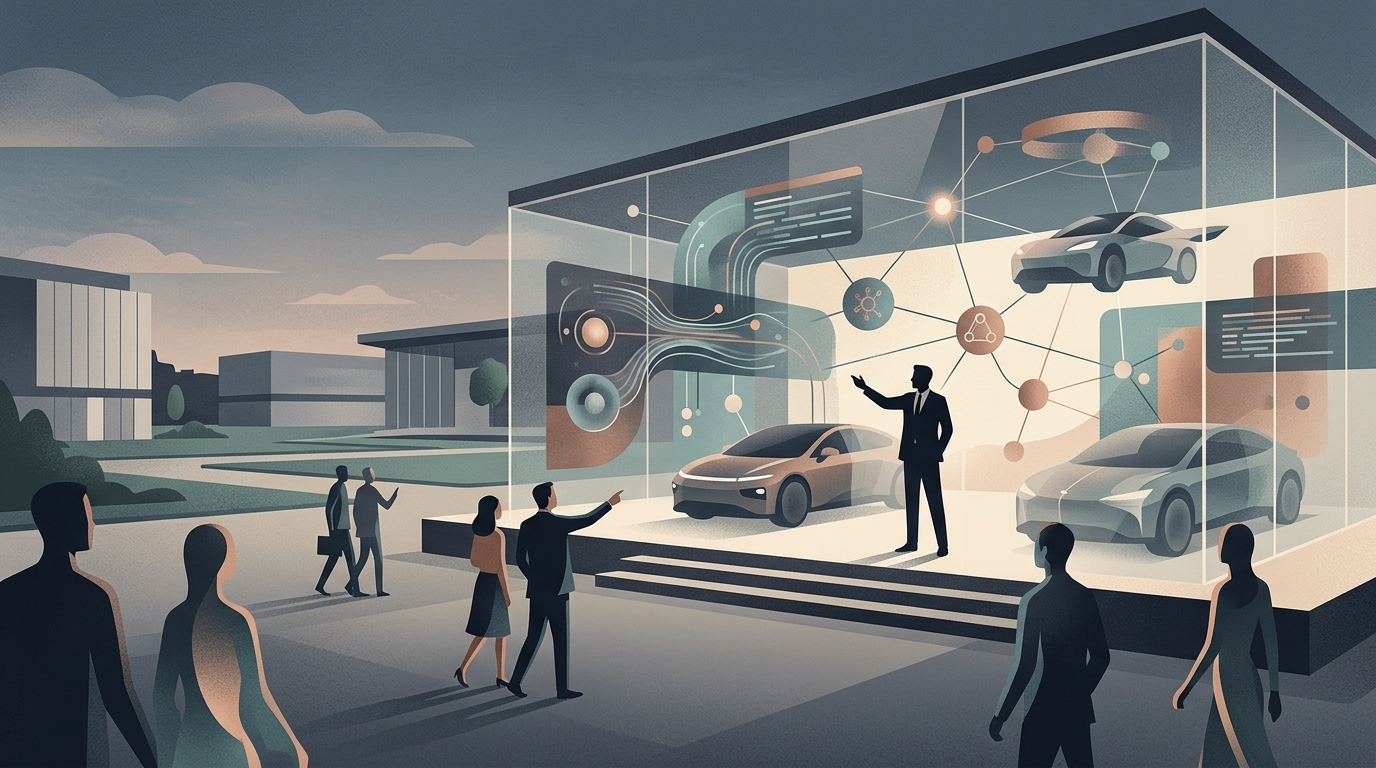
The automotive industry is not merely undergoing a transition from fossil fuels to electricity; it is on the threshold of a cognitive revolution. XPENG, the Chinese company once viewed as just another Tesla challenger, has now charted a course that places it at the vanguard of "AI-defined" mobility. In its recent strategic presentations, the company made it clear that its future is not just about batteries and range, but about the integration of Large Language Models (LLMs) and neural networks into every facet of the driving experience.
The Era of End-to-End AI
The most significant shift XPENG is bringing to the market is the transition from traditional programming to "end-to-end" autonomous driving. Until recently, driver assistance systems relied on thousands of lines of human-written code to define rules ("if you see this, do that"). XPENG, with its XNGP system, is discarding this approach. Using vast amounts of data from real-world driving conditions, it trains neural networks that "learn" to drive like a human, recognizing complex scenarios that conventional code fails to predict.
This technological pivot allows the vehicle to perceive its environment with an almost intuitive capability. It is no longer a machine following orders, but an entity making split-second decisions, enhancing both safety and comfort. The computational power required for this process is immense, and XPENG is investing billions in AI data centers, transforming itself from a hardware manufacturer into an intelligent software provider.
The Smart Cockpit and Human Interaction
Artificial Intelligence is not limited to the vehicle's movement. The interior of XPENG's new models, equipped with the XOS Tianji operating system, serves as a living example of how AI can improve daily life. Through the integration of GPT-like models, the car's digital assistant doesn't just execute voice commands; it understands the context of the conversation, suggests routes based on driver habits, and can even compose texts or analyze data during the journey.
- Adaptive learning of driver preferences for cabin settings.
- Continuous updates via Over-the-Air (OTA) upgrades that improve AI in real-time.
- Seamless integration with the user's ecosystem of smart devices.
This approach changes the nature of car ownership. The vehicle ceases to be a static product that depreciates and becomes obsolete over time. Instead, it becomes an evolving platform that grows "smarter" the more it is used, fostering a new relationship of trust and convenience between human and machine.
Geopolitics and Global Competition
However, XPENG's rise does not occur in a vacuum. Chinese dominance in the Smart EV sector has sparked intense reactions in Europe and the US. Tariffs and technology export restrictions represent significant hurdles. XPENG, recognizing these challenges, is seeking strategic partnerships—such as its deal with the Volkswagen Group—to gain access to international markets and share development costs.
"Artificial Intelligence is the catalyst that will separate the survivors from the losers in the global automotive industry over the next ten years," He Xiaopeng, the company's founder, recently stated.
The challenge for XPENG is to convince Western consumers not only of the quality of its vehicles but also of the security of their data. In a world where the car collects vast amounts of information via cameras and sensors, transparency and privacy protection become as vital as horsepower.
Vision Beyond Four Wheels
XPENG's ecosystem also extends into robotics. The development of humanoid robots that share the same AI "brain" as its cars demonstrates the breadth of the company's ambitions. The idea is simple: if you can train an AI to navigate the chaotic streets of a city, you can train it to move within a factory or a home. This convergence of technologies positions XPENG in a unique spot, where mobility is no longer defined by wheels, but by the ability of intelligence to interact with the physical world.